










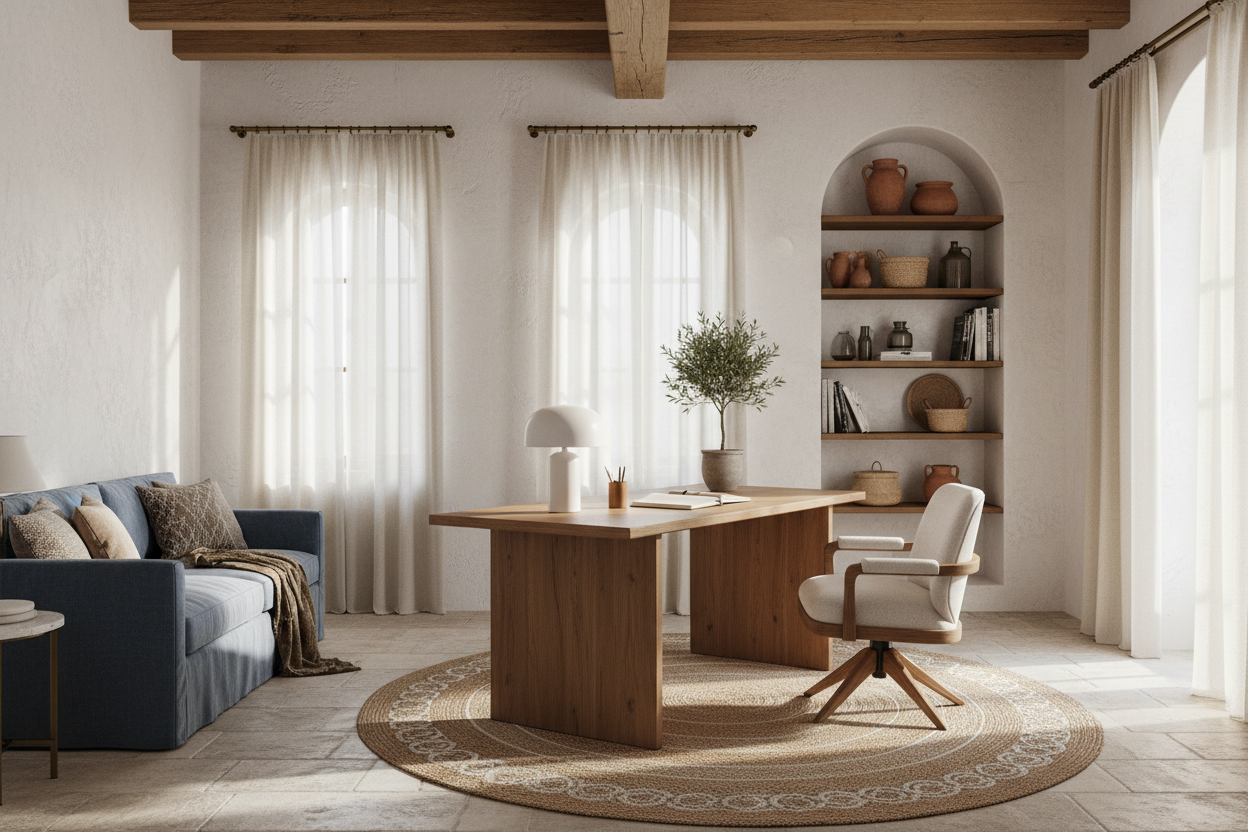
We often treat the home office as a purely utilitarian space, resulting in sterile environments that stifle creativity rather than igniting it. The antidote to the 'corporate grey' fatigue isn't just more plants—it is a fundamental shift in materials and warmth. A mediterranean office offers a sophisticated balance of Old World charm and contemporary functionality, prioritizing natural light, tactile materials, and a sense of 'slow living' even during a busy workday.
Key Features of a Mediterranean Workspace
- Materiality: Prioritize solid woods (walnut, olive, oak), wrought iron accents, and natural stone or terracotta flooring.
- Color Palette: Utilize warm neutrals, terracotta oranges, and coastal blues rather than stark whites or blacks.
- Texture: Look for plaster wall finishes, exposed beams, and linen textiles to absorb sound and add depth.
- Lighting: Layered lighting using ceramic or blown glass fixtures to mimic the warmth of the Mediterranean sun.
Anchoring the Room: The Mediterranean Desk
The centerpiece of your design is, inevitably, the workstation. When sourcing a mediterranean desk, avoid the high-gloss finishes common in commercial furniture. Instead, look for pieces that celebrate the grain of the wood. A heavy, solid wood table with carved detailing often serves better than a standard office desk. However, functionality is paramount.
If you are aiming for a modern mediterranean office, consider a floating wood desk anchored into a plaster wall. This creates an airy, uncluttered silhouette that mimics the breezy architecture of the Greek Isles or the Spanish coast. Ensure the depth is at least 30 inches to accommodate monitors without feeling cramped.
Material Quality and Patina
In this design style, imperfections are a feature, not a bug. A mediterranean style desk made of reclaimed pine or oak will develop a patina over time. When inspecting potential pieces, check the joinery. Dovetail joints are a hallmark of quality that fits the artisan aesthetic of this style. Be wary of particle board with a wood-look laminate; it lacks the tactile warmth essential to the Mediterranean ethos and will chip rather than age gracefully.
Layout and Visual Balance
Mediterranean office design relies heavily on flow and light. Avoid pushing your desk directly against a wall if space permits. Floating the desk in the center of the room, perhaps on top of a vintage Oushak or jute rug, commands authority and improves the room's energy.
For storage, bypass metal filing cabinets. Opt for low-profile wooden credenzas or built-in plaster shelving niches. The goal is to hide the clutter of technology (printers, routers, cables) behind doors that feature caning or intricate woodwork, maintaining the organic visual language of the space.
My Personal Take on Mediterranean Interiors
I learned a hard lesson about mediterranean style home office furniture during a renovation project in Santa Barbara a few years ago. I fell in love with a stunning, raw-edge reclaimed wood table to serve as the client's desk. Visually, it was a masterpiece—rustic, heavy, and full of character.
However, I neglected the practical "touch test." The surface was so heavily textured that the client couldn't write on a single sheet of paper without the pen poking through, and their optical mouse jumped constantly. We ended up having to commission a custom glass top to make it usable, which slightly killed the matte aesthetic we wanted. Now, whenever I specify a rustic desk, I run my hand across the working area. If it feels like a barn door, it stays in the barn. You need a timber that has been sanded to a satin smoothness, sealed with a matte wax, not a rough-hewn finish, no matter how good it looks on Instagram.
Conclusion
Curating a Mediterranean workspace is about more than just buying rustic furniture; it is about creating an atmosphere of calm resilience. By investing in quality timber, managing light, and choosing textures that age beautifully, you build a space that supports your work while grounding your spirit.
Frequently Asked Questions
How do I fit a Mediterranean look into a small office?
Focus on verticality and light tones. Use a lighter wood for your mediterranean style desk and paint the walls a warm white or cream. Incorporate a large arched mirror to reflect light and create the illusion of a grander architectural space.
Can I use an ergonomic chair with this style?
Absolutely. Do not sacrifice your back for aesthetics. Look for high-end ergonomic chairs upholstered in cognac leather, linen, or neutral fabrics. Avoid racing-style gaming chairs or bright plastics, as these will clash with the organic palette.
What flooring works best for a Mediterranean office?
Ideally, hardwood or terracotta tiles set the perfect stage. If you are stuck with generic carpet, layer a large, flat-weave rug—jute, sisal, or a vintage wool kilim—to introduce that essential natural texture.

Leave a comment
This site is protected by hCaptcha and the hCaptcha Privacy Policy and Terms of Service apply.