










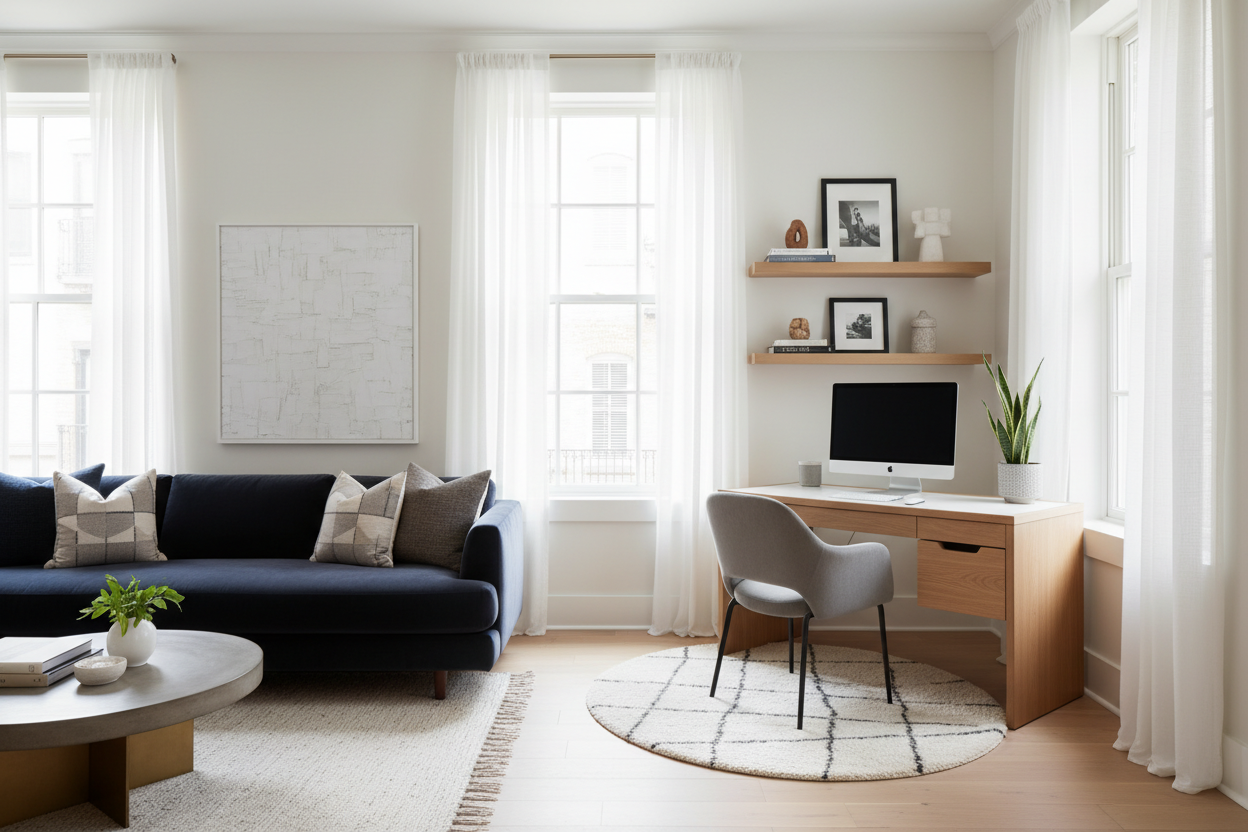
Integrating a workspace into your primary relaxation zone is one of the most delicate balancing acts in interior design. The challenge isn't just finding a desk that fits; it is ensuring the visual language of your productivity zone doesn't scream "work" while you are trying to unwind on the sofa. When executed correctly, a home office in corner of living room can actually enhance the architectural interest of the space rather than detracting from it.
Key Elements for a Cohesive Corner Office
- Visual Continuity: Ensure the desk material (e.g., walnut, oak, glass) matches or complements existing living room joinery.
- Scale and Proportion: Avoid bulky executive desks; opt for silhouettes that feel like residential furniture.
- Lighting Layering: Combine task lighting with the room's ambient light to prevent eye strain without creating a clinical atmosphere.
- Cable Management: In a shared living space, visible wires are the quickest way to degrade the aesthetic.
Mastering the Layout and Flow
The placement of your furniture dictates the energy of the room. When exploring office corner ideas home owners often default to pushing a desk against the wall. While this saves space, it often results in the "time-out" effect, where you stare at a blank wall while the life of the home happens behind you.
The Command Position
If square footage allows, consider floating the desk perpendicular to the wall or diagonally in the corner, facing out toward the room. This "command position" offers better sightlines and allows you to engage with the living space. However, this requires a desk with a finished back—veneered or painted—since it will be visible from the sofa.
Materiality and Furniture Selection
To successfully hide an office in corner of living room settings, treat the desk as a console table. Look for pieces with slender legs, interesting hardware, or stone tops. A heavy, melamine office desk will clash with soft furnishings.
For seating, bypass the massive ergonomic gaming chairs. Instead, select a high-quality task chair upholstered in boucle, velvet, or leather that mimics a lounge chair's aesthetic but hides ergonomic lumbar support within its structure.
Lighting: The Invisible Divider
Lighting creates zones without physical walls. A dedicated architectural floor lamp or a directional sconce can define the corner as a workspace. Ensure the color temperature of your task bulb matches the living room's ambient lighting (usually 2700K to 3000K) so the corner doesn't glow with a harsh, blue daylight hue in the evening.
Lessons from My Own Projects
I want to share a specific realization from a project I worked on in a Tribeca loft. We designed a beautiful custom home office in corner of living room with a floating desk. It looked stunning in the renderings. However, once we installed the computer, we hit a snag I rarely see mentioned in buying guides: the back of the monitor.
From the sofa, the client was staring directly at the ugly plastic venting and cable ports of the computer screen. It completely ruined the luxury vibe. We had to pivot quickly. I designed a small, fabric-wrapped divider screen (upholstered in the same linen as the drapes) to sit on the back of the desk. It hid the cables and the plastic monitor back, adding a soft texture that faced the living room. Now, when I consult on corner offices, I always check the "reverse view"—what does the desk look like from the couch?
Conclusion
Merging work and life requires intentionality. By prioritizing furniture-grade finishes, managing your sightlines, and controlling cable clutter, your corner office can feel like a curated vignette rather than a corporate intrusion. It is about making the utility beautiful.
Frequently Asked Questions
How do I hide my computer when guests come over?
If visual clutter is a major concern, consider a secretary desk (drop-front desk) or a custom millwork cabinet with pocket doors. This allows you to physically close off the workspace at the end of the day, signaling a mental transition from work to rest.
What is the minimum space needed for a corner office?
For a functional setup, you generally need a footprint of at least 48 inches by 36 inches. This accommodates a modest desk (42-48 inches wide) and allows enough clearance for the chair to roll back without hitting the living room rug or sofa.
Can I use a dining chair as a desk chair to save space?
While aesthetically pleasing, standard dining chairs lack the lumbar support and adjustability required for 8-hour workdays. If you must use a static chair, use a lumbar pillow and ensure the seat height allows your elbows to rest at a 90-degree angle to the desk surface.


Leave a comment
This site is protected by hCaptcha and the hCaptcha Privacy Policy and Terms of Service apply.