










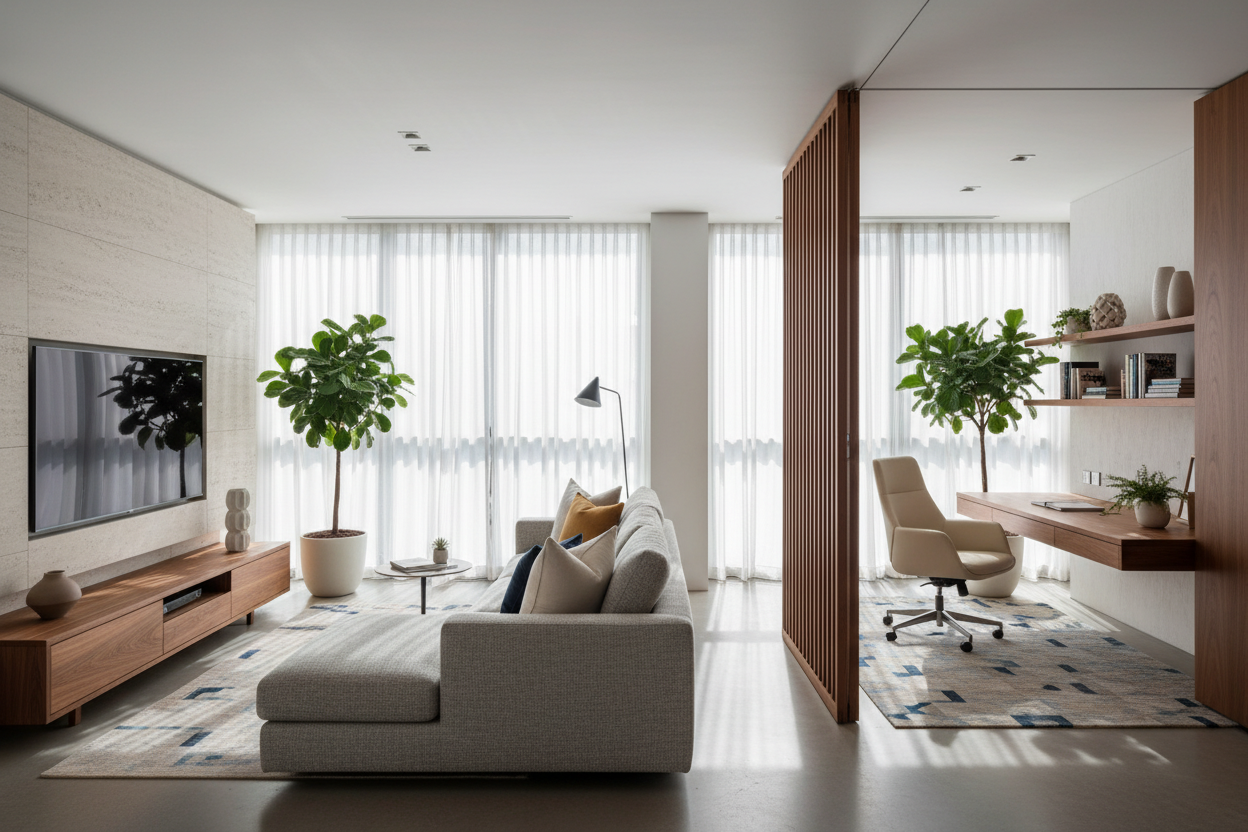
The modern home often demands that we do more with less square footage. The challenge isn't just squeezing a desk into a corner; it is creating a cohesive office family room combination that respects both the productivity required for work and the relaxation needed for leisure. Nothing kills the vibe of a movie night faster than the glaring LED standby light of a printer in your peripheral vision.
Key Features for a Successful Layout
- Visual Zoning: Establishing distinct areas using rugs, lighting, or furniture placement to separate "work" from "chill."
- Acoustic Control: Incorporating soft textiles (drapes, plush rugs) to dampen keyboard clatter and conference call echoes.
- Concealed Storage: prioritizing cabinetry that hides distinct office clutter like paperwork and cables.
- Multi-purpose Lighting: Layering task lighting for focus with warm ambient lighting for evening relaxation.
Mastering the Layout: Zoning Without Walls
When executing a living room and office combo design, the biggest error I see is pushing all furniture against the walls. This creates a "waiting room" effect. Instead, float your sofa to create a natural corridor. Placing a console table or a low bookshelf behind the sofa can act as a physical and psychological barrier between the entertainment zone and the workspace.
Ideally, orient the desk so you are not facing the television. Facing a window or into the room (command position) is superior for focus, provided you manage the glare. If the room is long and narrow, use the "back-to-back" layout where the sofa back faces the desk, effectively splitting the room in two distinct functional zones.
Furniture Selection: The "Anti-Office" Aesthetic
To maintain a high-end residential feel, avoid standard corporate furniture. An office family room combo requires pieces that speak the same design language as your coffee table and sofa.
The Desk
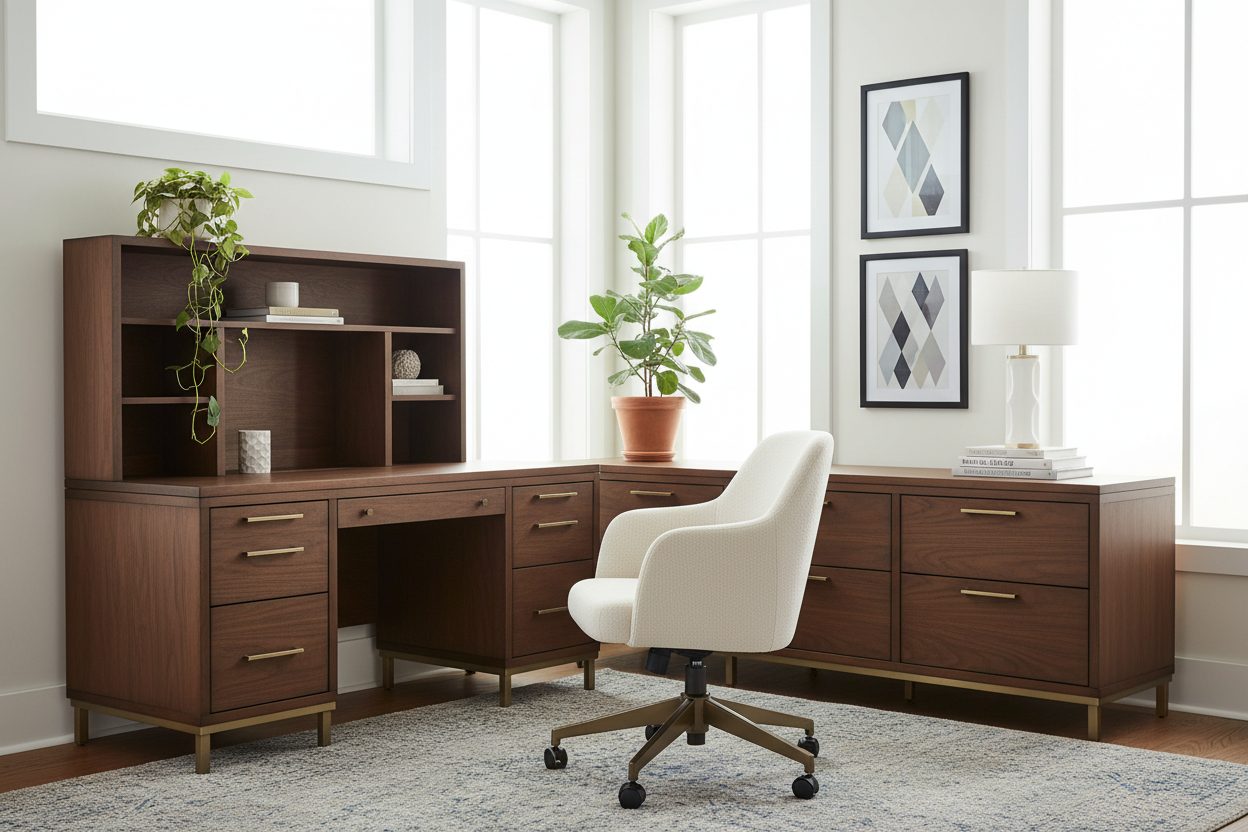
Look for writing desks with slender silhouettes or integrated joinery rather than bulky executive desks. Materials matter here. A solid walnut or white oak desk with a matte finish adds warmth and hides dust better than high-gloss lacquer or glass, which are fingerprint magnets. If you need storage, opt for a desk with built-in drawers to avoid the need for a separate, unsightly metal filing cabinet.
The Chair
This is where ergonomics meets aesthetics. A massive, black mesh high-back chair will ruin the visual balance of a cozy family room. Instead, source a mid-century modern task chair upholstered in performance velvet or leather. Ensure it has a tilt mechanism and lumbar support, but look for legs that mimic residential furniture finishes (wood or brushed brass) rather than standard black plastic castors.
Lighting: Transitioning from Day to Night
Lighting defines the mood. For the office area, a dedicated task lamp is non-negotiable. However, choose a fixture with a dimmer. When the workday ends, you want that lamp off or dimmed low to blend into the background. Avoid cool white bulbs (4000K+) in the ceiling fixtures, as they will make the family room feel sterile in the evening. Stick to 2700K or 3000K bulbs and rely on the focused task lamp for brightness during work hours.
My Personal Take on the Office Family Room Combination
I learned a hard lesson about this specific layout during a project for a client in a downtown loft. We selected a stunning, floating desk that looked incredible in the renderings. However, once installed, we realized we hadn't accounted for the visual chaos of cables. Because the desk floated in the center of the room, the power cords snaked across the floor, ruining the clean lines and creating a tripping hazard.
I had to retrofit a floor outlet and custom-wrap the cords in a leather sleeve to match the rug. It was a headache that taught me a valuable detail: never design a floating desk layout without a strict cable management plan. Now, I always check the underside of a desk before specifying it. If it doesn't have a dedicated channel or apron to hide a power strip, I won't use it in a family room setting. Seeing a tangle of wires while trying to relax on a Sunday is a subtle stressor you don't realize until it's gone.
Conclusion
Merging these two environments requires restraint and intentionality. By selecting furniture that disguises its utilitarian purpose and planning your layout to manage sightlines, your space can transition effortlessly from a powerhouse of productivity to a sanctuary of rest.
Frequently Asked Questions
How do I hide my computer monitor when I'm not working?
Consider a secretary desk or an armoire-style workstation where doors can close off the screen entirely. Alternatively, use a monitor on a high-quality arm that can be pushed flat against the wall or draped with a tailored fabric cover when not in use.
Can I fit an office in a small family room?
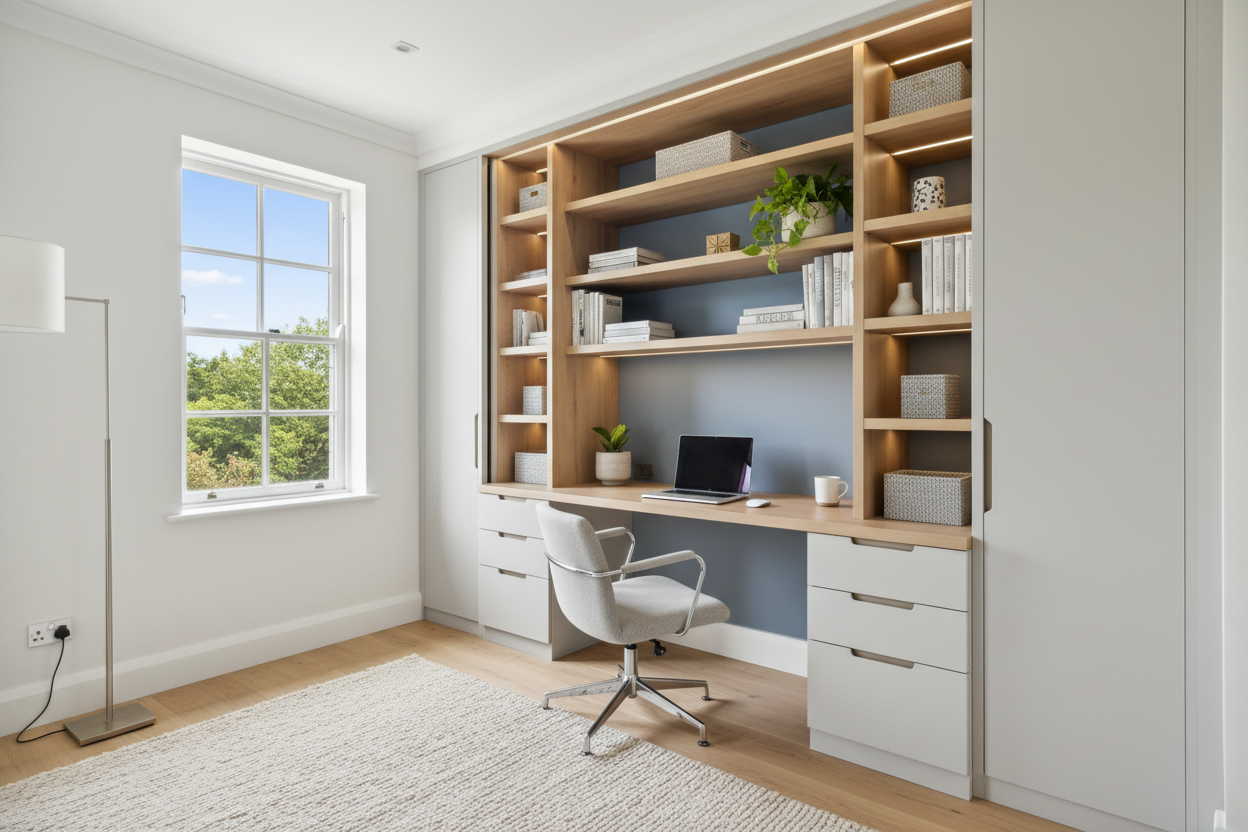
Yes. Utilize vertical space. A ladder desk or wall-mounted shelving unit with a drop-down desk surface minimizes the footprint. Ensure the chair can tuck fully under the desk surface to keep traffic paths clear.
What is the best rug strategy for this combo?
Use separate rugs to visually anchor each zone. However, ensure the chair's castors are compatible with the pile height. A low-pile or flatweave rug is essential for the office zone to allow smooth movement, while a plush high-pile rug works best for the family lounge area.

Leave a comment
This site is protected by hCaptcha and the hCaptcha Privacy Policy and Terms of Service apply.