










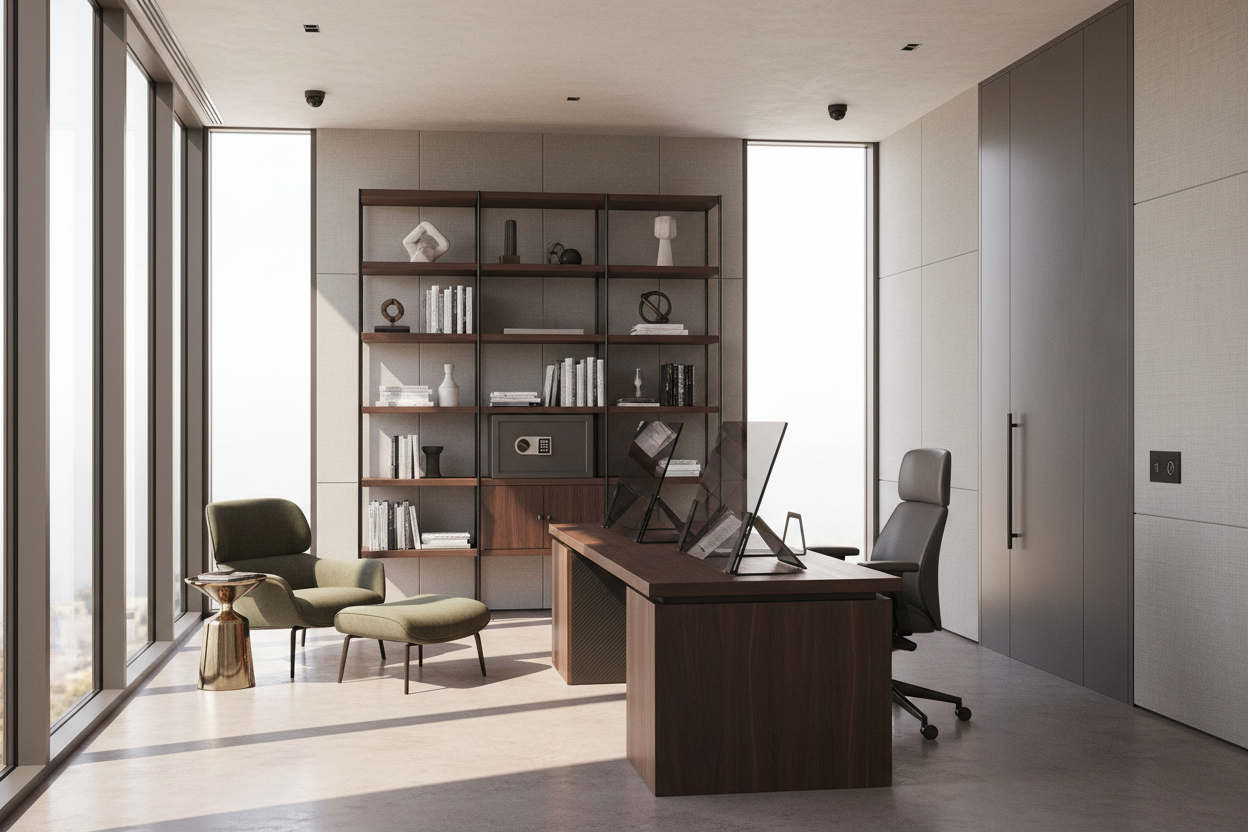
In the world of high-end residential design, we often obsess over ergonomic chairs and the perfect ambient lighting, yet we frequently overlook a critical layer of functionality: vulnerability. As remote work involves increasingly sensitive data, the concept of a secure home office has shifted from a luxury for executives to a necessity for many homeowners. The challenge, however, lies in creating a space that protects your physical and intellectual property without resembling a sterile bank vault or a panic room.
Key Features of a Secure Workspace
- Sightline Control: Positioning hardware away from windows to prevent screen snooping.
- Reinforced Joinery: Choosing solid wood cabinetry over hollow-core for locking drawers.
- Acoustic Privacy: Utilizing high-density materials to dampen sound and protect verbal confidentiality.
- Integrated Storage: concealed safes and locking mechanisms that blend seamlessly with the millwork.
Layout and Sightlines: The Command Position
Security begins with space planning. In design terms, we refer to the "Command Position"—placing your desk so you have a clear view of the door without being directly in line with it. However, for a secure setup, we must also consider exterior visibility. A common mistake is floating a desk directly in front of a ground-floor window. While the natural light is appealing, it exposes your monitors to anyone passing by.
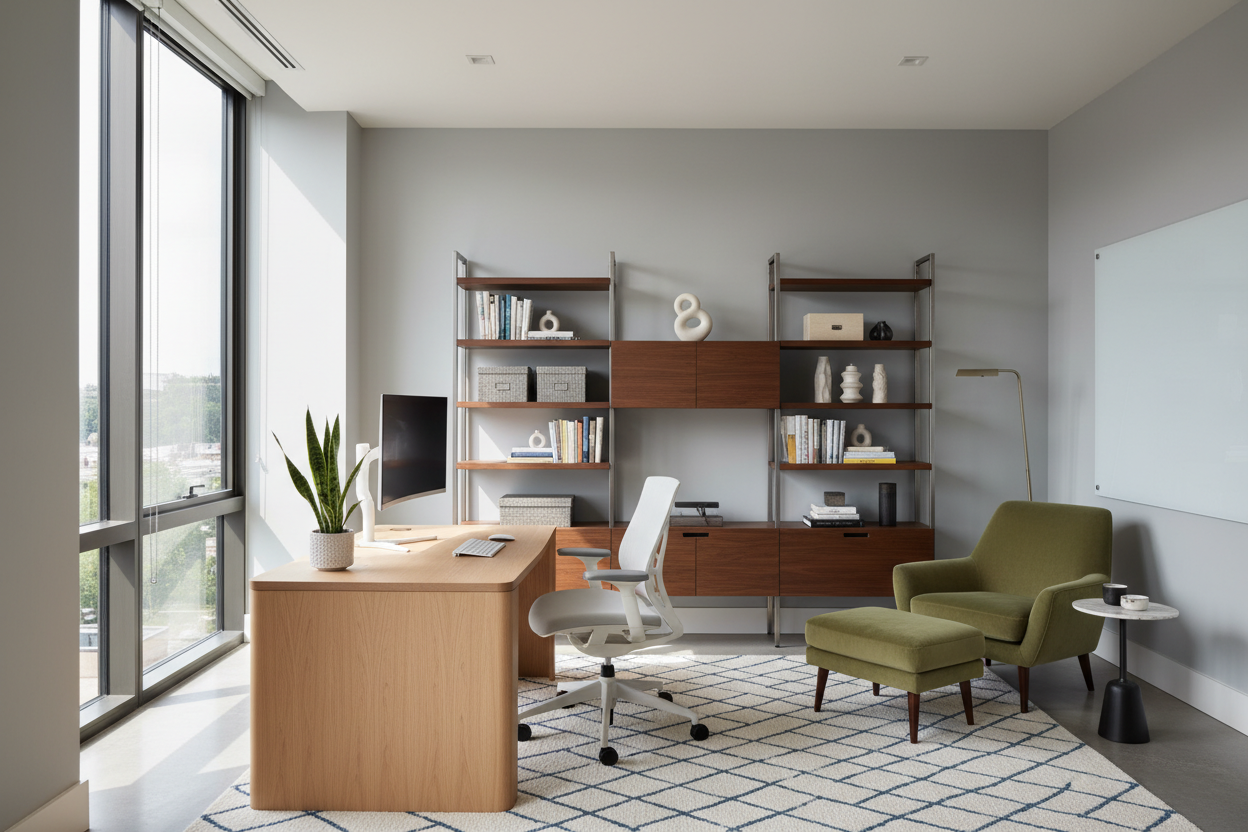
Instead, position the desk perpendicular to the window. This maintains access to daylight while keeping screens obscured. If direct window placement is unavoidable, invest in bottom-up shades or smart glass that frosts over with the touch of a button, allowing light in while blocking the view from the street.
Materiality: Why Solid Wood Matters
When selecting furniture for security, the substrate is just as important as the lock itself. Many mass-market desks use particle board with a veneer finish. While aesthetically pleasing, these materials offer zero resistance; a locked drawer in a particle board desk can be pried open with a simple screwdriver, often ripping the screws right out of the composite material.
For true security, I advise clients to invest in solid hardwoods like oak, walnut, or mahogany for their primary cabinetry. Solid wood provides the structural integrity required to anchor heavy-duty locking mechanisms. Furthermore, the visual weight of these materials adds a sense of permanence and authority to the room, grounding the design.
Acoustic Security and Soft Furnishings
Security isn't just visual; it is auditory. If you are discussing sensitive contracts or patient data, thin drywall is a liability. While tearing down walls to add mass-loaded vinyl isn't always an option, you can manipulate the room's acoustics through decor.
Hard surfaces bounce sound, making conversations audible in adjacent rooms. To mitigate this, introduce plush textures. Heavy velvet drapery, thick wool rugs, and upholstered wall panels not only elevate the aesthetic to a library-like sophistication but also absorb sound waves. For a modern look, consider felt acoustic baffles that double as art installations.
My Personal Take on Secure Home Office Design
I learned a valuable lesson about secure furniture early in my career while designing a study for a client in finance. We installed a beautiful, custom-built credenza intended to house a heavy, fireproof document safe. On paper, the dimensions were perfect.
However, six months later, I visited the site and noticed the bottom joinery was bowing, and the cabinet door dragged across the hardwood floor every time it opened. We hadn't accounted for the sheer point-load weight of the safe combined with the torque of the door swing. It ruined the clean lines of the piece.
Now, whenever I design a secure space, I insist on reinforced sub-flooring inside the cabinetry and heavy-duty, ball-bearing hinges that are rated for double the expected weight. It’s a detail you will never see on Instagram, but it ensures the furniture functions smoothly and keeps your valuables secure without destroying the piece over time.
Conclusion
Creating a secure workspace doesn't require sacrificing your personal style. By prioritizing solid materials, thoughtful layouts, and acoustic dampening, you can build a sanctuary that protects your work while inspiring your best performance. It is about making safety feel effortless and integrated.
Frequently Asked Questions
What is the best type of door for a secure home office?
Always opt for a solid-core door rather than a hollow-core one. Solid-core doors offer significantly better soundproofing and are much more difficult to breach. Pair this with a commercial-grade deadbolt or a smart lock for enhanced control.
How can I hide a safe in my office without it looking bulky?
The best approach is to integrate it into custom millwork. We often place safes inside lower cabinets disguised as standard drawers or behind a false panel in a bookshelf. Ensure the joinery is reinforced to handle the weight.
Is it worth buying a desk with built-in biometric locks?
While convenient, built-in tech can become obsolete quickly. I generally recommend high-quality traditional furniture with standard locking mechanisms, or retrofitting high-end cabinetry with hidden magnetic locks, which are easier to replace if the technology fails.

Leave a comment
This site is protected by hCaptcha and the hCaptcha Privacy Policy and Terms of Service apply.