










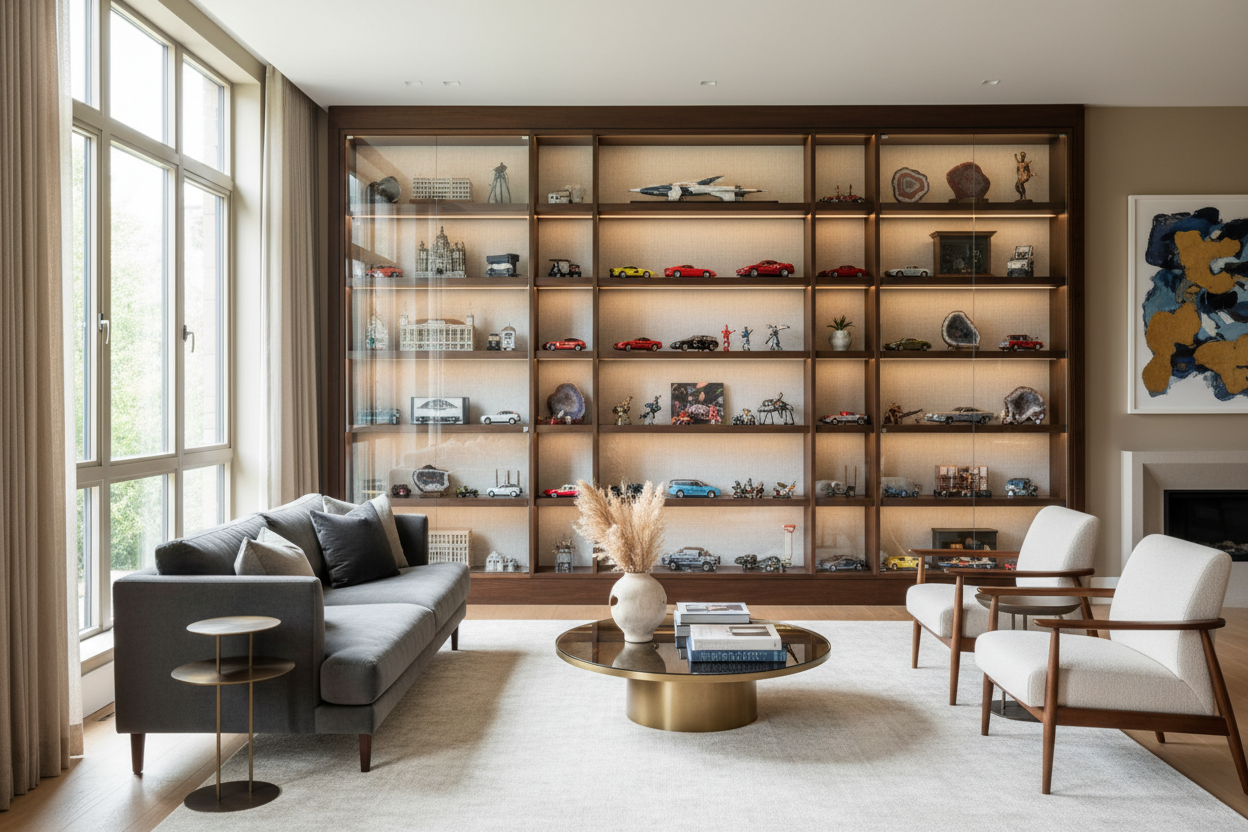
We all have that one client—or maybe it is you—who has spent hundreds of hours meticulously assembling a scale replica, only to let it gather dust on an open bookshelf. Finding the right display cabinet for models is notoriously tricky. If you go too cheap, your living room ends up looking like a retail stockroom. If you ignore scale, a bulky piece of furniture can completely overwhelm your space.
Whether you collect die-cast cars, architectural builds, or intricate ships, the goal is to integrate your passion into your home seamlessly. By the end of this guide, you will know exactly how to choose a piece that protects your investment while maintaining a sophisticated, curated aesthetic.
Quick Decision Guide
- Check the depth first: Standard bookcases are 11 to 12 inches deep, which is rarely enough for larger pieces. Look for a minimum depth of 15 inches.
- Prioritize dust sealing: Frameless glass doors look modern but allow dust in through the gaps. Seek out designs with brush seals or overlapping frames.
- Mind the shelf weight capacity: Tempered glass shelves are beautiful but have strict weight limits. Always verify the load capacity before placing heavy die-cast metal pieces.
- Integrated lighting is crucial: Overhead room lighting creates harsh shadows. Opt for cabinets with built-in, adjustable LED lighting to highlight the details.
Choosing the Right Materials
Glass vs. Acrylic Fronts
When selecting a model display cabinet, the clear panels dictate both the look and the longevity of the piece. Tempered glass is the gold standard for North American homes. It resists scratching during routine cleaning and provides superior clarity. Acrylic, while lighter and shatter-resistant, is highly prone to micro-scratches and holds static electricity, which ironically attracts more dust to your models.
Wood vs. Metal Frames
The frame material determines how the cabinet interacts with your room's existing decor. A sleek, powder-coated steel frame offers a minimalist, industrial vibe that recedes into the background, letting the model displays take center stage. On the other hand, a solid walnut or white oak frame adds warmth and visual weight, making the cabinet feel like a deliberate piece of heirloom furniture rather than an afterthought.
Nailing the Scale and Placement
Managing Visual Weight
A tall, glass-front cabinet full of intricate replicas carries a massive amount of visual weight. To prevent the room from feeling lopsided, you need to balance it. If you place a heavy, dark-wood cabinet on the left side of your living room, balance it with an equally weighty element on the right—like a large fireplace, a substantial armchair, or a dark-painted accent wall. Always leave at least 36 inches of clearance in front of the cabinet doors so guests can easily view the collection without feeling cramped.
Lessons from My Own Projects
A few years ago, I worked with a client in a Chicago loft who had a massive, highly detailed Lego Millennium Falcon. He bought a generic, big-box store glass cabinet to house it. Within three months, the MDF shelves had noticeably bowed under the weight, and the gaps between the sliding glass doors let in so much city dust that the model looked gray.
I learned the hard way that standard display cases are built for lightweight porcelain, not heavy, complex models. We ended up replacing it with a custom-depth, steel-framed cabinet featuring heavy-duty tempered glass shelves and silicone dust seals along the door tracks. The downside? It cost three times as much as his original purchase. But the peace of mind—and the fact that he only has to dust once a year now—made it worth the investment.
Frequently Asked Questions
How do I keep dust out of my display cabinet?
Look for cabinets with overlapping doors or brush-seal weatherstripping along the edges. If you already own a cabinet with gaps, you can buy clear silicone weatherstripping tape online and apply it to the inner edges of the doors to create a highly effective barrier.
What depth do I need for a model cabinet?
It completely depends on your collection, but as a general rule, 15 to 18 inches of depth handles most 1:18 scale cars, architectural builds, and medium-sized ships. Always measure your largest model and add two inches of breathing room on all sides.
Are LED lights safe for models?
Yes, LED lights are the safest option. Unlike halogen or incandescent bulbs, LEDs do not emit UV rays or significant heat, which means they will not melt plastic components or cause paint and decals to fade over time.


Leave a comment
This site is protected by hCaptcha and the hCaptcha Privacy Policy and Terms of Service apply.