










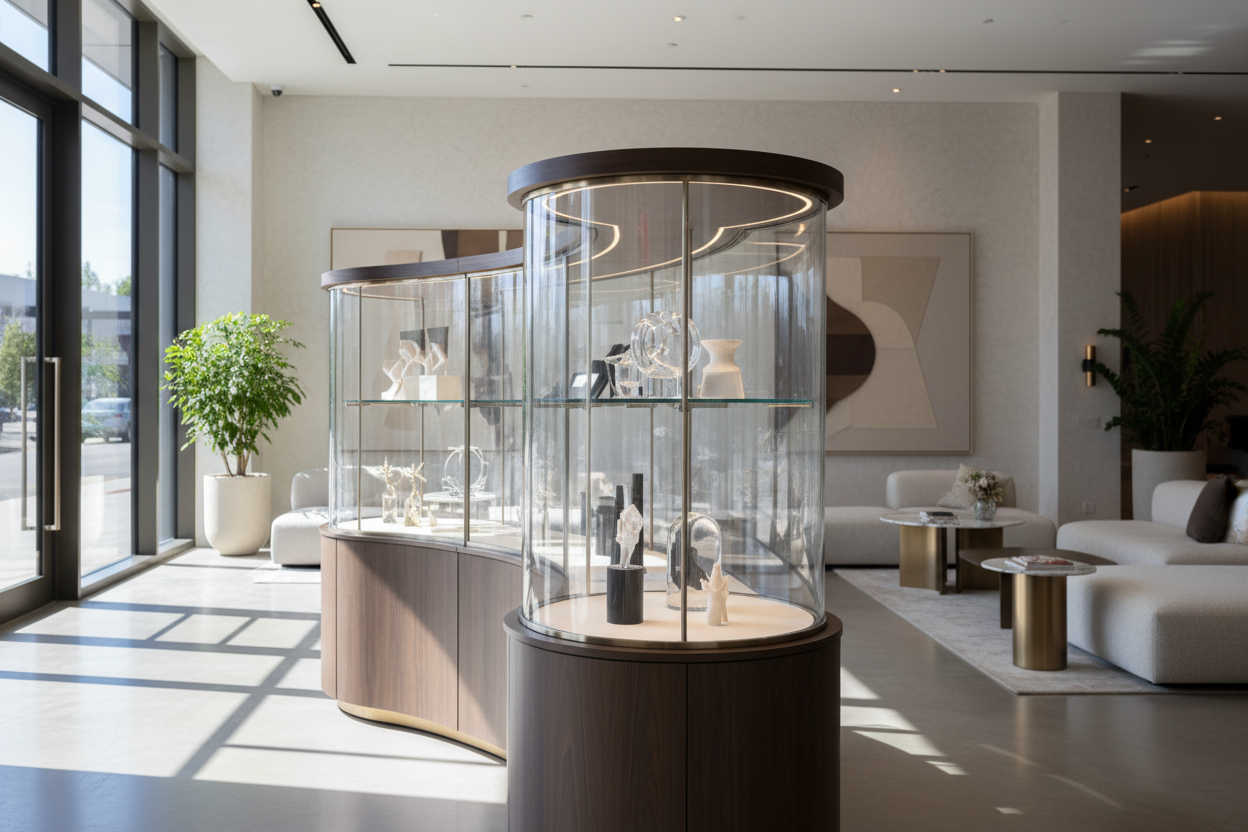
Have you ever walked into a boutique where the merchandise felt chaotic, almost like an unorganized closet rather than a curated collection? The difference between a high-end shopping experience and a cluttered room often comes down to how items are framed. When sourcing a display cabinet for store environments, the stakes are remarkably different than buying for a residential dining room. You aren't just storing items; you are actively directing a customer's eye, establishing perceived value, and managing foot traffic.
By the end of this guide, you will know exactly how to evaluate retail casework for durability, visual weight, and layout efficiency.
Quick Decision Guide
- Prioritize tempered glass: Standard glass is a liability in commercial spaces; always verify the glass is tempered for safety and durability.
- Check the lighting color temperature: Jewelry requires cool lighting (4000K+), while leather goods and textiles look richer under warm light (3000K).
- Account for door swing: Sliding doors save aisle space, whereas hinged doors require an extra 24 to 36 inches of clearance.
- Demand commercial-grade hardware: Residential hinges will sag under the stress of being opened fifty times a day by staff.
Material & Build Quality: Surviving the Retail Floor
Retail environments are punishing on furniture. A piece that holds up perfectly in a quiet suburban living room will often show severe wear after just one holiday season in a shop.
The Glass and Frame Equation
When evaluating display cabinets for shops, the frame material dictates the visual silhouette, but the glass dictates the safety. Solid hardwoods like white oak or walnut offer a warm, bespoke feel for boutique environments, but they require regular oiling to hide scuffs from shopping bags and strollers. Powder-coated steel frames provide a slimmer profile and handle abuse significantly better.
Regardless of the frame, insist on heavy-duty tempered glass. It resists the daily tapping of rings and keys, and if it breaks, it shatters into dull cubes rather than dangerous shards.
Space Planning & Visual Layout
A beautiful cabinet placed poorly will choke your floor plan. Retail design relies heavily on negative space and intuitive navigation.
Clearances and Customer Flow
In North American commercial spaces, accessibility is non-negotiable. You need a minimum of 36 inches of clearance around any freestanding fixture, but 42 to 48 inches is ideal for main aisles to allow two customers to pass comfortably. If you are visiting a display cabinet store to test floor models, pay attention to the base. Plinth bases feel grounded and heavy, which anchors a large room, while cabinets on legs create a sense of lightness and allow the floor material to flow underneath, making tight retail spaces feel larger.
Designer's Honest Take
I learned a hard lesson about commercial casework a few years ago while designing a high-end ceramics boutique in Toronto. I specified a stunning, matte-black steel cabinet with integrated LED shelving. It looked incredible on the rendering. What I didn't account for was the reality of dust and fingerprints.
The matte finish acted like a magnet for natural oils, and the stark internal lighting highlighted every single speck of dust on the dark metal shelves. The shop staff had to wipe it down three times a day just to keep it looking presentable. Since then, I always specify lighter, satin-finish interiors for high-touch retail areas, and I never use un-diffused strip lighting where customers can see the individual LED diodes. It breaks the illusion of luxury.
Frequently Asked Questions
What type of lighting is best for a retail display cabinet?
Integrated LED channel lighting with a frosted diffuser is the industry standard. It prevents harsh shadows and keeps the internal temperature low, which is crucial if you are displaying cosmetics, food, or delicate textiles.
How do I secure high-value items without making the cabinet look like a safe?
Look for cabinets with concealed plunger locks built into the bottom track of sliding doors. This keeps the locking mechanism out of the customer's direct line of sight while maintaining strict security for your merchandise.
Can I use residential cabinets in a commercial store?
Technically yes, but it is rarely a good idea. Residential hinges and drawer glides are not rated for the high-frequency use of a retail environment, and standard glass shelving poses a significant liability risk if a customer leans on it heavily.

Leave a comment
This site is protected by hCaptcha and the hCaptcha Privacy Policy and Terms of Service apply.