










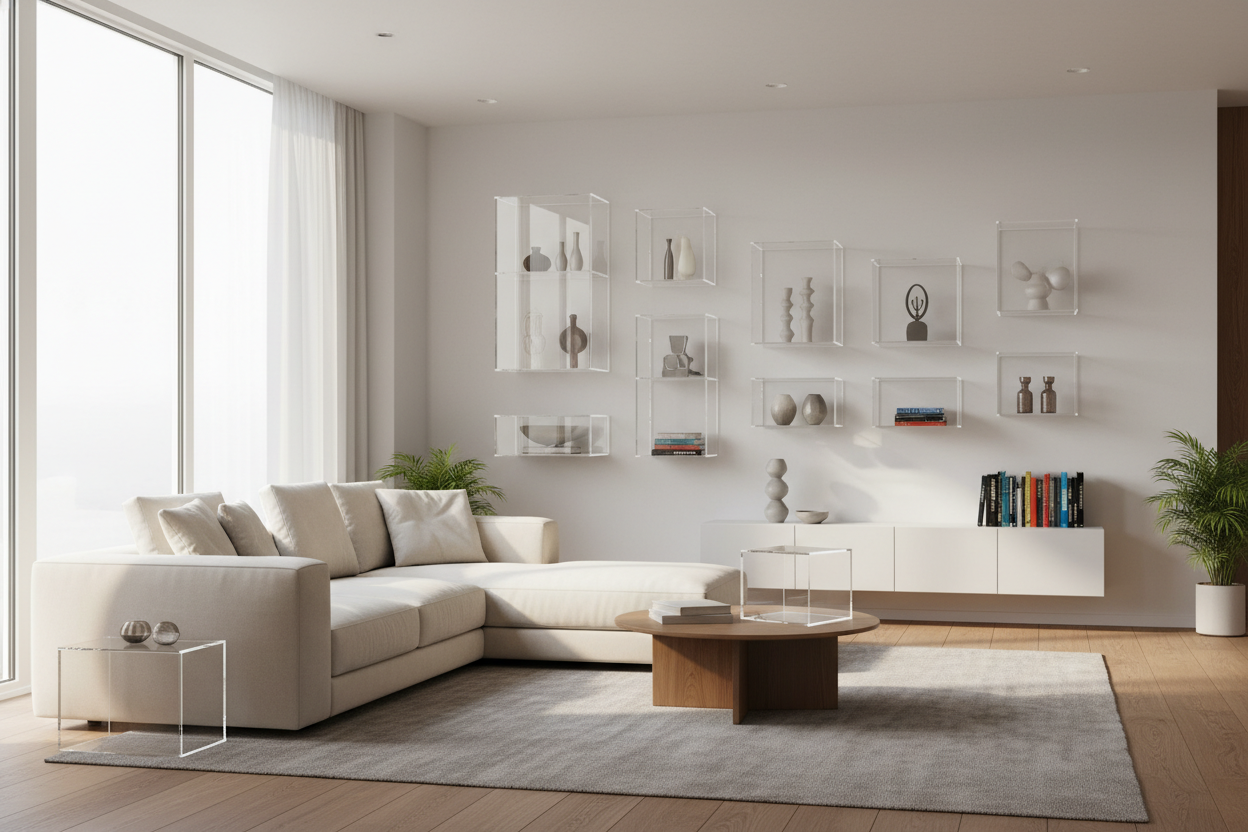
I spent three hours trying to shimmy a heavy glass cabinet through a narrow hallway in my third-floor walk-up. By the time I hit the second landing, I was sweating, my fingers were cramping, and I was genuinely afraid the whole thing would explode into a million shards if I bumped the banister. It was the moment I realized my loyalty to traditional materials was actually a massive pain in the neck.
I used to be a total snob about clear plastic display cases. I thought they looked like something you would find in a dusty hobby shop or a clearance shoe rack. But after that move, I started looking into high-quality acrylic, and I have never looked back. My security deposit—and my lower back—are much happier for it.
- Weight: Acrylic is about half the weight of glass, making it actually portable for renters.
- Safety: It is shatter-resistant, which is a must if you have pets or toddlers running around.
- Clarity: High-end plastic lacks the green tint found in the edges of standard tempered glass.
- Cost: You get a museum-gallery look for a fraction of the custom-glass price.
The Day I Finally Gave Up on Heavy Glass
It was 2 PM on a Tuesday, and I was stuck on a stairwell landing with a traditional tall curio cabinet that felt like it was made of solid lead. Every time the dolly tipped, I heard the glass panes rattle, and I could practically feel my heart rate spiking. That cabinet weighed nearly 150 pounds empty. Why was I killing myself to move a box that was supposed to hold things that weighed next to nothing?
That was the turning point. I realized that an empty display case shouldn't be a piece of workout equipment. I wanted the look of a museum—clean lines, invisible borders—but I did not want the logistical nightmare of tempered glass. I started researching alternatives that would not require a four-man moving crew every time I wanted to rearrange my living room.
The transition was not immediate. I had to get over my own ego first. I associated plastic with cheap toy boxes. But once I saw a high-quality acrylic case in person, the difference was night and day. It was not just lighter; it actually looked better in my space because it did not have the bulky wooden frames required to keep heavy glass stable and upright.
The 'Cheap Mall Vibe' Myth (And Why It's Dead)
We have all seen those flimsy plastic bins at the mall that are covered in scratches and fingerprints. That is the image most people have when they hear the word plastic. But furniture-grade acrylic is a completely different beast. When I tested glass vs acrylic options, the first thing I noticed was the edge color.
Standard glass has a distinct green tint because of the iron content. When you look through it, your collectibles are slightly color-distorted. A high-quality see through display case made of acrylic is optically superior. It is actually clearer than glass. It allows more light to pass through, which means your items look more vibrant and true-to-life. It does not scream plastic; it whispers invisible.
Manufacturing has come a long way. We are not talking about molded plastic with rough seams. Modern cases are laser-cut and hand-polished. The clarity is so high that you will likely find yourself accidentally bumping into it because you forgot the wall was there. It is about the material density—high-grade acrylic feels substantial and looks expensive because it does not warp or distort the light like the cheap stuff does.
What Makes a Plastic Case Look High-End?
If you want to avoid the college dorm aesthetic, you have to be picky about the specs. Start with the thickness. If the walls are only 2mm or 3mm thick, the case will flex and look cheap. I always look for at least 4mm or 5mm. That extra thickness gives the edges a beautiful, polished glow that mimics the look of high-end crystal.
Seamless joints are the next big factor. A flat acrylic display case that uses museum-grade bonding looks like a single, solid object. Avoid the kits that snap together with little plastic tabs—those are for the garage, not the living room. You want clean, 90-degree angles where the adhesive is completely clear, leaving no bubbles or silvering in the joints.
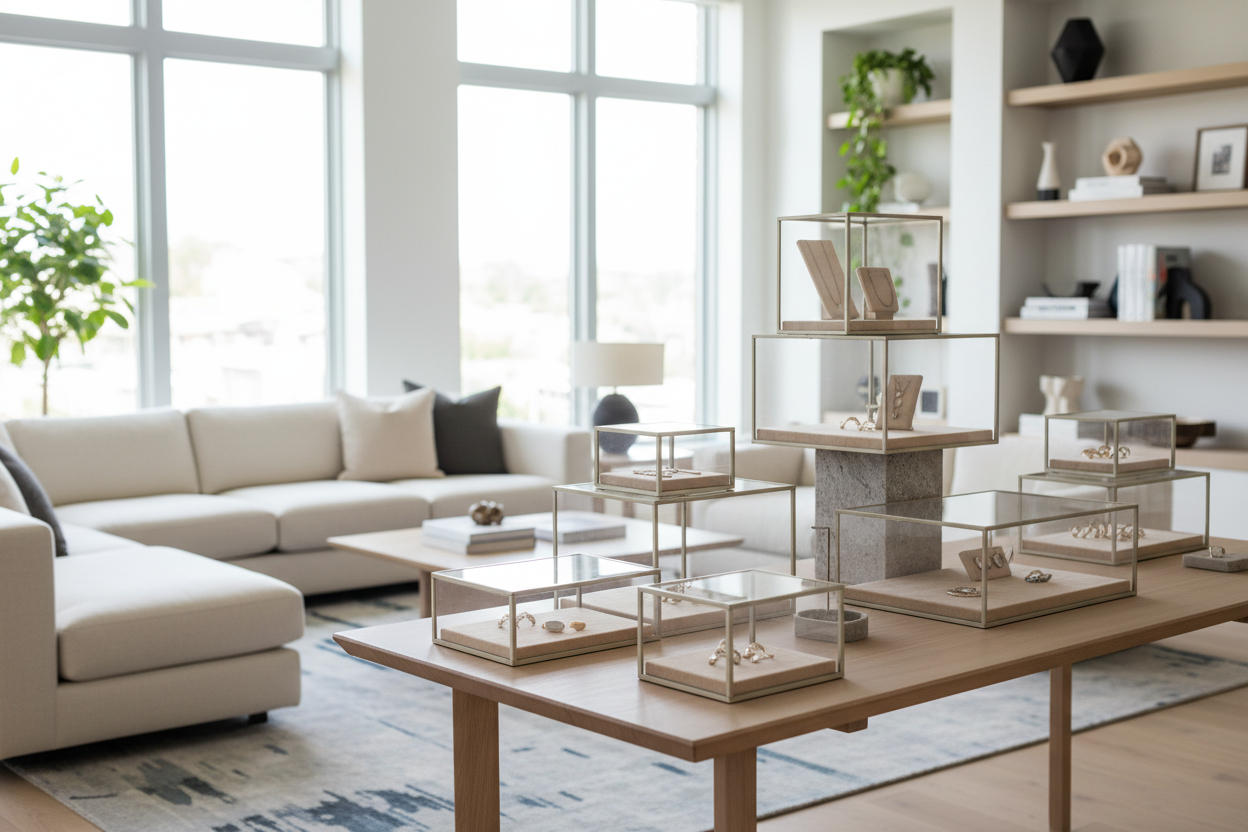
The base is where you can really sell the look. A clear case sitting on a solid walnut or matte black base looks like a custom commission. I am also a big fan of display cases with integrated lighting. When you add a slim LED strip to the top or bottom, the light catches the polished edges of the acrylic and creates a halo effect that makes whatever is inside look like a million bucks. It is a simple trick that separates the pros from the amateurs.
How to Style Them Without Looking Like a Toy Store
The biggest mistake people make with clear cases is overfilling them. Just because you have the space does not mean you should use all of it. In a clear case, the nothingness is just as important as the objects. Use negative space to your advantage. If you are displaying a collection of vintage cameras or ceramics, group them in odd numbers and leave a few inches of breathing room between them.
Think about the flow of the room. Because these cases are transparent, they do not block the visual weight of a space. This makes them perfect for awkward spots. I love using a dedicated corner display case to fill those weird gaps next to a window or behind a door. It utilizes the space without making the room feel smaller or more cluttered.
Try to keep a consistent color palette inside the case. If you have a rainbow of items, it can start to look chaotic. By grouping items by color or material—like all white porcelain or all brass accents—the case feels like a curated exhibition. You want people to notice the art, not the container. The clear plastic acts as a silent stage hand, doing all the work while staying out of the spotlight.
The Final Verdict: When to Ditch Glass for Good
I am officially a convert. Unless you are buying a 200-year-old antique, there is very little reason to choose heavy glass over modern acrylic. For renters who move every year, the weight savings alone are worth it. For parents, the peace of mind knowing a stray ball will not result in a trip to the ER is priceless.
Clear plastic cases offer a level of versatility that traditional furniture just cannot match. They disappear when you want them to and highlight your favorite things without adding bulk to your home. If you prioritize clarity, safety, and your own sanity during a move, it is time to stop being a glass snob and embrace the clear alternative.
Do they scratch easily?
If you use a rough paper towel or Windex, yes. Use a dedicated acrylic cleaner and a fresh microfiber cloth. Treat it like the lens of a pair of expensive sunglasses and it will stay crystal clear for years.
Will it turn yellow over time?
Not if it is high-quality acrylic. Cheap PVC or low-grade plastics yellow because of UV exposure. Modern acrylic used for furniture is UV-stable, meaning it stays clear even in a sunny living room.
Can it hold heavy items?
Most can, but check the shelf rating. A 5mm thick acrylic shelf is incredibly strong. If you are displaying heavy bronze statues, look for a case with reinforced joints rather than a snap-together kit.


Leave a comment
This site is protected by hCaptcha and the hCaptcha Privacy Policy and Terms of Service apply.