










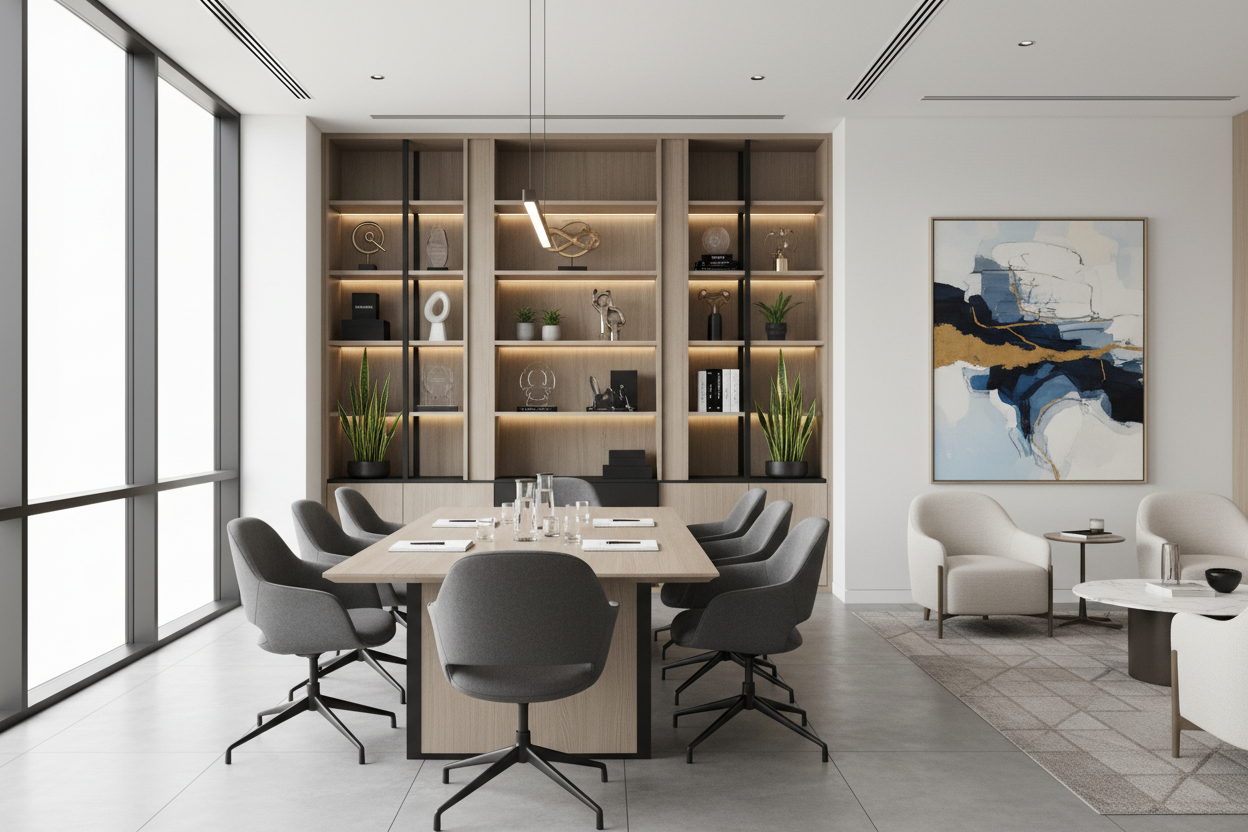
Walking into a workspace that feels sterile or chaotic doesn't just lower employee morale; it sends the wrong message to your clients. The environment you cultivate is a direct reflection of your company culture and competence. Whether you are refreshing a reception area or overhauling an executive suite, strategic business office decor is about balancing visual impact with rigorous functionality.
Key Features to Look For
Before selecting finishes or furniture, consider these core elements to ensure your design investment yields long-term value:
- Commercial Durability: Look for high Martindale rub counts on upholstery and scratch-resistant laminates or sealed hardwoods for surfaces.
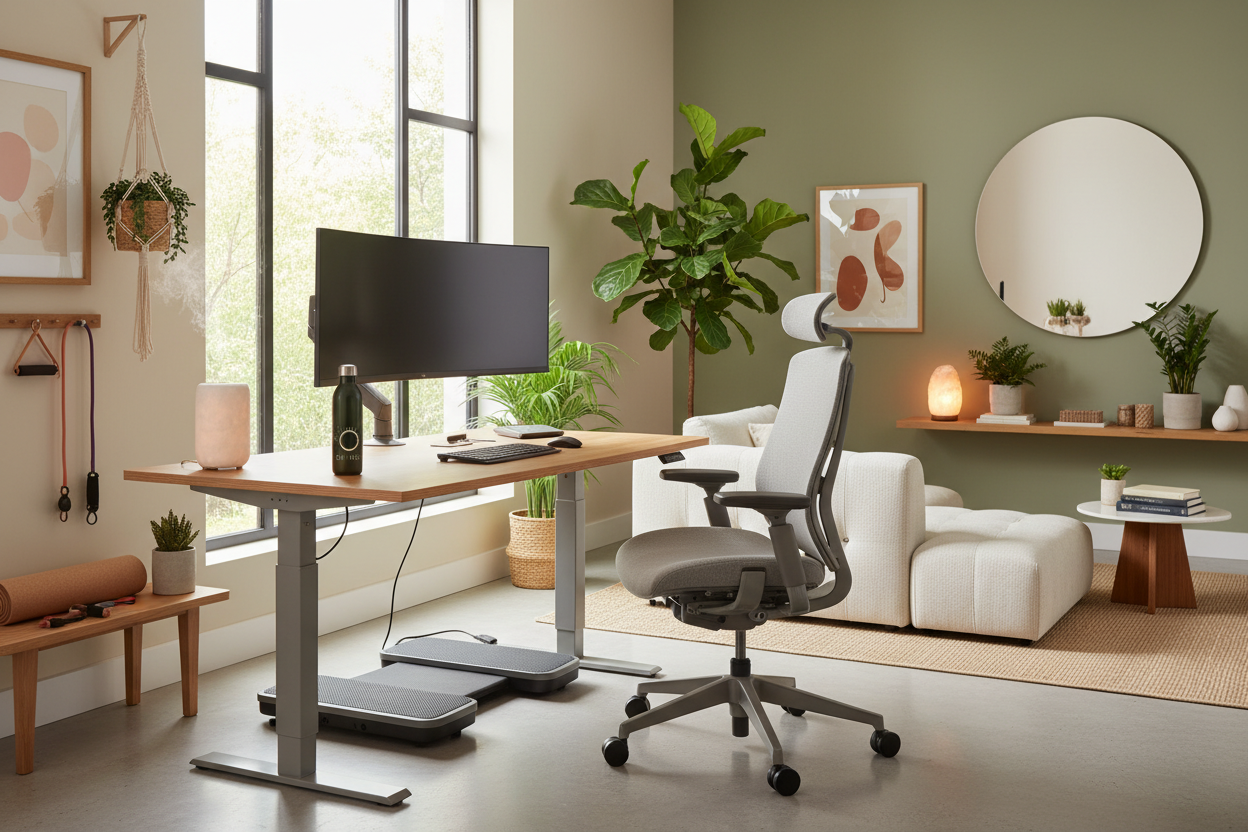
- Ergonomic Integrity: Prioritize seating with lumbar support and adjustable height mechanisms to support long work hours.
- Lighting Layers: Combine ambient overhead lighting with task lighting to reduce eye strain and create atmosphere.
- Acoustic Management: Incorporate rugs, acoustic panels, or soft furnishings to dampen noise in open layouts.
- Brand Alignment: Ensure color palettes and design motifs reflect your corporate identity subtly.
Defining Your Professional Aesthetic
When generating professional office office decor ideas, avoid the trap of following residential trends too closely. A business environment requires a distinct level of polish. Start by analyzing your brand's voice. A tech startup might benefit from industrial accents, exposed ductwork, and vibrant colors, while a legal firm usually requires the gravitas of dark woods, leather accents, and subdued hues.
The goal is to create a narrative. Your reception desk is the prologue; the conference room is the climax. Use texture to convey quality—think brushed brass hardware or walnut veneers—rather than relying solely on bright colors which can date quickly.
Furniture Selection: Materiality Matters
As you decorate business office interiors, the materials you choose dictate the longevity of the design. In high-traffic zones, solid wood is beautiful but susceptible to humidity changes and water rings. High-pressure laminate (HPL) or thermally fused laminate (TFL) often mimics the grain of wood perfectly but offers superior resistance to impact and stains.
Seating and Textiles
For upholstery, I always advise clients to look beyond aesthetics. Performance fabrics like Crypton or commercial-grade vinyls are essential for business office ideas decorating. They resist spills and are easy to sanitize, which is non-negotiable in shared spaces. If you opt for leather, ensure it is top-grain; bonded leather will peel within a year of daily use.
Mastering Layouts and Large Spaces
Handling large office decor presents a unique challenge: the "sea of desks" effect. To combat this, introduce zoning. Use open shelving units or tall planters as physical dividers that break up sightlines without blocking light. This creates micro-environments within the larger floor plan, offering privacy and reducing visual noise.
Scale is critical here. A common mistake when decorating business office spaces is undersizing the artwork or rugs. In a large conference room, a small rug looks like a postage stamp. Ensure your area rugs extend at least 24 inches beyond the table perimeter to accommodate chair movement.
My Personal Take on Business Office Decor
I once worked on a project for a boutique financial firm where the client was dead-set on high-gloss, glass-topped desks for a sleek, modern look. It looked incredible in the renderings. However, two weeks after installation, I received a call. The issue wasn't the style—it was the maintenance and the wire management.
Every fingerprint showed up under the overhead lights, and because the desks were transparent, the tangle of computer cables underneath looked chaotic, completely ruining the "clean" aesthetic. We ended up having to retrofit expensive modesty panels and cable trays to hide the mess. Since then, I always warn clients: if you want glass, you need a rigorous cleaning schedule and a wireless setup. For most businesses, a matte finish with integrated grommets is the only way to maintain a truly professional look day in and day out.
Conclusion
Investing in high-quality office design is an investment in your workflow and brand perception. By prioritizing durable materials, appropriate scale, and ergonomic comfort, you create a space that empowers your team to perform their best. Don't settle for generic; curate a space that works as hard as you do.
Frequently Asked Questions
How do I budget for business office decor?
A good rule of thumb is to allocate 50% of your budget to furniture (desks and ergonomic chairs), 30% to lighting and technology integration, and 20% to accessories and art. Never skimp on the chairs; your employees' health depends on them.
What are the best plants for low-light offices?
If your office lacks natural light, opt for ZZ plants, Snake plants (Sansevieria), or Pothos. These are incredibly resilient, require minimal watering, and add necessary biophilic elements to soften the corporate edge.
How can I make a small office feel larger?
Utilize vertical space with floor-to-ceiling shelving and use glass partitions instead of solid walls to allow light to travel. Keep the color palette monochromatic to reduce visual clutter.

Leave a comment
This site is protected by hCaptcha and the hCaptcha Privacy Policy and Terms of Service apply.