










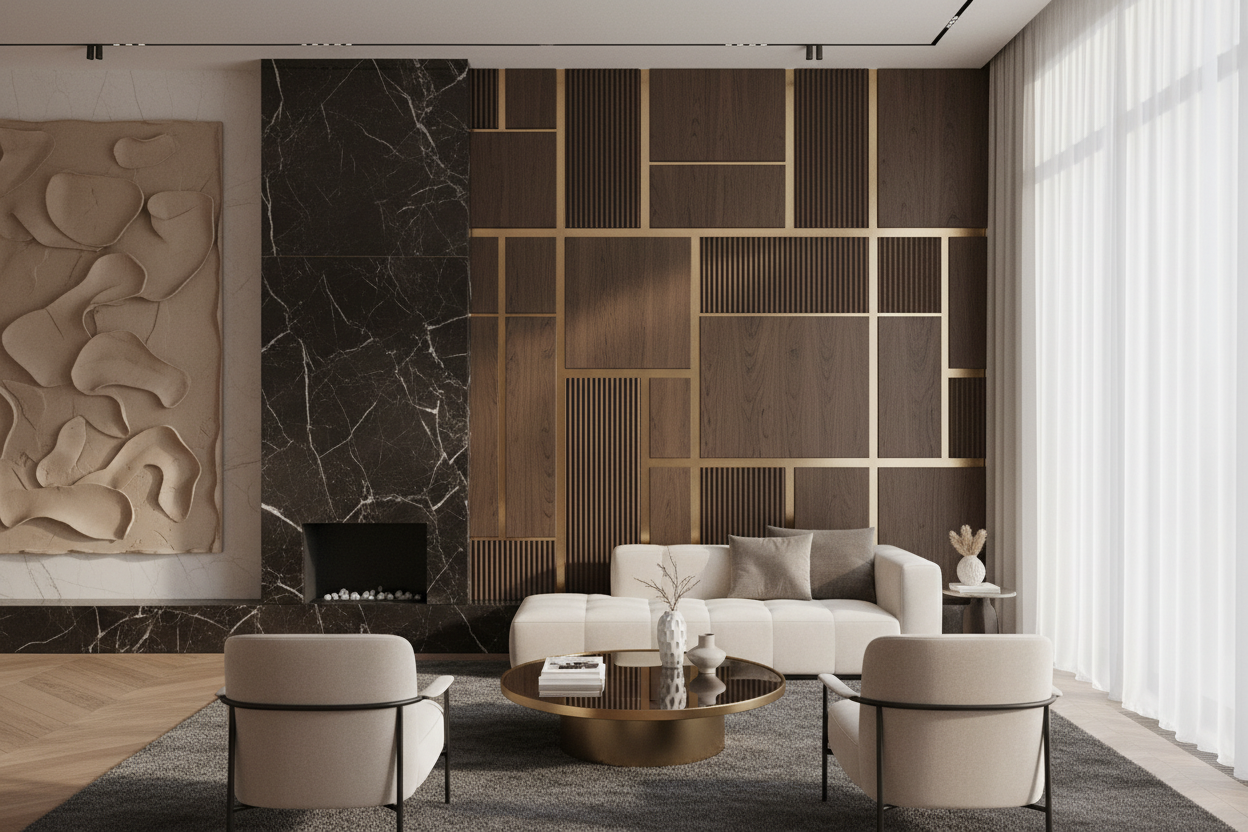
We often treat walls as mere boundaries—flat surfaces waiting for a coat of paint or a lonely gallery frame. As a designer, I see this as a missed opportunity to alter the architectural weight of a room. The right treatment transforms a static partition into a dynamic focal point that anchors your furniture. Whether you are framing a sofa or creating a backdrop for a media unit, exploring structural background wall ideas is the most effective way to introduce depth and character into a home.
Key Elements of a Statement Wall
- Materiality: Prioritize tactile surfaces like fluted wood, stone veneers, or upholstered panels over flat paint.
- Lighting Integration: Plan for LED channels or grazing lights to highlight textures; shadows create the drama.
- Scale & Proportion: Ensure the design extends floor-to-ceiling to heighten the room, rather than stopping mid-wall.
- Acoustics: Consider soft materials (fabric, felt, cork) in media rooms to dampen sound reflection.
- Maintenance: Evaluate the cleanability of deep textures versus smooth finishes in high-traffic zones.
Choosing the Right Material: Beyond Drywall
When clients ask for luxury wall background ideas, I steer them away from 2D solutions like wallpaper and toward architectural cladding. The goal is to add physical layers to the space.
Wood Slats and Millwork
Vertical wood slats or tambour panels are staples in modern design for a reason: they add rhythm. However, the quality of the veneer matters. Solid wood offers longevity but reacts to humidity; high-grade MDF with a real wood veneer is often more stable for large spans. Look for "acoustic backing" felt between slats—this creates a blackout effect behind the wood, hiding the drywall and improving sound quality.
Stone and Porcelain Slabs
For a cooler, more monumental aesthetic, large-format porcelain slabs that mimic marble or travertine are superior to traditional tile. By minimizing grout lines, you achieve a seamless, monolithic look. This works exceptionally well behind a TV console or a fireplace, providing a heat-resistant and durable surface that anchors the room's visual weight.
Lighting: The Invisible Material
You cannot invest in a textured background wall without addressing lighting. Texture requires light to exist visually. If you install 3D panels or rough-split stone, you must use "grazing" light—fixtures placed close to the wall aiming down. This catches the high points and casts shadows in the low points, revealing the depth of the material. Without this specific lighting plan, even the most expensive stone wall will look flat and uninspiring at night.
Visual Balance and Furniture Integration
A common error is designing the wall in isolation from the furniture placed in front of it. If you are backing a low-profile Italian leather sofa, the background design should start above the seat line to avoid visual clutter. Conversely, if the wall is for a media center, the background material should be subtle enough not to compete with the screen but interesting enough to frame it. The background should act as a stage, not the protagonist.
Lessons from My Own Projects
I want to share a specific realization from a penthouse project I managed last year. We installed a stunning, deep-grooved charcoal slat wall in a master bedroom. It looked incredible in the renderings. However, three months post-installation, the client called me about maintenance.
The issue wasn't the look; it was the horizontal surfaces within the vertical design. We had used a horizontal trim piece to separate the upper and lower sections, and that ledge became a dust magnet that was too high to easily wipe. Furthermore, because we used a matte finish, the natural oils from fingertips near the light switches (which were cut into the wood) started leaving shiny patches that were impossible to buff out.
Now, I strictly advise clients: if we do dark millwork, we use a satin finish or high-pressure laminate (HPL) near touchpoints to resist fingerprints. And I avoid horizontal reveals above eye level unless the client has a dedicated cleaning crew.
Conclusion
A successful background wall blurs the line between decor and architecture. It shouldn't feel like a sticker applied to a surface, but rather an integral part of the building's soul. By focusing on tactile materials and precise lighting, you can create a space that feels curated and permanent.
Frequently Asked Questions
How do I choose a background wall for a small room?
In compact spaces, avoid high-contrast patterns. Opt for vertical lines (like fluting) to draw the eye upward, making the ceiling feel higher. Monochromatic textures—where the wall color matches the adjacent walls but adds depth—keep the room feeling open rather than boxed in.
Can I install heavy stone cladding on existing drywall?
Rarely directly. Real stone usually requires reinforcing the wall studs and applying a cement board substrate. However, modern "thin stone" veneers or large-format porcelain tiles are lighter and can often be installed with standard tile setting methods, provided the drywall is sound and primed correctly.
What is the best background for a TV wall to reduce glare?
Matte finishes are non-negotiable behind screens. Polished stone or glass reflects the TV's light, causing eye strain. I recommend matte wood, felt acoustic panels, or honed stone (non-reflective) to absorb light and improve the viewing experience.

Leave a comment
This site is protected by hCaptcha and the hCaptcha Privacy Policy and Terms of Service apply.