










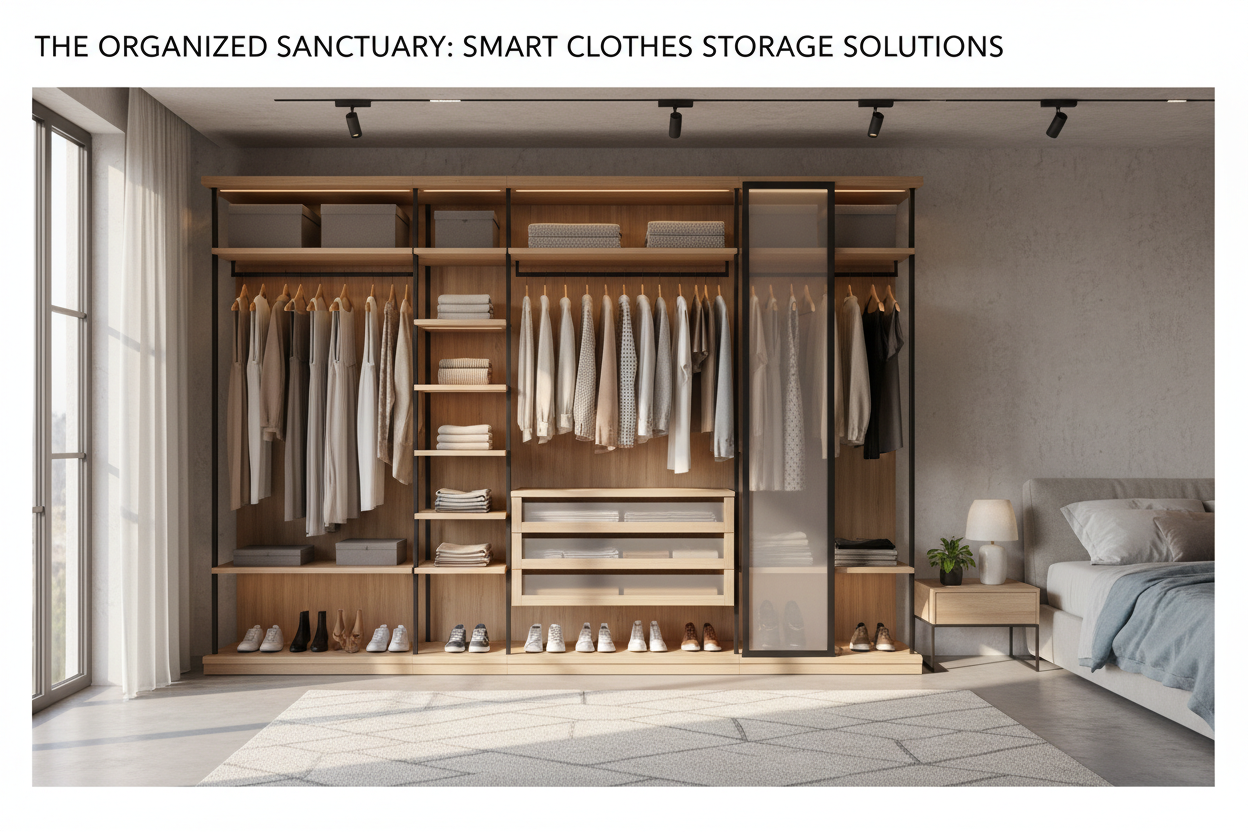
We have all seen it: the bedroom that looks pristine in photos but falls apart in practice. The culprit is rarely the bed or the rug; it is almost always the lack of functional storage. You might be relying on 'that one chair' to hold half your wardrobe, or perhaps your current drawers are bursting at the seams. Investing in high-quality clothes storage furniture is not just about hiding clutter; it is about curating a morning routine that feels seamless rather than stressful.
Key Features to Look For
Before you commit to a purchase, review this checklist to ensure you are selecting a piece that balances longevity with aesthetics. This is the criteria I use when sourcing for private clients:
- Joinery Techniques: Look for dovetail joints in drawers rather than staples or glue. This ensures the piece can handle the weight of heavy woolens or denim.
- Material Composition: Distinguish between solid hardwoods (oak, walnut) for longevity versus particleboard with veneer, which may bow under humidity or weight.
- Hardware Quality: Test the glides and hinges. Soft-close mechanisms prevent wear and tear on the frame over time.
- Internal Depth: Ensure a minimum depth of 24 inches (60 cm) for hanging spaces to prevent sleeves from getting crushed against doors.
Choosing the Right Material: Beyond the Veneer
In the showroom, everything looks polished. However, the core material dictates the lifespan of your furniture. For a primary residence, I always advise clients to steer clear of low-density fiberboard for main structural components. While a clothes cupboard storage unit made of MDF can be cost-effective, it rarely survives a move.
Solid wood expands and contracts with the seasons, so look for 'floating' panel construction which allows for this movement without cracking. If you prefer a modern, high-gloss lacquer finish, ensure the substrate is high-grade plywood, which offers superior stability compared to standard particleboard.
Space Planning and Ergonomics
The most common mistake homeowners make is misjudging the 'swing' space. A stunning armoire is useless if you cannot open the doors fully because the bed frame is too close.
Clearance Zones
You need at least 30 inches of clearance between the front of your storage unit and the next piece of furniture. If your bedroom is tight, opt for sliding doors or a tallboy dresser that utilizes vertical space rather than floor footprint.
The Dress Storage Cabinet Dilemma
Standard wardrobes often split the hanging space into two short rails. This is excellent for shirts but disastrous for evening wear or trench coats. If you own long garments, specifically look for a dedicated dress storage cabinet or a modular unit that allows you to remove the bottom rail. The silhouette of your furniture should serve your wardrobe, not compress it.
Visual Balance and Scale
Storage pieces are often the largest items in a room after the bed. A massive, dark wood wardrobe in a small room with low ceilings will feel oppressive. To mitigate this visual weight, consider pieces with legs rather than a solid plinth base; seeing the floor underneath the furniture tricks the eye into perceiving the room as larger. Alternatively, mirrored fronts can bounce light around the room, making the storage unit disappear into the space.
Lessons from My Own Projects
I want to share a specific mistake from one of my early design projects that changed how I buy furniture. I sourced a beautiful, vintage-inspired armoire for a client in a pre-war apartment. It looked stunning, but I hadn't accounted for the drawer extension.
The drawers were on old-fashioned wood-on-wood runners. While authentic, they became a nightmare during the humid summer months, swelling and sticking so badly the client broke a handle trying to get her socks. Furthermore, the drawers only extended about 70%, leaving a 'dead zone' at the back where items disappeared, never to be seen again.
Now, regardless of how 'luxury' a piece claims to be, I physically pull the drawer out to check the extension ratio and inspect the runner mechanism. I also check the back panel. If it is just a flimsy piece of cardboard nailed on, I walk away. That back panel provides the shear strength for the whole unit; if it wobbles, the piece will eventually rack and the doors will misalign.
Conclusion
Your clothes storage furniture should be a silent servant: reliable, beautiful, and functional. By prioritizing structural integrity and ergonomic dimensions over fleeting trends, you invest in a piece that protects your wardrobe and elevates your daily ritual. Treat this purchase as an architectural addition to your room, not just a box for your things.
Frequently Asked Questions
What is the standard depth for a wardrobe?
The standard depth is typically 24 inches (approx. 60-65 cm). This depth allows hangers to sit straight without brushing against the doors. Shallower units (around 18 inches) often require front-facing hanging rails, which reduces capacity.
How do I prevent clothes from smelling musty in closed storage?
Air circulation is key. Avoid overstuffing the unit. I recommend placing cedar blocks or dried lavender sachets inside drawers. Additionally, ensure the back of the unit isn't pressed tight against a damp external wall; leave an inch of air gap.
Open shelving vs. closed cabinets: Which is better?
Closed cabinets are superior for protecting clothes from dust and sunlight fading (UV damage). Open shelving systems (like walk-ins) are aesthetically pleasing but require high maintenance to keep tidy and dust-free.

Leave a comment
This site is protected by hCaptcha and the hCaptcha Privacy Policy and Terms of Service apply.