










When a client walks into a showroom or consults with me on a renovation, the conversation often starts with the living room, but it inevitably drifts to the workspace. We spend a third of our lives working, yet the environment we do it in is often an afterthought. Interior decorating office spaces requires a distinct psychological approach; it is not merely about filling a room with furniture, but about curating an environment that reduces cognitive load while inspiring creativity. A poorly planned office isn't just ugly—it is a barrier to your professional potential.
Key Features to Look For
- Ergonomic Integrity: Prioritize seating and desk heights that support neutral body posture to prevent fatigue.
- Lighting Layers: Combine ambient overhead lighting with focused task lighting and directional accent lights to reduce eye strain.
- Material Durability: Select work surfaces (solid wood, high-pressure laminate) that resist heat, scratches, and liquid rings.
- Acoustic Control: Incorporate soft furnishings like rugs or upholstered panels to dampen echo and improve focus.
- Traffic Flow: Ensure a minimum of 36 inches of clearance behind your chair for unrestricted movement.
The Architecture of Focus: Layout and Flow
Before selecting a single piece of decor, we must address the floor plan. In professional design, we look for the "command position." Ideally, your desk should face the entrance of the room but not be directly in line with it. This taps into a primal sense of security, allowing you to see who is approaching without being in the direct path of traffic.
Zoning for Functionality
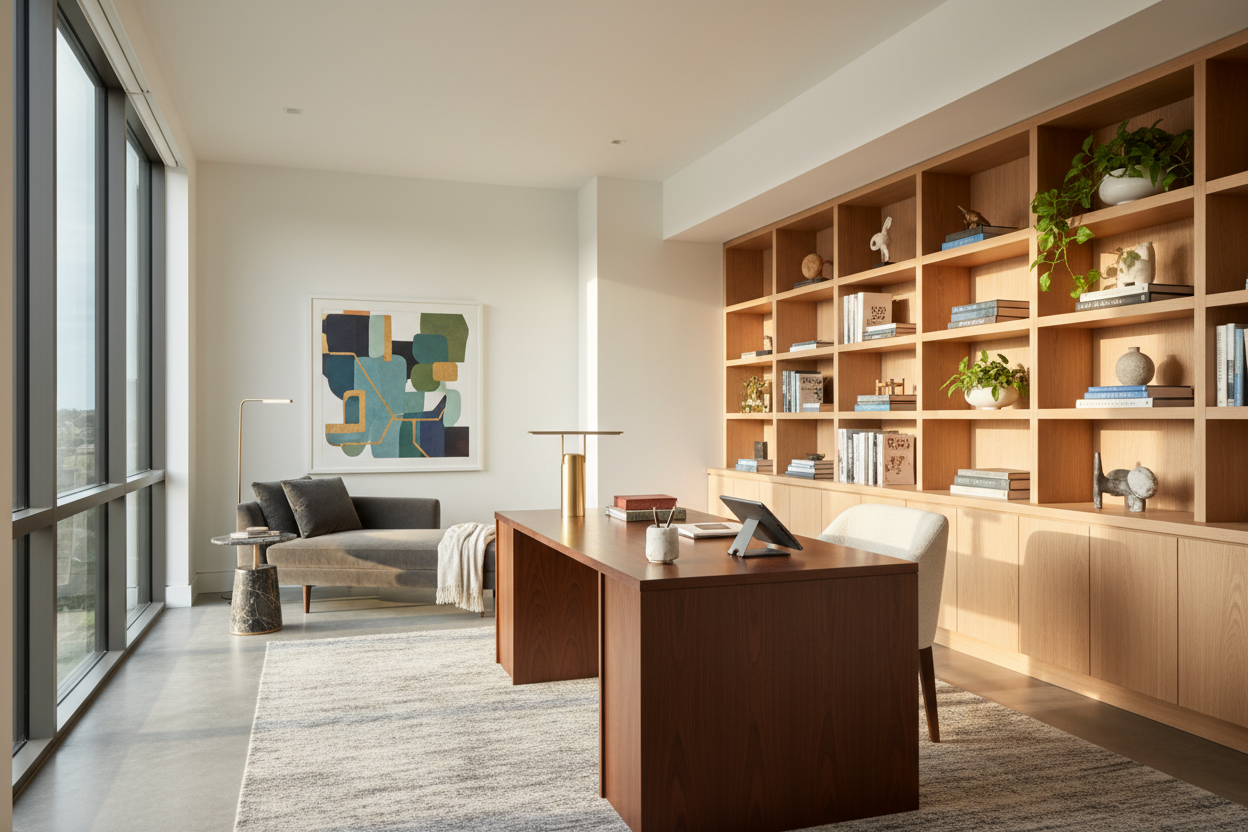
If you have the square footage, move away from the concept of the office as a single station. Create zones. A primary zone for deep work (the desk), and a secondary zone for contemplation or reading (a lounge chair or window seat). This physical separation allows for a mental reset without leaving the room.
Materiality and Texture: Beyond the Visual
The tactile experience of your furniture dictates the quality of your day. When exploring ideas to decorate home office spaces, I always steer clients toward natural materials for the primary touchpoints.
Solid Wood vs. Veneer: For an executive feel, a solid walnut or oak desk offers a weight and warmth that veneer often lacks. Solid wood creates a sense of permanence and ages beautifully, developing a patina over time. However, high-quality architectural veneers are excellent for achieving consistent grain patterns on larger conference-style tables.
Textiles: Avoid cheap synthetics for your seating. Look for high-performance wool blends or top-grain leather. These materials breathe, preventing the discomfort of heat buildup during long sessions.
Lighting: The Invisible Design Element
Lighting is the most critical, yet most botched, element in home office styling ideas. Relying on a single overhead fixture creates harsh shadows that strain the eyes. A sophisticated lighting plan uses the "rule of three":
- Ambient: Soft, general illumination (dimmable ceiling fixtures).
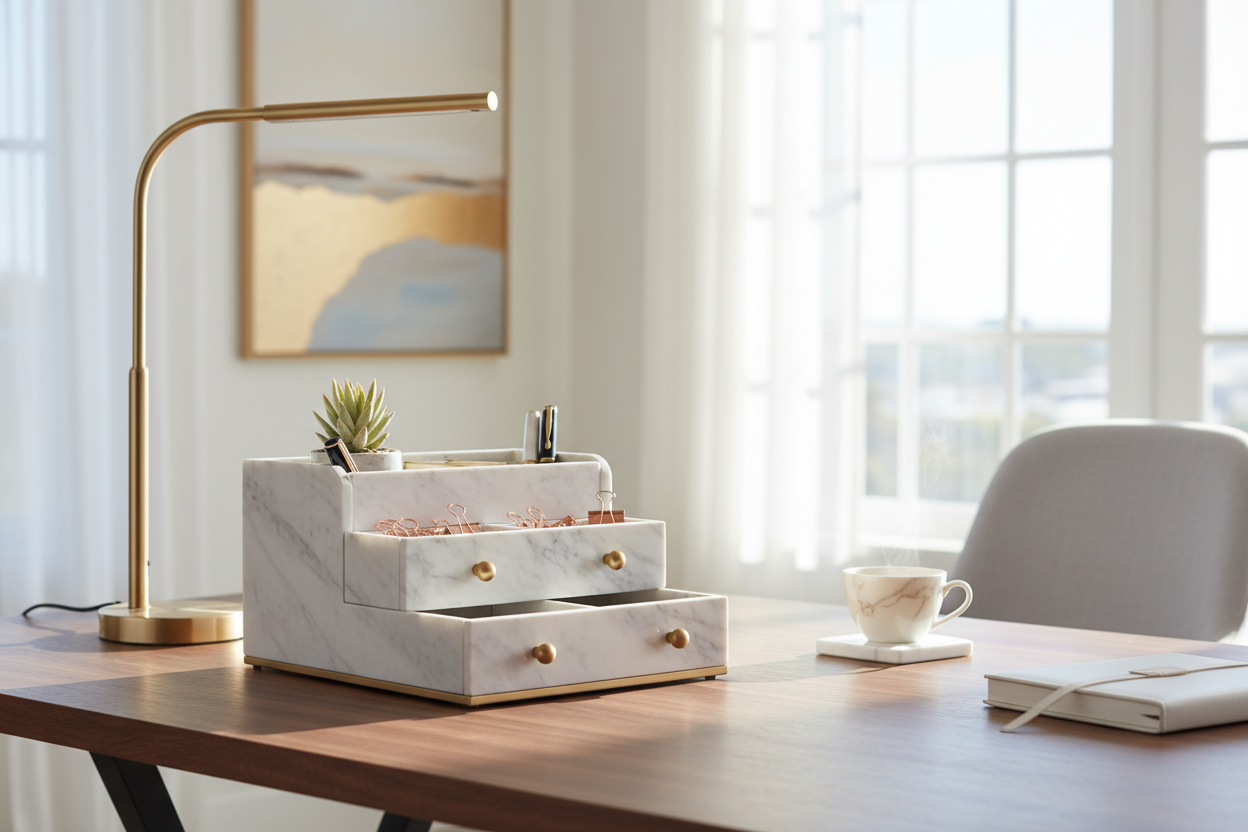
- Task: A dedicated articulated lamp with a CRI (Color Rendering Index) above 90 to show true colors.
- Accent: LED strip lighting in bookshelves or a floor lamp to warm up dark corners and expand the perceived space.
My Personal Take on Interior Decorating Office Spaces
Lessons from My Own Projects
I want to share a specific realization I had while redesigning my own studio last year—something you won't find in a standard catalog description. I fell in love with a stunning, matte-black laminate desk. It looked incredibly sleek and modern in the renderings.
However, within a week of actual use, I regretted it. Why? The "fingerprint factor." Every time I rested my hand on the desk or moved a paper, the natural oils from my skin left a streak on the matte finish. I spent more time wiping it down than designing. Furthermore, I chose a desk with sharp, architectural 90-degree edges. After eight hours of drafting, those sharp edges dug into my forearms, cutting off circulation. I eventually swapped it for a desk with a "comfort edge"—a subtle bevel that makes a massive difference in daily comfort. When you are buying, run your hand along the edge of the desk; if it feels sharp to the touch, it will feel like a knife after four hours of typing.
Conclusion
Refining your workspace is an investment in your own efficiency. By prioritizing ergonomic layouts, layering your lighting, and choosing materials that age gracefully, you elevate the act of working into a daily ritual of focus. Do not settle for a space that merely functions; build one that inspires.
Frequently Asked Questions
How do I choose the right desk size for a small room?
For tight spaces, depth is more important than width. Ensure the desk is at least 24 inches deep to allow for a monitor and keyboard without cramping your wrists. Visually, choose a desk with "open" legs (like a trestle or metal frame) rather than a solid block to keep the room feeling airy.
What is the best color temperature for office lighting?
Aim for a color temperature between 3000K and 4000K. This range is crisp enough to keep you alert and focused but warm enough to avoid the sterile, clinical feel of 5000K+ daylight bulbs found in commercial cubicles.
Is a rug necessary in a home office?
From a design and acoustic standpoint, absolutely. A rug grounds the furniture, preventing the "floating" look, and absorbs sound bouncing off hard floors and walls. Ensure the rug is large enough that your chair casters do not roll off the edge when you slide back.

Leave a comment
This site is protected by hCaptcha and the hCaptcha Privacy Policy and Terms of Service apply.