










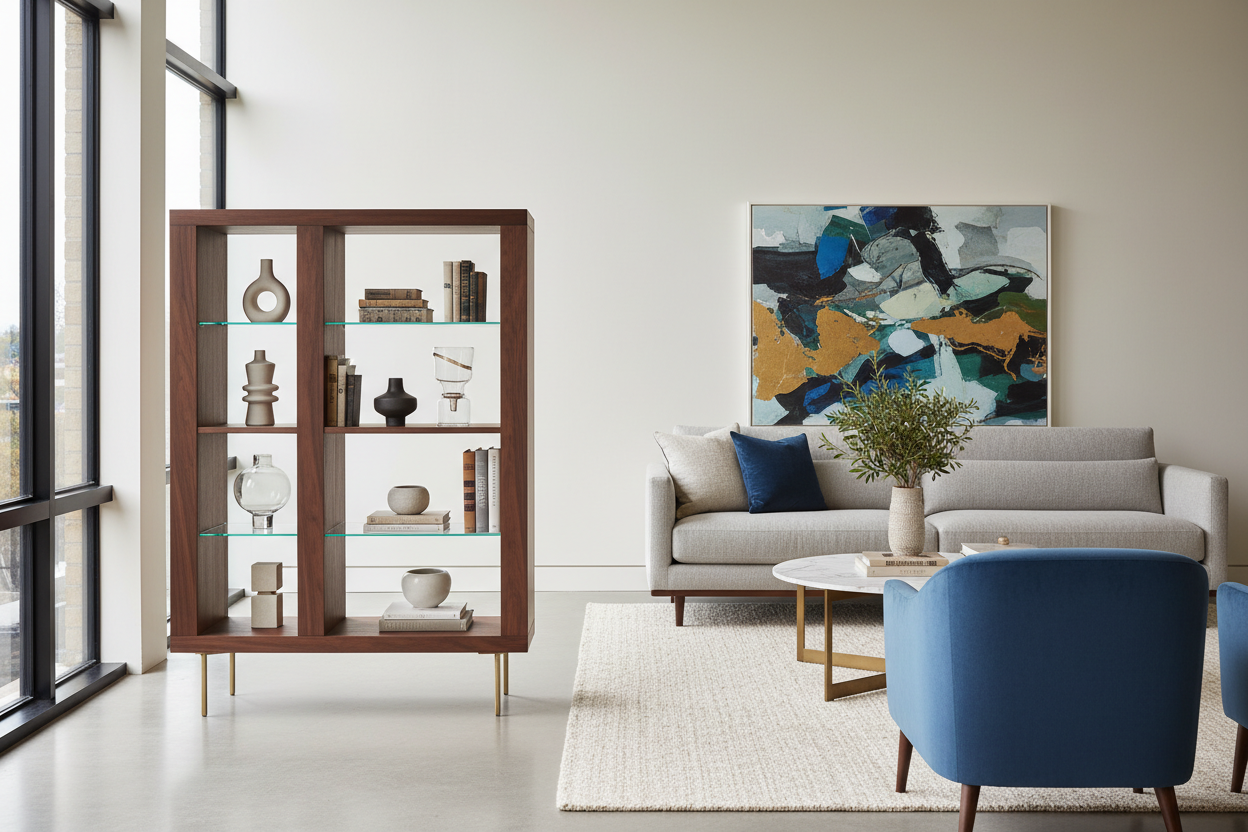
We all have that one awkward blank wall. You know the one—too narrow for a deep credenza, but too prominent to leave bare. Or maybe you have a beautiful collection of ceramics currently hiding in a cardboard box because you are terrified of them getting knocked over. This is exactly where a floor standing display cabinet proves its worth. It gives your favorite items a dedicated focal point while protecting them from dust and curious pets.
But bringing one of these tall pieces into a room requires careful planning. If you choose the wrong scale, finish, or lighting, it can quickly make your living room feel like a museum gift shop rather than a curated home. Before you commit, here is what 15 years of designing residential spaces has taught me about selecting and styling these cabinets.
Quick Decision Guide
- Check your lighting temperature: Built-in lighting should be warm (2700K to 3000K). Cool lighting makes residential furniture look like a retail fixture.
- Anchor it immediately: Any tall, heavy piece of furniture with glass doors is a tipping hazard. Wall anchors are non-negotiable.
- Mix your materials: If your room already has a lot of wood, choose a metal or painted frame to break up the visual monotony.
- Mind the negative space: Do not pack every shelf full. Leaving 30 percent of the shelf space empty allows the eye to rest and highlights the pieces you actually care about.
Managing Layout and Space Planning
When placing a freestanding display case, you have to consider how it interacts with the architecture of your room. Unlike a sofa or a coffee table, a tall cabinet draws the eye upward, highlighting the height of your ceilings—or lack thereof.
Clearances and Sightlines
A standing display case carries significant visual weight. In an open-concept North American home, you want to position it where it will not block natural light from windows or obstruct sightlines into adjacent rooms. Always leave a minimum of 36 inches of walkway clearance in front of the cabinet doors so you can comfortably open them and step back to arrange your items.
Material Matters: Glass, Wood, and Acrylic
The frame and shelving material will dictate how a floor display cabinet feels in your space. Solid wood frames offer warmth and ground the piece, while thin metal frames lean transitional or industrial.
Choosing Your Transparent Panels
A traditional standing glass display case offers a classic, scratch-resistant surface that holds up beautifully over decades. However, glass is incredibly heavy. If you live in an upper-floor apartment or plan to move frequently, a floor standing acrylic display case is a lightweight alternative. Just be aware that acrylic scratches easily; you will need to use microfiber cloths and specialized cleaners rather than standard window spray.
Styling and Curation
Whether you need a floor standing display case for collectibles, vintage books, or heirloom dinnerware, how you arrange the interior is just as important as the furniture itself.
Playing with Proportion
If you have a wide, empty dining room wall, a long glass display case provides excellent horizontal balance. Conversely, if you are tucking furniture into a tight corner, a narrow stand up display case draws the eye up without eating up square footage. Group smaller items together on trays or risers, and place your heaviest, visually darkest items on the bottom shelves to anchor the composition.
Lessons from My Own Projects
I will be completely honest: I used to avoid using floor standing display cases in my residential projects. Early in my career, I specified a massive, frameless free standing display case for a client's living room. In the showroom, it looked sleek and minimalist. In a real suburban home with a golden retriever and a toddler, it was a disaster.
Within a week, the bottom half was covered in nose smudges and sticky fingerprints. Worse, the factory-installed cool-white LED strips made the entire floor standing glass display case look clinical. I had to hire an electrician to swap the lighting to a warm temperature and add a custom wooden plinth to raise the glass out of the "splash zone." It was an expensive lesson. Now, I always insist on cabinets with solid lower doors or drawers if there are pets or kids in the house, and I never trust built-in lighting without checking the specs first.
Frequently Asked Questions
How much walkway space do I need around a floor display cabinet?
Always leave at least 36 inches of clearance in front of the cabinet. This allows you to fully open the doors and step back without tripping over a coffee table or bumping into a sofa.
Should I anchor my floor display cases to the wall?
Absolutely. Because these pieces are tall and often top-heavy (especially once loaded with glass shelves and decor), they are a severe tipping risk. Use heavy-duty anti-tip brackets secured directly into a wall stud.
How do I keep dust out of a standing display case?
Look for cabinets that feature weatherstripping or felt-lined door edges. While no cabinet is 100 percent airtight, framed doors typically seal better than frameless glass doors, significantly reducing how often you need to dust the interior.

Leave a comment
This site is protected by hCaptcha and the hCaptcha Privacy Policy and Terms of Service apply.