










Creating a harmonious home environment goes beyond aesthetics. The ancient Chinese practice of feng shui teaches us that the way we position our furniture can significantly impact the energy flow in our living spaces, affecting everything from our mood and productivity to our relationships and overall well-being. By arranging furniture thoughtfully, you can cultivate a sense of balance, promote positive energy, and create rooms that feel naturally inviting and comfortable.
Understanding Feng Shui Basics
Before diving into specific furniture arrangements, it's helpful to understand the core principles that guide feng shui practice.
At the heart of feng shui is the concept of chi, the vital life force that flows through all spaces. When chi moves freely and smoothly through your home, it brings vitality and positive energy. When it becomes blocked or stagnant, it can create feelings of unease or lethargy. Your furniture placement directly influences how chi circulates through each room.
Feng shui also emphasizes the balance of yin and yang, the complementary forces of passive and active energy. A well-designed space incorporates both restful areas for relaxation and energized zones for activity. The five elements—wood, fire, earth, metal, and water—work together to create equilibrium in your environment. Each element can be represented through furniture materials, colors, and shapes.
The bagua map is a feng shui tool that divides your space into nine zones, each corresponding to different life areas such as wealth, relationships, career, and health. Understanding which areas of your home align with these zones can help you make intentional choices about furniture placement and room function.
General Principles for All Rooms
Regardless of which room you're arranging, certain feng shui principles apply universally throughout your home.
First and foremost, maintain clear pathways that allow energy to flow naturally from one area to another. Furniture should never completely block doorways or create obstacles that force you to navigate awkwardly through a space. Think of chi as water flowing through your home—it needs open channels to move gracefully.
Windows serve as portals for natural light and fresh energy to enter your space. Avoid placing tall furniture directly in front of windows, as this restricts both light and energy flow. Instead, position lower pieces nearby or leave windows unobstructed to maximize the beneficial energy they bring.
The commanding position is one of feng shui's most important concepts for furniture placement. This principle suggests that key pieces like beds, desks, and seating should be positioned so you can see the room's entrance while using them, without being directly in line with the door. This placement creates a sense of security and control, allowing you to feel grounded and aware of your surroundings.
Balance and symmetry also play crucial roles in creating harmonious spaces. While perfect symmetry isn't necessary, aim for visual equilibrium by distributing furniture weight evenly throughout a room. A heavy sofa on one side might be balanced by a bookshelf or console table on the other, creating a sense of stability.
Room-by-Room Guidance
Each room in your home serves a unique purpose and requires specific considerations for optimal furniture arrangement.
Living Room
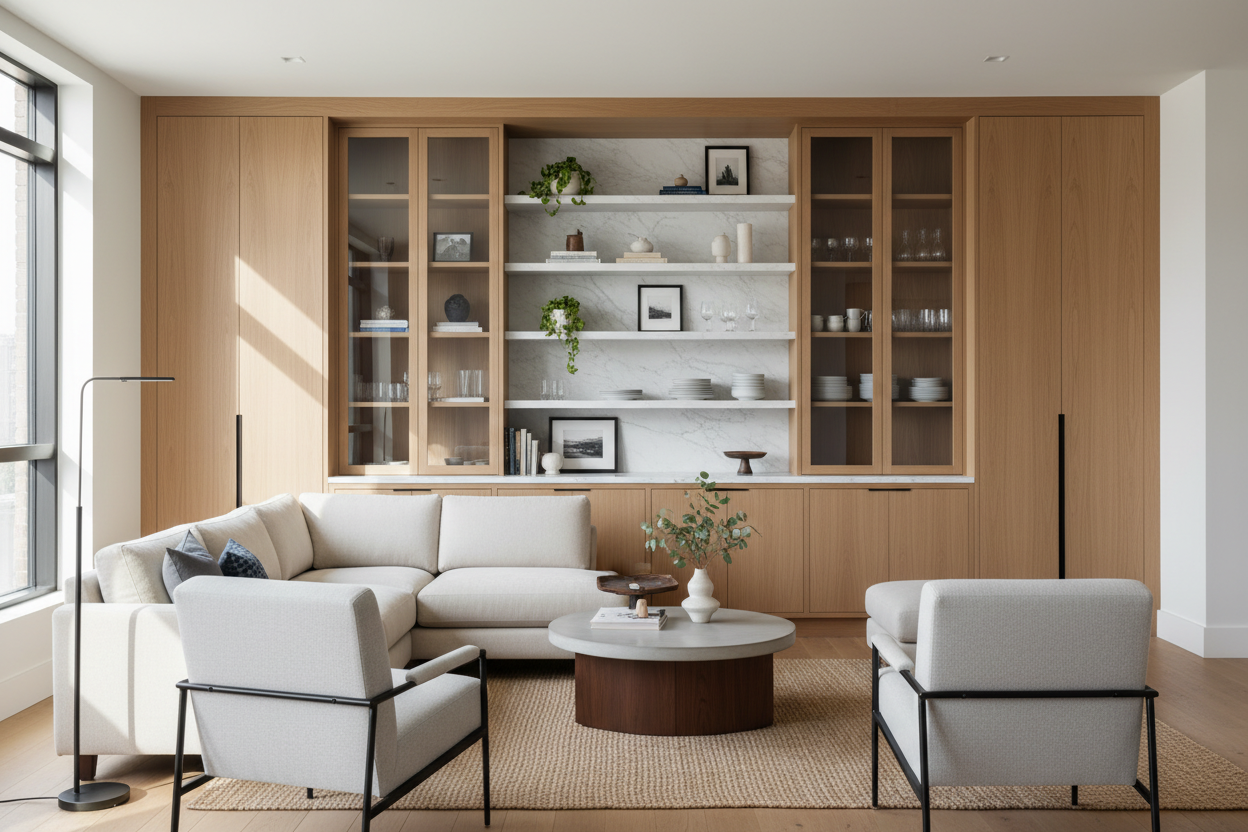
The living room is your home's social heart, where family and friends gather to connect and relax. Position your main seating in a conversational arrangement that allows people to see each other comfortably without straining their necks. Sofas and chairs work best when placed to form a semicircle or U-shape, creating an inclusive atmosphere that encourages interaction. Learn more about living room feng shui
Your sofa should ideally be placed against a solid wall, providing symbolic support and security for those seated there. Avoid floating sofas in the middle of the room unless the space is very large and you're creating distinct zones. If you must place seating away from walls, position a console table behind it to create a sense of backing.
Entertainment centers and televisions shouldn't dominate the room's energy. While they're practical necessities, try to balance their presence with natural elements like plants or by incorporating them into cabinetry that can be closed when not in use. Coffee tables work best when they're proportional to your seating—leave enough space to walk around them comfortably, maintaining that essential energy flow.
Bedroom
Your bedroom should be a sanctuary for rest and intimacy, making furniture placement particularly important. The bed is unquestionably the room's most significant piece and deserves careful positioning. Place your bed in the commanding position where you can see the door while lying down, but not directly in line with it. This diagonal placement from the entrance is considered ideal. Learn more about bedroom feng shui
Your headboard should rest against a solid wall, never under a window or shared wall with a bathroom. This solid backing provides stability and support during your vulnerable sleeping hours. If possible, leave equal space on both sides of the bed for nightstands, promoting balance in relationships and ensuring both partners have equal access and personal space.
Avoid positioning your bed under exposed beams, sloped ceilings, or heavy hanging objects, as these can create oppressive energy that disrupts sleep. Dressers and wardrobes should be placed where they don't loom over the bed or create sharp corners pointing toward sleeping areas. If you must have a mirror in your bedroom, avoid positioning it where it reflects the bed, as this is believed to disrupt rest and create excessive yang energy in a space meant for relaxation.
Home Office
A well-arranged workspace can boost productivity, creativity, and career success. Your desk should be positioned in the commanding position, allowing you to see the door while you work. This placement helps you feel in control and aware, reducing subconscious anxiety about what might be happening behind you.
Ideally, face your desk toward the room rather than a wall, as this opens up your perspective and symbolically welcomes opportunities. If space constraints require you to face a wall, hang inspiring artwork or a vision board to provide visual stimulation and prevent feelings of being blocked. Behind your chair, position furniture or place your desk against a solid wall to create supportive energy that gives you a sense of backing in your professional endeavors.
Keep storage solutions organized and accessible, but avoid cluttering your immediate workspace. Overstuffed bookshelves and filing cabinets can create stagnant energy, so regularly purge items you no longer need. Add a living plant to your office to bring vibrant wood element energy that supports growth and new beginnings.
Dining Room
The dining room represents nourishment, abundance, and family connection. Your dining table should be positioned centrally in the room when possible, allowing equal access from all sides and creating an inclusive atmosphere for meals and gatherings.
Choose a table shape that suits your space and family needs. Round and oval tables promote equality and conversation, while rectangular tables work well in formal settings. Regardless of shape, ensure there's adequate space around the table for chairs to be pulled out comfortably without bumping into walls or other furniture.
If your dining area doubles as a workspace or homework station, consider furniture that can serve multiple purposes while maintaining the room's primary function as a nourishing gathering space. A buffet or sideboard against a wall provides storage while supporting the room's abundance energy.
Entryway
Your entryway is where energy first enters your home, making it crucial for setting the tone for your entire space. Keep this area open and welcoming, avoiding bulky furniture that crowds the entrance. A console table or small bench can provide function without overwhelming the space.
If you include a mirror in your entryway, position it on a side wall rather than directly facing the front door, as this can symbolically push energy back out before it has a chance to circulate through your home. Hooks, coat racks, or a small closet keep outerwear organized, preventing clutter from accumulating and blocking the flow of incoming chi.
Common Feng Shui Furniture Mistakes to Avoid
Even with the best intentions, it's easy to make furniture placement errors that disrupt your home's energy flow.
One of the most frequent mistakes is blocking natural light sources with tall or dense furniture. Windows and doors are vital energy portals, and obstructing them limits the beneficial chi that can enter your space. If you must place furniture near windows, choose low-profile pieces that allow light to flow over them.
Sharp corners, particularly those pointing toward seating areas or beds, create what feng shui calls "poison arrows"—aggressive energy that can cause discomfort. While you don't need to eliminate all angular furniture, position pieces so their corners point toward walls or unused spaces rather than where people sit, sleep, or work. Alternatively, soften sharp edges with plants or draping fabric.
Clutter and overcrowding are perhaps the most detrimental feng shui issues you can create with furniture. Too many pieces crammed into a space restrict energy flow and create visual chaos that translates into mental overwhelm. Be selective about what furniture truly serves your needs, and resist the urge to fill every available space. Empty areas allow chi to circulate and give your eyes places to rest.
Mirrors, while useful for reflecting light and expanding small spaces visually, can create problems when poorly placed. Avoid positioning mirrors directly across from front doors, reflecting toilets or beds, or in locations where they create confusing or chaotic reflections. Use mirrors intentionally to amplify positive views or bring light into dark corners.
Conclusion
Arranging furniture according to feng shui principles doesn't require perfection or rigid adherence to complex rules. Instead, it's about creating spaces that feel balanced, comfortable, and supportive of your daily life. By ensuring clear pathways for energy flow, positioning key furniture pieces in commanding positions, and maintaining balance throughout your rooms, you can cultivate an environment that nurtures your well-being.
Start with one room and pay attention to how different arrangements make you feel. Feng shui is ultimately about creating harmony between your environment and your life, so trust your intuition as you experiment with placement. The best arrangement is one that not only follows feng shui guidelines but also enhances your comfort, supports your daily routines, and brings you joy every time you enter the space. Your home should be a reflection of balance, abundance, and positive energy—and thoughtful furniture arrangement is a powerful step toward achieving that vision.


Leave a comment
This site is protected by hCaptcha and the hCaptcha Privacy Policy and Terms of Service apply.