










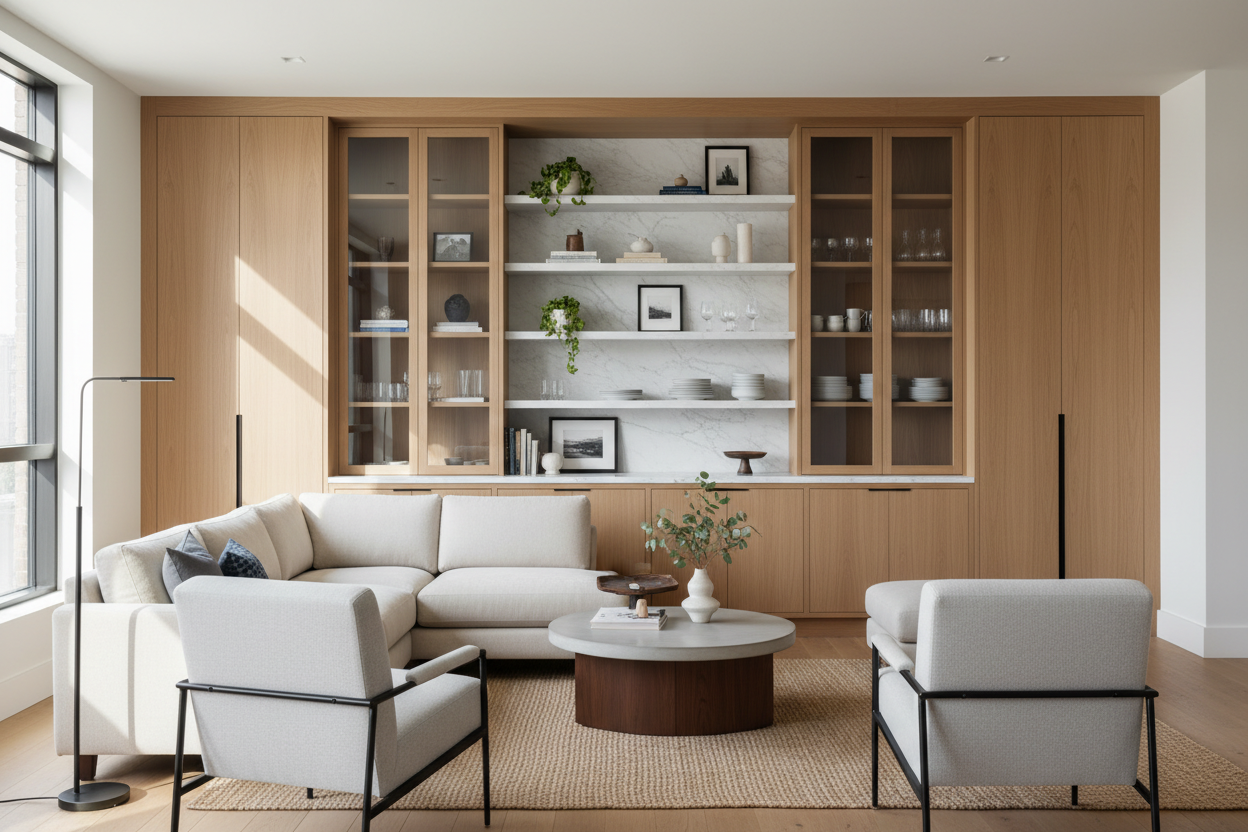
I used to be the person who bought every clear plastic bin and woven seagrass basket in a three-mile radius. I thought if I could just categorize my chaos into pretty containers, my house would finally feel calm. Instead, my living room looked like a high-end warehouse where I could still see every tangled charging cable and half-finished knitting project through the mesh. It was visual noise, not organization.
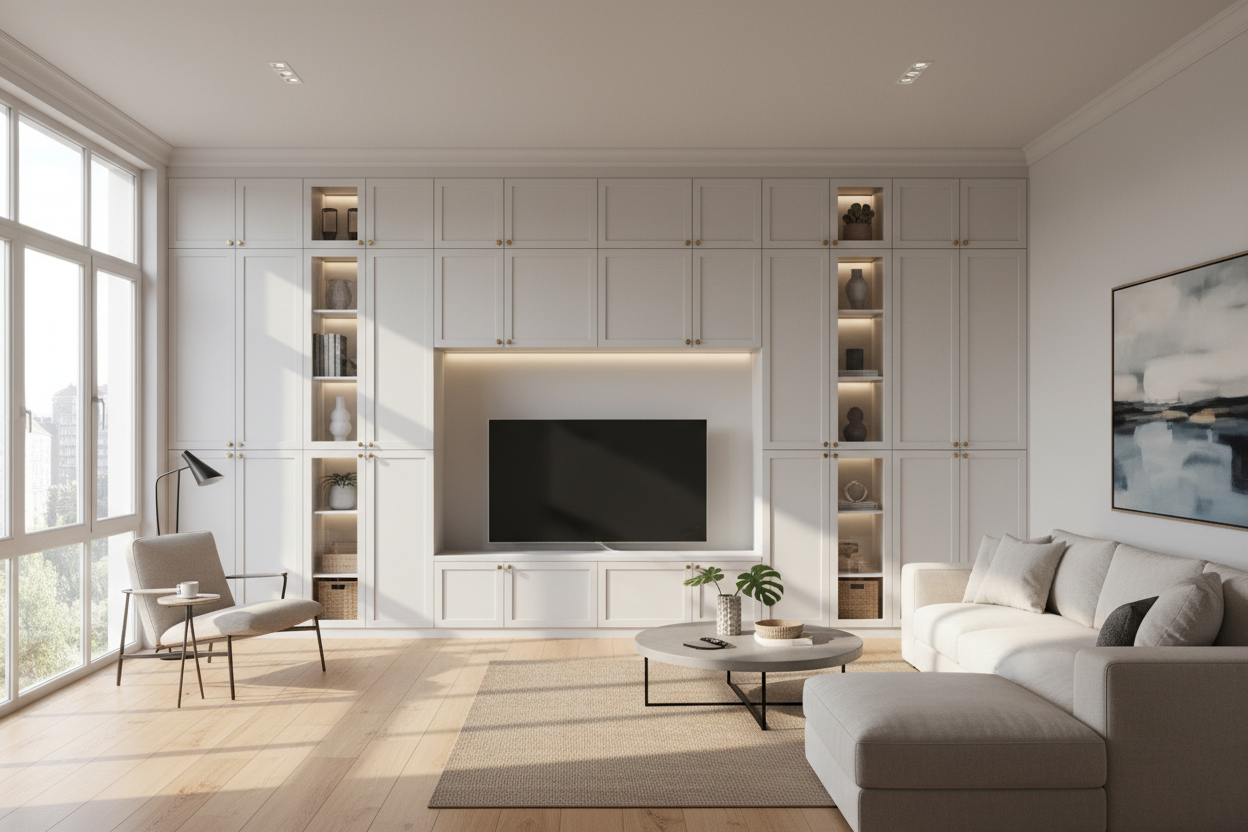
Everything changed when I stopped trying to 'organize' the mess and started hiding it. I realized that a real storage and cabinet system isn't about showing off your label-maker skills; it's about creating a literal wall between your life and your stuff. If you can see it, your brain is still processing it as clutter.
Quick Takeaways
- Open shelving is for 10% of your stuff; cabinets are for the other 90%.
- Prioritize solid doors over glass to eliminate visual 'noise.'
- Vertical units save floor space while doubling your actual capacity.
- Look for adjustable shelving to accommodate awkward items like vacuums or printers.
The Illusion of 'Aesthetic' Organization
We’ve all been sold the lie that open racks and baskets are the peak of home design. They look great in a staged photo with three perfectly neutral books and a single succulent. In reality, they are dust magnets. When I finally swapped my open wire racks for a closed system, the room instantly felt five degrees cooler and twice as large. You have to design storage that actually works for your actual habits, not your aspirational ones.
The transition from 'visible storage' to a dedicated cabinet system was the best $600 I ever spent. It stopped the constant cycle of tidying because, frankly, if I didn't feel like folding the throw blankets, I could just shove them behind a door and the room still looked pristine. That’s the freedom of a closed system.
Why You Need the 'Two-Thirds Hidden' Rule
The biggest mistake people make is going all-in on one style. If you have only cabinets, the room looks like an office; if you have only shelves, it looks like a garage. I follow the two-thirds rule: two-thirds of the unit should be hidden storage, and one-third can be open for the things you actually like looking at. This is why I love a solid wood modern sideboard as a foundation piece.
This type of storage with cabinets anchors a room. It gives you a heavy, permanent-feeling base that can hold heavy items—like that 20-pound mixer you use twice a year—while the top surface stays clear for a lamp or a tray of drinks. It’s about balancing the 'heavy' utility with the 'light' decor.
Going Vertical: The Magic of Shelf Cabinets
If you’re working with a narrow hallway or a cramped dining area, stop looking at wide dressers. You need to go up. Tall shelf cabinets are the secret to making a standard 8-foot ceiling look like a loft. By drawing the eye upward, you’re tricking your brain into seeing more volume in the room. I always tell people to look for adjustable shelf storage because your needs will change.
Last year, my tall cabinet held a stack of board games. This year, I moved the shelves around to fit a tall floor lamp and a stack of oversized art portfolios. If your shelves are fixed, you’re stuck in a furniture straitjacket. Don't buy anything that doesn't let you move the pegs.
Hiding the Awkward Stuff (Yes, Even the Vacuum)
Not everyone has a walk-in pantry or a dedicated broom closet. In my last apartment, my vacuum cleaner lived behind the sofa. It was embarrassing. I eventually solved it by repurposing a modern white black buffet storage unit. Because it had metal slides and removable interior dividers, I could fit the vacuum, the attachments, and even the mop inside.
It’s one of the best cabinets for storage room overflow because it doesn't look like 'utility' furniture. It looks like a high-end piece of decor. You don't need a renovation to get more closet space; you just need a cabinet that’s deep enough to swallow the things you don't want to explain to guests.
My Biggest Storage Mistake
I once bought a cheap, flat-pack cabinet because it was 50% off. The 'wood' was essentially hardened paper. Within three months, the shelves started to sag in the middle under the weight of my cookbooks. I had to throw the whole thing out because the cam-locks stripped when I tried to tighten them. Now, I check the weight capacity per shelf. If it’s under 30 lbs, I walk away. Your stuff is heavier than you think.
Frequently Asked Questions
How deep should a storage cabinet be?
For general household items, 15 to 18 inches is the sweet spot. Anything shallower won't fit a standard dinner plate or a folded towel; anything deeper and you'll lose things at the back of the shelf forever.
Can I mix different wood tones?
Absolutely. In fact, matching all your cabinets exactly can make a room feel like a hotel lobby. As long as the undertones (warm vs. cool) are similar, a walnut sideboard can live happily next to an oak tall cabinet.
Are metal slides better than wood?
Always. Wood-on-wood slides stick when it’s humid and require constant waxing. Metal slides with ball bearings will still open smoothly ten years from now, even if the drawer is packed to the brim.


Leave a comment
This site is protected by hCaptcha and the hCaptcha Privacy Policy and Terms of Service apply.