










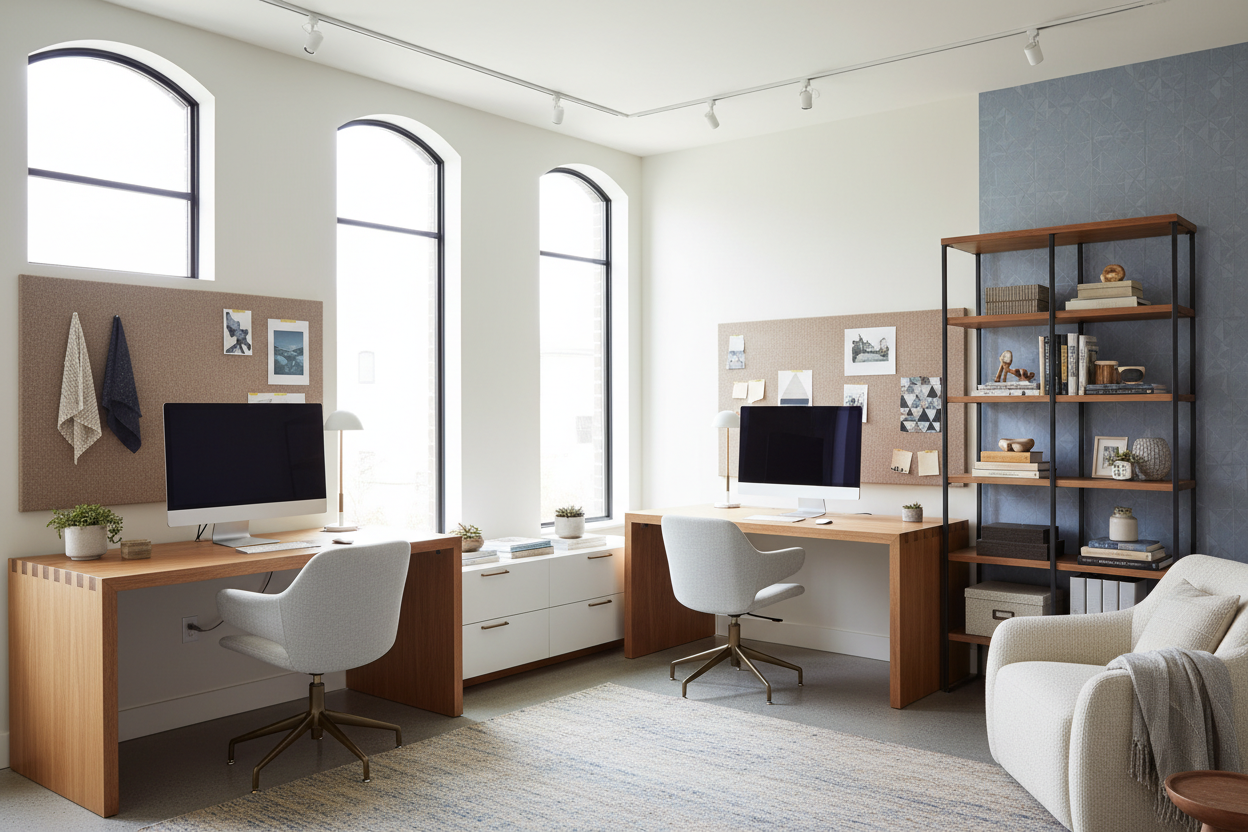
Designing a shared workspace is rarely just about fitting two chairs into a room; it is an exercise in negotiation and spatial psychology. The challenge lies in creating individual zones for deep work while maintaining a cohesive aesthetic. If you are struggling to merge two distinct working styles into one harmonious environment, you are not alone. This guide explores professional couple office ideas that balance ergonomics, acoustics, and high-end design principles to solve the friction often found in dual workspaces.
Key Features to Look For
Before purchasing furniture or knocking down walls, consider these non-negotiable elements for a successful shared office:
- Desk Depth & Width: Aim for a minimum of 60 inches of width per person and 30 inches of depth to accommodate monitors without crowding.
- Acoustic Control: Look for soft furnishings (rugs, upholstered chairs) or acoustic panels to dampen voice reverberation during simultaneous calls.
- Lighting Zones: Ensure each workstation has dedicated task lighting to prevent glare on the partner’s screen.
- Material Durability: Prioritize matte finishes or solid wood over high-gloss lacquer to minimize distracting reflections and fingerprints.
Structuring the Layout: Flow and Function
The layout is the backbone of your couples home office. The configuration you choose dictates the workflow and the level of interaction between partners.
The T-Shape Configuration
For a couple office setup that requires collaboration without constant eye contact, a T-shape arrangement is ideal. By placing a desk perpendicular to a shared back wall unit, you create a peninsula. This allows both users to face away from the wall while maintaining personal boundaries. It anchors the room and provides excellent traffic flow around the perimeter.
Face-to-Face vs. Side-by-Side
A couples desk ideas classic is the face-to-face partner desk. This works beautifully in larger rooms where the desk can float in the center, acting as a focal point. However, ensure you have integrated cable management channels; otherwise, you will be staring at a nest of wires. Conversely, a side-by-Side layout (a long run along a wall) saves floor space but requires a desk length of at least 10 feet to avoid elbow bumping.
Materiality and Visual Weight
When selecting a couple office desk, the material choice impacts both longevity and the room's "visual weight." In smaller spaces, a glass or acrylic desk can make the room feel larger, but be warned: glass is cold to the touch and amplifies the sound of typing.
For a sophisticated, grounded look, I often recommend solid walnut or white oak. Unlike veneer, which can chip at the edges over time, solid wood develops a patina. If you are looking for home office ideas for couples that lean towards modern luxury, consider a matte Fenix laminate. It is soft to the touch, thermally healing, and resists the micro-scratches that plague standard laminates.
Ergonomics and The "Active" Chair
A home office for couples often fails when one partner compromises on comfort for the sake of matching chairs. While symmetry is visually pleasing, bodies are not identical. Instead of buying matching sets, look for chairs with complementary silhouettes or matching upholstery fabrics but different ergonomic structures. This maintains the visual thread without sacrificing individual lumbar support.
Lessons from My Own Projects
I want to share a specific realization from a project I managed in a pre-war apartment last year. We designed a stunning, 12-foot floating custom desk for a couples home office ideas showcase. Visually, it was architectural perfection.
However, within a week, the clients called me with an issue I hadn't accounted for: Monitor Wobble transference. Because the desk was a single continuous slab mounted to the wall, every time the husband (a heavy typist) hammered out an email, the wife's dual monitors on the other side would vibrate slightly. It was maddening for her.
We had to retroactively install heavy-duty steel stiffeners under the desktop and decouple their monitor arms from the desk, mounting them to the wall instead. The lesson? If you are buying a long shared desk, check the sub-frame rigidity. If you can wiggle one end and feel it on the other, skip it. Sometimes, two separate desks pushed together is the superior engineering choice over one massive slab.
Creating Your Shared Sanctuary
Designing a dual workspace is about respecting individual habits while curating a shared vision. By investing in the right layout, prioritizing acoustic dampening, and selecting materials that age gracefully, you can build a space that fosters productivity rather than resentment. Start with the layout, invest in the chair, and never underestimate the importance of a sturdy desk surface.
Frequently Asked Questions
What is the minimum room size for a comfortable couple office?
Ideally, you need a room that is at least 10x10 feet. This allows for two 4-foot desks and adequate clearance for chair push-back (roughly 30-36 inches behind each desk) without the space feeling claustrophobic.
How do we handle video calls in the same room?
Acoustics are key. Introduce "soft" elements like heavy drapes, a plush area rug, and even acoustic wall slats to absorb sound. Position your desks so microphones are not facing each other, and consider high-quality noise-canceling headsets as part of the office budget.
Is a custom built-in better than freestanding furniture?
Custom built-ins maximize square footage, especially in awkward alcoves. However, freestanding furniture offers flexibility. If you rent or plan to move, high-quality freestanding desks are a better investment as they can adapt to future homes.

Leave a comment
This site is protected by hCaptcha and the hCaptcha Privacy Policy and Terms of Service apply.