










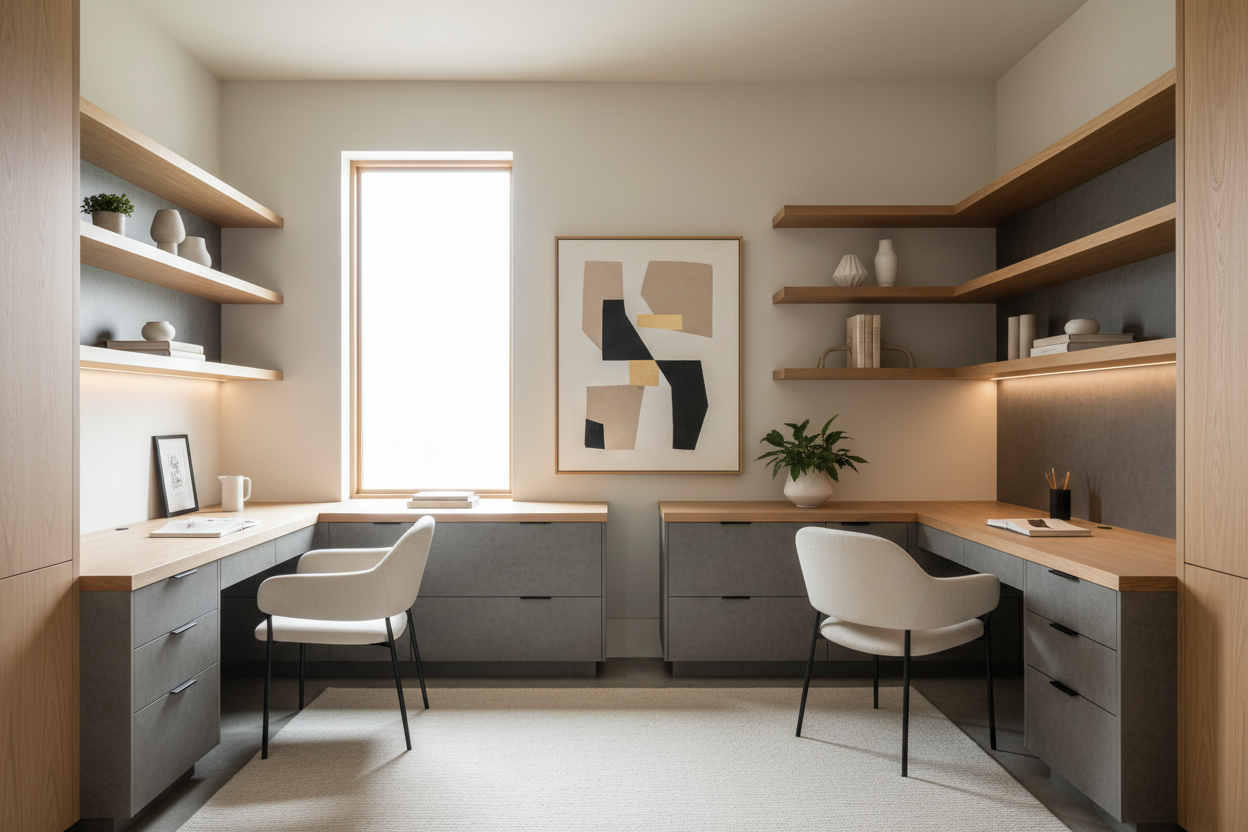
There is a specific frustration that comes with freestanding furniture: the dead space. The dust bunnies gathering in the gap between the table edge and the wall, or the tangle of wires that ruins the visual calm of a room. As a designer, I see this constantly. The solution isn't just buying a better table; it is integrating the workspace into the architecture of the home. Modern built in desks offer a seamless transition between structure and function, turning awkward alcoves into sophisticated command centers.
Key Features to Look For
Before commissioning a carpenter or sketching your layout, consider these non-negotiable elements that define high-quality joinery:
- Ergonomic Depth: A standard built-in should be at least 24 inches (60cm) deep to accommodate monitors without cramping your typing posture.
- Cable Management: Look for integrated grommets and hidden chases within the cabinetry to keep technology invisible.
- Material Continuity: The finish should complement your existing flooring or millwork for a cohesive, high-end appearance.
- Lighting Integration: Plan for under-shelf LED strips or hardwired sconces early in the design phase.
Designing the Layout: Beyond the Basic Slab
When planning a custom desk built in, the silhouette dictates the room's energy. In a dedicated study, you might opt for a wall-to-wall installation. However, for multi-purpose rooms, a built in desk unit needs to feel like furniture, not just a shelf.
The Floating Aesthetic vs. Cabinetry Bases
For a minimalist, airy vibe, cantilevered designs (floating desks) are superior. They expose the floor underneath, making small rooms feel larger. However, they require structural steel supports hidden in the wall. If you need substantial storage, opt for desk cabinet ideas that utilize base units. A popular configuration involves a 'knee-hole' flanked by drawers, providing a grounded, substantial look often found in executive suites.
Materiality and Texture
The difference between a generic office setup and a luxury workspace lies in the materials. While melamine is durable, it rarely screams 'luxury.' For a built in desk for home office applications, I recommend natural wood veneers like walnut or white oak. These materials add warmth and age beautifully.
If you are aiming for a sleek, monochromatic look, consider Fenix NTM laminates. They offer a super-matte finish that heals micro-scratches thermally—perfect for a high-traffic built in study desk where laptops are constantly sliding around.
Maximizing Vertical Space
The real power of custom joinery is vertical utilization. Built in bookshelf with desk ideas allow you to draw the eye upward, creating a focal point. When designing built in office shelves and desk combinations, avoid uniform grid patterns. Vary the shelf heights to accommodate tall art pieces or oversized folios alongside standard books. This asymmetry adds a curated, designer touch to the desk wall unit ideas.
Bedroom and Niche Integration
Not every home has a dedicated library. We are seeing a surge in built in desk ideas for bedroom wall niches. The key here is duality. The design should function as a vanity in the morning and a workstation during the day. A custom built-in desk and shelves in a bedroom should feature closed storage to hide laptops at night, ensuring the room returns to a restful state.
Lessons from My Own Projects
I want to share a specific realization from a project I managed in a high-rise apartment last year. We designed a stunning, high-gloss lacquered built in desk system facing a floor-to-ceiling window. On paper, it looked incredible.
However, once installed, we realized a critical error: glare. The high-gloss surface acted like a mirror, reflecting the sun right into the client's eyes. We had to retrofit a custom leather blotter pad—inlaid directly into the desktop—to mitigate the reflection. It ended up looking elegant, but it was a panicked fix. Since then, I always insist on matte or satin finishes for the primary work surface, regardless of how trendy high-gloss might be. Also, never underestimate the heat generated by a PC tower inside a cabinet; always vent the toe-kick or the back panel, or your hardware will fry within months.
Conclusion
Investing in custom millwork transforms a house into a home tailored to your specific workflow. Whether you are looking for built-in study desk ideas for a student or a professional executive suite, the goal is the same: reduce visual noise and maximize utility. When the joinery fits the space perfectly, the work you do there feels effortless.
Frequently Asked Questions
How deep should a built-in desk be?
For a laptop-only station, 20 inches is passable, but for a full built in study desk with a monitor, aim for 24 to 30 inches deep. This ensures your eyes are at a safe distance from the screen.
Is a built-in desk a good investment for resale?
generally, yes. High-quality built in wall desk ideas are viewed as premium upgrades. However, ensure the design is relatively neutral; highly specific configurations might deter buyers who want to use the room differently.
Can I build a desk over a radiator or vent?
It is possible, but requires careful planning. You must install decorative grilles in the desktop or toe-kick to allow airflow. Blocking a heat source can damage the millwork and overheat the room.

Leave a comment
This site is protected by hCaptcha and the hCaptcha Privacy Policy and Terms of Service apply.