










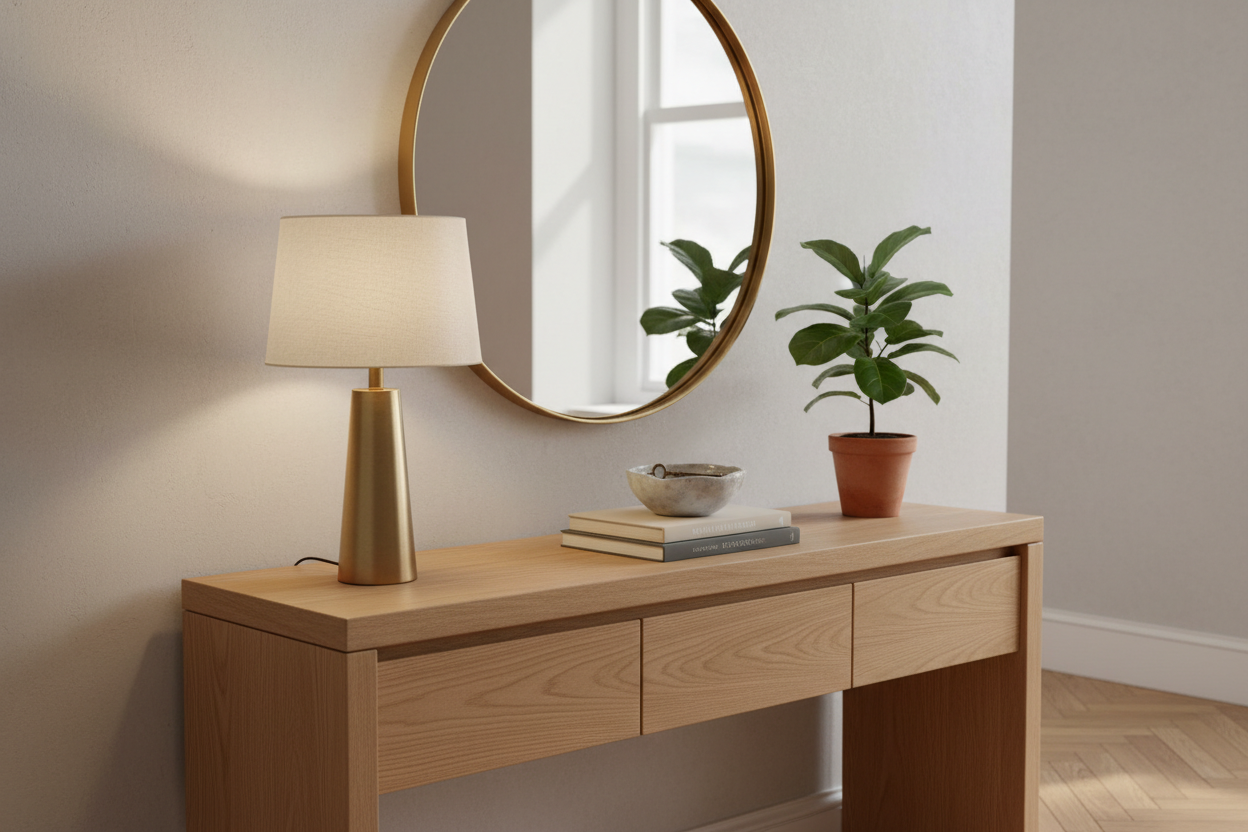
Your entryway is the handshake of your home. It sets the tone for the rest of the house and serves as the primary transition zone between the chaotic outside world and your personal sanctuary. A well-chosen table entrance setup does double duty: it anchors the design of your foyer and provides a critical landing pad for keys, mail, and daily essentials. Whether you have a grand foyer or a tight hallway, selecting the right piece of furniture can transform a cluttered pass-through into a welcoming destination.
I learned this lesson the hard way in my first apartment. The front door opened directly into a narrow corridor, and for months, the floor became the default storage for my bag and keys. It looked messy and made leaving the house a frantic scavenger hunt. Investing in a slim door entrance table changed everything. It wasn't just about aesthetics; it was about reclaiming sanity. Suddenly, there was a designated spot for everything, and the apartment felt finished. That experience taught me that functionality and style aren't mutually exclusive, even in the tightest quarters.
Assessing Your Space and Scale
Before you fall in love with a piece of furniture online, get out the measuring tape. The biggest mistake homeowners make is buying front door tables that impede traffic flow. You need at least 30 to 36 inches of clearance for comfortable walking. If your hallway is narrow, look for a table for front door placement that is shallow—typically 10 to 12 inches deep. For those blessed with a large, open foyer, a round entrance foyer table placed in the center of the room creates a dramatic focal point. However, most homes require a console style that sits flush against a wall. The length of the table should be proportional to the wall it rests on. A tiny stand on a massive wall looks lost, while a massive front entrance table in a small nook feels suffocating.Functionality: The Drop Zone
A front door entrance table needs to work for you. Think about your daily habits. Do you dump your mail immediately? Do you need a place to sit and put on shoes? If storage is a priority, look for a home entrance table with drawers or a lower shelf. Drawers are excellent for hiding clutter like sunglasses, dog leashes, and unread mail, keeping the surface clean for decor. If your entryway is merely a pass-through, a house entrance table with an open bottom feels airier and allows you to tuck ottomans or baskets underneath. This is a great trick for a table at entrance of house setups where you need shoe storage but don't want a bulky shoe rack ruining the vibe.Styling Your Entryway Surface
Once you have the furniture, the fun begins. Styling a table for front door entrance is an exercise in balance. A common design technique is the "rule of three," grouping items of varying heights to create visual interest. Start with a tall object, like a lamp or a vase with branches, to add height. Balance this on the opposite side with a stack of books or a sculptural bowl. A mirror is almost non-negotiable above a table for house entrance areas. It allows for a last-minute check before you leave and reflects light, making a cramped hallway feel larger. If mirrors aren't your style, a large piece of art works equally well to anchor the entrance door table. Don't forget the sensory details. A scented candle or a reed diffuser on your front door side table ensures your home smells inviting the moment the door opens. A small tray is also essential; it acts as a corral for loose change and keys, preventing them from scratching the surface of your house entryway table.Solutions for Small or Awkward Layouts
Not every home has a dedicated foyer. If your front door opens straight into the living room, you can still create an entry zone. Placing a table for door entrance perpendicular to the wall can act as a room divider, creating a visual separation between the "entry" and the living space. For extremely tight corners, hall table stands or a demi-lune (half-moon) table prevents hip-bumping on sharp corners. A small table for front door use doesn't have to be boring; look for interesting materials like acrylic, which takes up zero visual weight, or hammered metal for texture. Even a floating shelf can serve as a table for entrance of house purposes if floor space is non-existent.Material and Durability
Your table near front door areas sees high traffic. It will get bumped by groceries, splashed by wet umbrellas, and scratched by keys. Delicate finishes might look beautiful in a showroom, but they rarely hold up to the reality of a busy household. Hardwoods, tempered glass, and stone tops are excellent choices for longevity. If you choose a painted wood surface, ensure it has a protective sealant. Metal consoles are fantastic for a modern or industrial look and are generally very durable. However, if you want to add warmth to a sterile space, a wood table entrance piece adds natural texture and coziness. Match the material to the existing architecture of your home for a cohesive look.Lighting the Way
A dark entryway is uninviting. If your ceiling light is lackluster, a table lamp on your console adds a warm, welcoming glow. For narrower tables where a lamp base might take up too much valuable real estate, consider wall sconces flanking the mirror above the table. This frees up the surface area of your front door tables for mail and decor while still providing that essential ambient light. Creating a welcoming entry is about blending utility with personality. Whether you need a heavy-duty storage solution or a sleek doorway table just for display, the right piece sets the stage for your entire home.Frequently Asked Questions
How tall should an entryway table be?
Standard console tables typically range from 30 to 36 inches in height. This height is comfortable for dropping off keys without bending down and aligns visually with the back of most sofas or the lower half of a wall, keeping the proportions balanced.
What if my front door opens directly into the table area?
Ensure you check the swing radius of your door before buying furniture. If the door opens toward the wall where you want the table, opt for a very shallow console (under 10 inches deep) or a floating shelf mounted high enough to clear the doorknob, preventing damage to both the door and the table.
Can I use a dresser instead of a console table?
Absolutely. A small dresser or chest of drawers is an excellent alternative for a larger foyer. It offers significantly more concealed storage than a standard table, making it perfect for hiding winter gear, shoes, and bags to keep the entrance looking pristine.


Leave a comment
This site is protected by hCaptcha and the hCaptcha Privacy Policy and Terms of Service apply.