










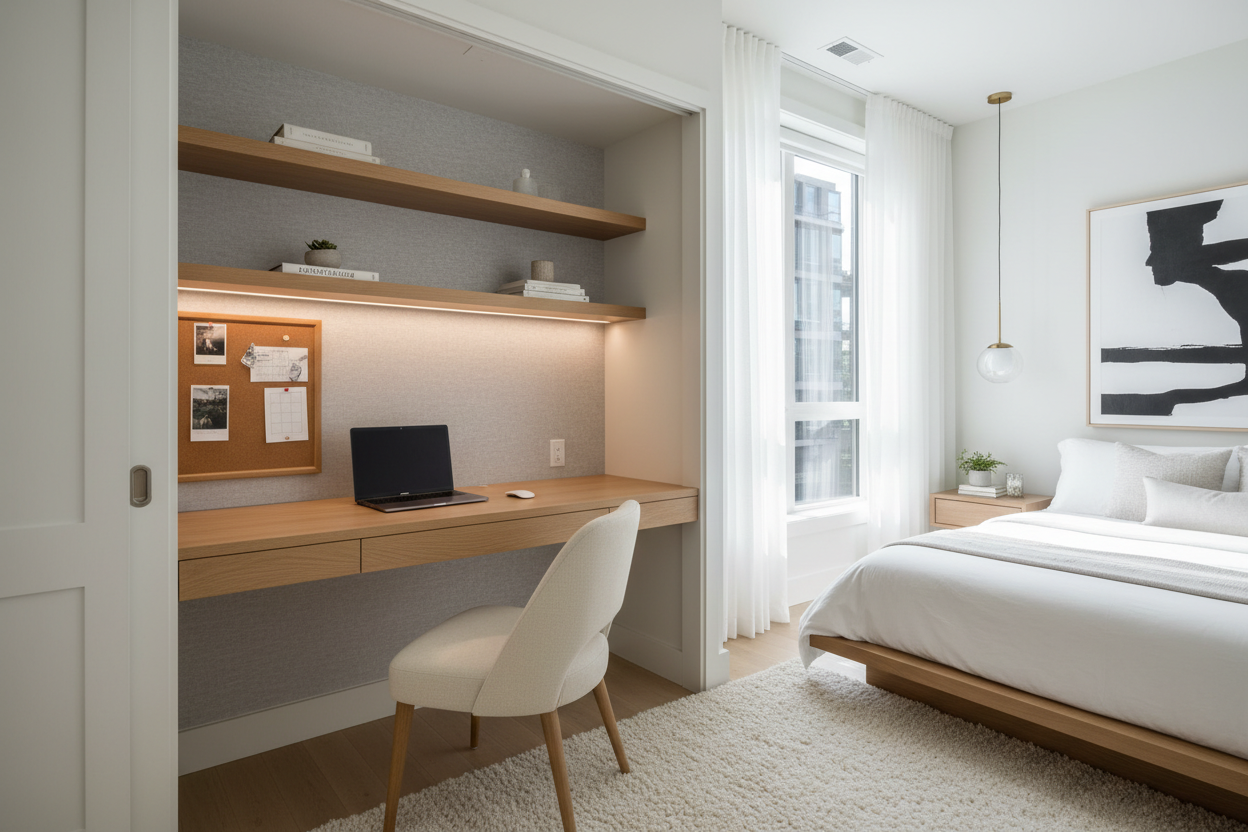
One of the most frequent dilemmas I encounter in residential design is the lack of dedicated square footage for a home office. Clients often assume they need an addition or a spare room to be productive. However, the solution often lies dormant behind a pair of bi-fold doors. A closet work space—affectionately known in the industry as a "cloffice"—is not just a compromise; when executed correctly, it is a sophisticated architectural intervention that maximizes utility without sacrificing floor space.
Quick Decision Guide: Essentials for a Cloffice
- Depth Requirement: Ensure a minimum depth of 24 inches for the desktop to accommodate a laptop and proper wrist support.
- Lighting Strategy: Closets lack windows. Prioritize hardwired overheads or rechargeable motion-sensor LEDs to mimic daylight (4000K).
- Power Access: Locate the nearest outlet immediately. You will likely need to route power behind the baseboards or hire an electrician for a new drop.
- Seating Clearance: Measure the width of your chair's wheelbase. Standard office chairs struggle in narrow reach-in closets; consider armless or slim-profile seating.
Assessing the Architecture: Reach-In vs. Walk-In
Before sourcing materials, we must audit the existing structure. For a bedroom closet office, the most common layout is the standard reach-in. The challenge here is depth. A standard closet is roughly 24 inches deep. If you install a desk that is flush with the front wall, you cannot close the doors while sitting.
For a seamless look, I recommend a floating desktop installed at a depth of 20 to 22 inches. This allows you to tuck a stool or slim chair entirely inside when the work day is done, preserving the visual calm of the bedroom.
Material Selection: Balancing Aesthetics and Durability
Because this space is compact, every texture counts. Avoid cheap melamine that can peel at the edges. For a high-end feel, opt for wood veneers or butcher block cut to size. These materials offer the warmth of solid wood but are more stable against humidity changes often found in enclosed spaces.
If you are looking for small closet office space ideas that feel expansive, use a monochromatic palette. Paint the back wall, the shelving, and the ceiling the same color. Dark navies or charcoal grays recede visually, making the back wall disappear and the space feel deeper than it actually is.
Lighting: The Make-or-Break Factor
Lighting is not decoration; it is infrastructure. In a deep nook, overhead lighting often casts a shadow of your head onto your work surface. To counter this, install under-cabinet LED strips beneath your upper shelving. This provides focused task lighting exactly where you need it—on your documents and keyboard—without creating glare.
Ergonomics and Layout Optimization
When curating closet workspace ideas, verticality is your best asset. Since horizontal space is limited, take your storage to the ceiling. Use the top shelves for archival storage (items you need once a year) and keep the shelves immediately above the monitor open for daily essentials.
managing the "Door Dilemma"
The doors are often the biggest obstruction. Standard bi-fold doors block the corners of the opening. If the budget allows, remove the doors entirely and treat the opening with casing and trim for an intentional built-in look. Alternatively, replace them with a sliding barn door hardware kit or pocket doors if the wall cavity permits, allowing for 100% access to the width of the desk.
My Personal Take on Closet Work Space
I learned a hard lesson about cloffices during a renovation for a client in a pre-war apartment. We designed a beautiful walnut slab desk inside a reach-in closet. It looked stunning in the renderings. However, I failed to account for the specific "throw" of the bi-fold door hinges.
When the client tried to sit at the desk, their elbows kept banging into the folded doors, which encroached about four inches into the opening on either side. It was a functional nightmare. We had to remove the doors and install a heavy velvet curtain on a ceiling track instead. It added a lovely texture and sound dampening, but it taught me a crucial lesson: Always measure the clear opening width, not just the interior closet width. Also, ventilation matters—closets get hot fast when you have a computer tower running inside them. I now always recommend a small, silent USB fan to keep air circulating.
Conclusion
Converting a closet into a workspace requires a shift in perspective. It is about subtracting the unnecessary to make room for the essential. By focusing on quality materials, layered lighting, and smart vertical storage, you can carve out a sanctuary of productivity that disappears when the work is done.
Frequently Asked Questions
What is the ideal desk height for a closet office?
Standard desk height is between 29 and 30 inches. However, in a closet, measure your chair height first. Ensure the armrests can slide under the desktop surface to allow the closet doors to close properly.
How do I handle cable management in a closet without outlets?
If hiring an electrician isn't an option, use a heavy-duty, flat-plug extension cord running along the baseboard from the nearest room outlet. Conceal it with a paintable cord cover. Inside the closet, mount a surge protector to the underside of the desk to keep cords off the floor.
Can I fit a dual monitor setup in a small closet office?
It is possible, but tight. Instead of placing monitors side-by-side on their stands, use a dual monitor arm clamped to the back of the desk. This floats the screens, reclaiming valuable desk surface for your keyboard and notebook.

Leave a comment
This site is protected by hCaptcha and the hCaptcha Privacy Policy and Terms of Service apply.