










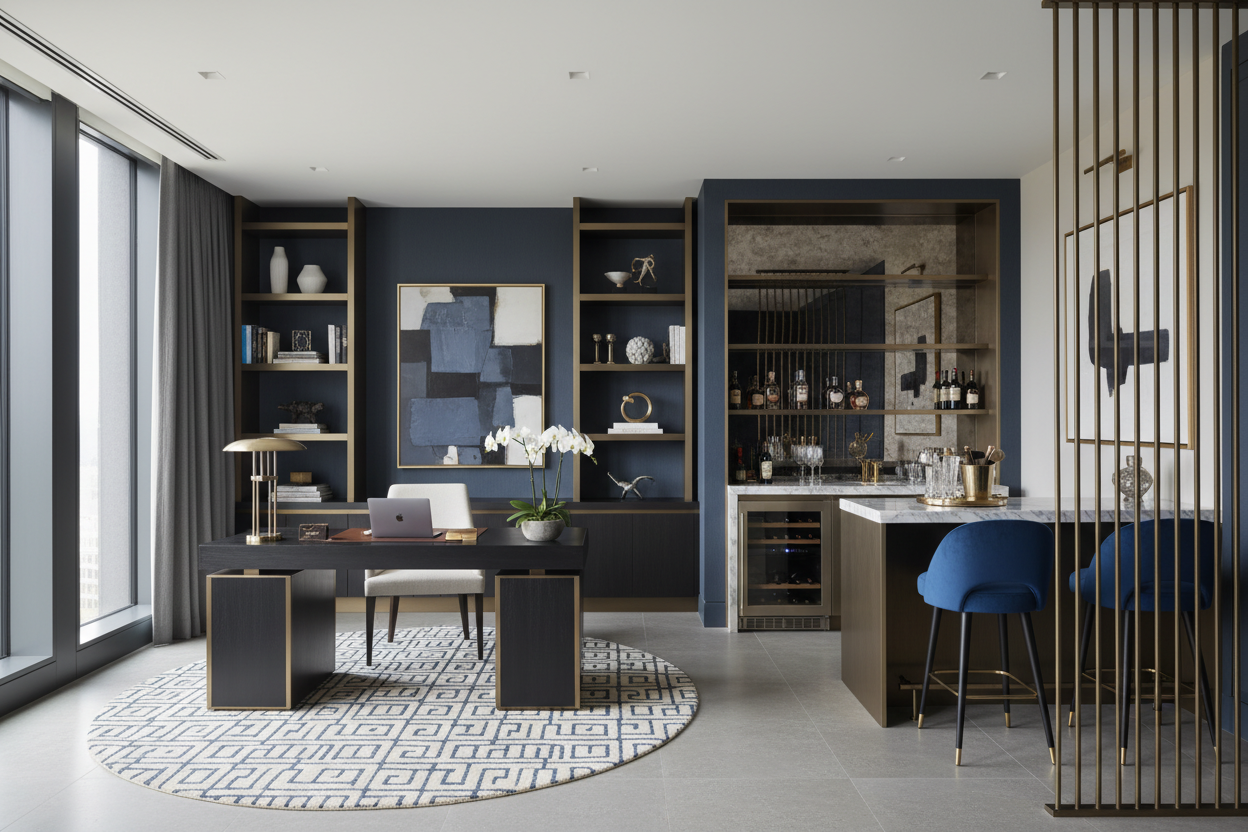
The boundary between professional obligations and personal downtime has never been thinner, yet the design challenge remains: how do you merge productivity with conviviality without compromising either? Creating a home office and bar is not merely about shoving a desk and a drinks trolley into the same room. It requires a sophisticated understanding of zoning, acoustics, and psychological transition.
When I consult with clients, the primary hesitation is always visual clutter. No one wants to stare at a stack of unpaid invoices while mixing a Negroni, nor do they want a bottle of scotch serving as the backdrop for a Monday morning video conference. This guide explores how to integrate these two distinct functions into a cohesive, high-end narrative.
Key Design Elements for Dual-Purpose Rooms
- Zoning & Flow: Distinct physical or visual separation between the workstation and the lounge area.
- Lighting Versatility: A mix of high-kelvin task lighting for work and dimmable, warm ambient lighting for the evening.
- Concealed Storage: Custom joinery or pocket doors to hide technology during leisure hours and barware during work hours.
- Acoustics: Soft furnishings and rugs to dampen sound, ensuring the space doesn't feel cold or echoey.
- Material Continuity: Using a consistent palette (e.g., walnut, brass, leather) to unify the two zones.
Mastering the Layout and Zoning
The success of this combination hinges on the floor plan. In a luxury setting, we avoid placing the desk directly facing the bar. Instead, position the desk to command the room—typically facing the door or a window—while the bar occupies a dedicated niche or a rear wall.
If square footage allows, floating the desk in the center of the room creates a natural partition. Behind the desk, a credenza can serve a dual purpose: file storage on the work-facing side and a beverage cooler on the reverse. For smaller spaces, consider distinct "zones" anchored by rugs. A flat-weave wool rug under the desk facilitates chair movement, while a plush, high-pile rug defines the lounge and bar area.
Joinery and Material Selection
The Art of Concealment
Custom millwork is the secret weapon of high-end interiors. When designing home office and bar ideas for clients, I often recommend cabinetry with retractable pocket doors. During the day, the bar is completely hidden behind sleek wood paneling, minimizing distractions. At 5:00 PM, the doors slide back to reveal a mirrored backsplash, glass shelving, and accent lighting, instantly changing the room's atmosphere.
Cohesive Finishes
To prevent the room from feeling like two separate spaces stitched together, carry your materials through both zones. If your desk features brass hardware, use the same brass finish for the bar faucet and cabinet pulls. Darker woods, such as walnut or mahogany, tend to work best for this hybrid concept; they offer the gravitas required for a serious workspace while evoking the moody, intimate feel of a speakeasy.
Lighting: The Mood Shifter
Lighting dictates the room's function. A single overhead fixture will not suffice. You need a layered approach:
- Task Layer: An articulated desk lamp with a focused beam.
- Ambient Layer: Architectural lighting, such as cove lighting or recessed cans on a dimmer.
- Accent Layer: This is where the bar shines. Install LED strip lighting under the bar shelves to illuminate the bottles and glassware.
Smart lighting systems are invaluable here. Program a "Work" scene that activates the overheads and desk lamp, and a "Lounge" scene that cuts the overheads and activates the warm glow of the bar shelving and floor lamps.
Lessons from My Own Projects: The "Hum" Factor
I learned a hard lesson early in my career while designing a study-turned-lounge for a client in Chicago. We selected a stunning, commercial-grade wine fridge to be built directly into the credenza behind the desk. Visually, it was impeccable.
However, two weeks after installation, the client called me. The issue wasn't the look; it was the sound. The compressor on that specific unit had a low-frequency hum that was imperceptible during a party but maddeningly loud during a silent work session. It vibrated slightly against the cabinet frame, creating a resonance that disrupted his concentration.
Since then, I have been obsessive about two things: ventilation and decibels. Now, I only specify thermoelectric coolers (which are quieter than compressor units) for office spaces, or I ensure the compressor unit is isolated with rubber gaskets and heavy insulation. Furthermore, I always check the depth of the hardware. We once had a beautiful bar cabinet where the crystal decanters rattled every time the client typed vigorously because the flooring transferred the vibration. We solved it with heavy-duty felt pads and a thicker rug, but it’s these unpolished, sensory details—sound and vibration—that define whether a space is actually livable.
Conclusion
Merging a home office and bar is an exercise in balance. It requires a shift from purely utilitarian thinking to an experiential approach. By investing in quality joinery, controlling your lighting environment, and respecting the acoustics of the room, you can create a sanctuary that supports your ambition during the day and celebrates your success in the evening.
Frequently Asked Questions
How do I fit a home office and bar into a small room?
Verticality is key. Use floor-to-ceiling shelving. Dedicate the lower cabinets to office storage and the upper open shelves for books and barware. A drop-front desk or a secretary desk can also double as a mixing station when the laptop is put away.
What is the best seating for a dual-purpose room?
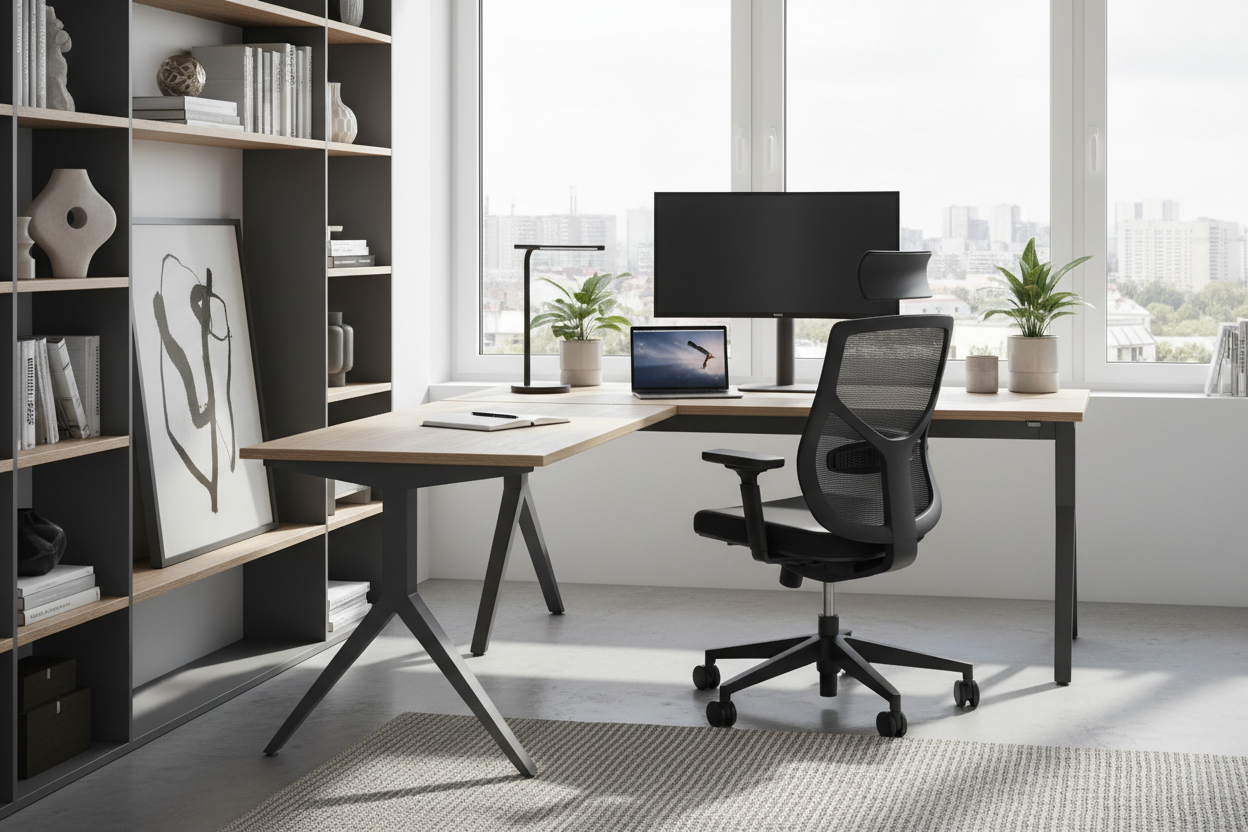
Invest in an ergonomic office chair that doesn't look too "corporate." Look for chairs upholstered in leather or velvet rather than standard black mesh. For the bar area, a pair of swivel club chairs allows guests to turn toward the desk or the bar effortlessly.
How do I hide the computer monitor when entertaining?
If you cannot hide the desk, focus on the monitor. Use a monitor arm to swing the screen flat against the wall, or invest in a smart monitor that doubles as a digital art frame when not in use. Alternatively, a folding screen can physically block the view of the workspace during social gatherings.

Leave a comment
This site is protected by hCaptcha and the hCaptcha Privacy Policy and Terms of Service apply.