










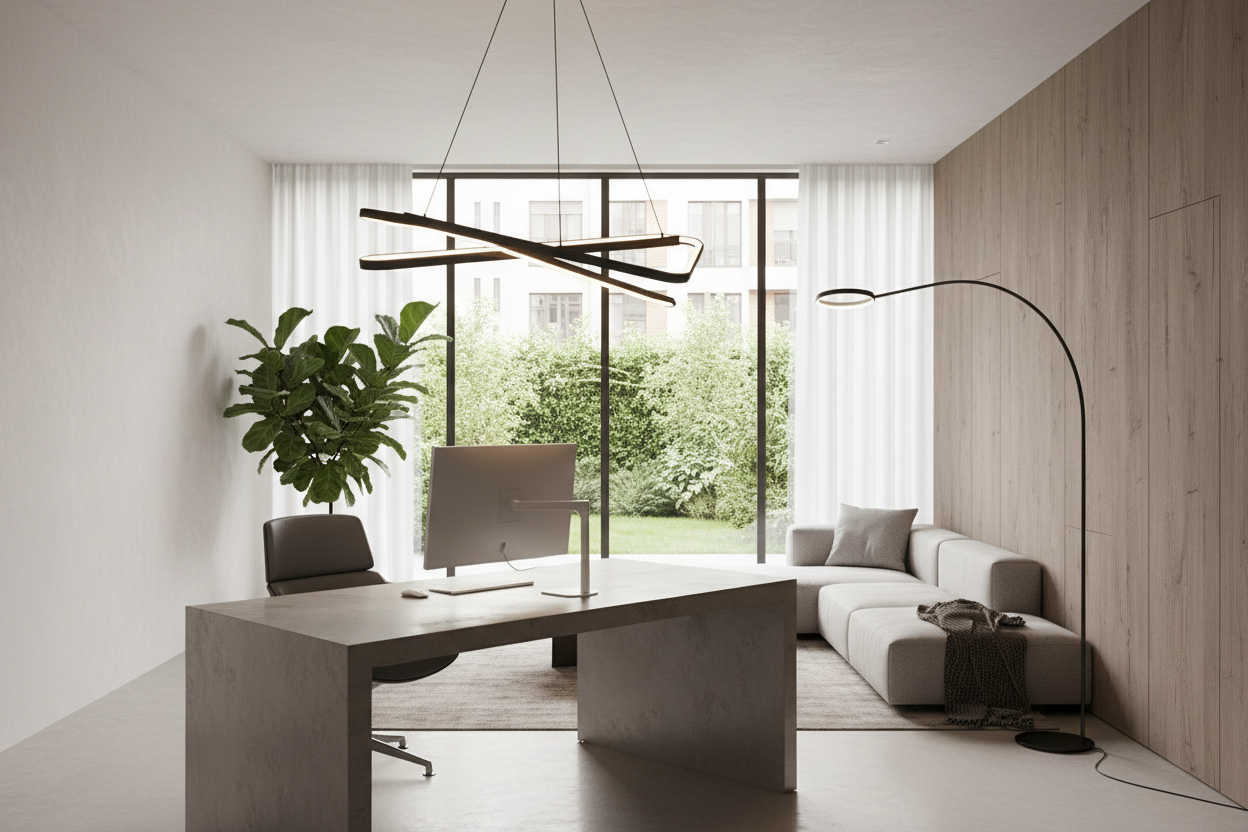
We often treat lighting as an afterthought in workspace design, prioritizing the ergonomic chair or the solid oak desk. However, poor lighting is the fastest way to ruin a sophisticated interior and induce eye strain. A well-chosen modern office light fixture does more than just illuminate your paperwork; it acts as the architectural anchor of the room, defining the zone and setting the professional tone. Whether you are renovating a corporate suite or refining a nook in your living room, the fixture you choose dictates the visual weight and functionality of the entire space.
Key Features to Look For
- Color Temperature (Kelvins): Aim for 3000K to 4000K for task clarity without the harshness of clinical blue light.
- Adjustability & Articulation: Look for cantilever arms or swiveling heads to direct lumens exactly where needed.
- Material Integrity: Prioritize weighted bases (marble or solid metal) over hollow plastic to ensure stability.
- Glare Control: Ensure the shade depth is sufficient to hide the bulb from your seated eye level.
- Scale Relative to Desk: The fixture should span roughly one-third of your desk's width for visual balance.
Mastering the Layers of Light
In high-end design, we never rely on a single source. Contemporary office lighting fixtures must be layered to create depth. A common error is installing a single overhead recessed light and calling it a day. This creates unflattering shadows across your face during video calls and creates a dull, flat atmosphere.
Instead, combine ambient lighting (general fill) with task lighting. A linear suspension light works beautifully over a floating desk, while contemporary home office lighting plans often benefit from a sculptural floor lamp in the corner to soften the room's edges. This layering reduces the contrast between your bright monitor and the dark room, saving your eyes from fatigue.
Materiality and Texture
The finish of your fixture can make or break the aesthetic. Currently, modern lighting for home office setups is trending toward mixed materials. We are seeing a move away from standard chrome and toward matte black powder coats paired with warm walnut accents or brushed brass details.
When selecting cool office light fixtures, consider the tactile experience. If it is a desk lamp, you will be touching it frequently. Does the switch feel substantial? Is the metal cold and solid, or does it feel like plated plastic? Solid brass or copper fixtures will develop a patina over time, adding character, whereas cheaper veneers may chip.
The Role of Silhouette
The silhouette of your modern home office light fixture should contrast with your furniture. If you have a heavy, blocky wooden desk, opt for a fixture with a slender, linear profile to add lightness. Conversely, if you are working on a glass or thin metal desk, a lamp with a more substantial, geometric volume can provide necessary grounding.
Lessons from My Own Projects
I want to share a specific realization I had while sourcing a modern office light fixture for a client in a high-rise condo. We fell in love with a stunning, high-gloss spun metal pendant. It looked incredible in the catalog.
However, once installed, I realized a critical functional flaw: the glossy interior of the shade acted like a mirror for the client's dual monitors. Every time they looked up, they saw a distracting reflection of their spreadsheet. We had to swap it for a fixture with a matte baffle inside the shade. Another detail I always check now is the "knuckle" or hinge tension on adjustable lamps. I've found that budget-friendly options often lose their tension after about six months of daily adjusting, causing the lamp head to droop. I now only specify fixtures where the tension screws are exposed and can be tightened with an Allen key, ensuring longevity.
Conclusion
Selecting the right lighting is about balancing technical performance with sculptural beauty. It is the finishing touch that signals a space is complete and considered. By focusing on color temperature, material quality, and proper scale, you can curate a workspace that feels both luxurious and highly functional. Don't settle for adequate; aim for exceptional.
Frequently Asked Questions
What is the best height to hang a pendant light over a desk?
Generally, the bottom of the fixture should sit 30 to 40 inches above the desk surface. However, sit in your chair first to ensure the fixture doesn't obstruct your view of the screen or create a collision hazard when you stand up.
Can I mix metal finishes in my office lighting?
Absolutely. Mixing metals adds sophistication. A good rule of thumb is to choose a dominant metal (e.g., matte black) and an accent metal (e.g., antique brass). Just ensure the undertones match; mixing varying shades of gold can look unintentional.
How many lumens do I need for a home office desk lamp?
For focused task work, look for a fixture that delivers roughly 450 to 800 lumens. If the light is dimmable, opt for the higher end of that range so you can adjust based on the time of day and the task at hand.


Leave a comment
This site is protected by hCaptcha and the hCaptcha Privacy Policy and Terms of Service apply.