










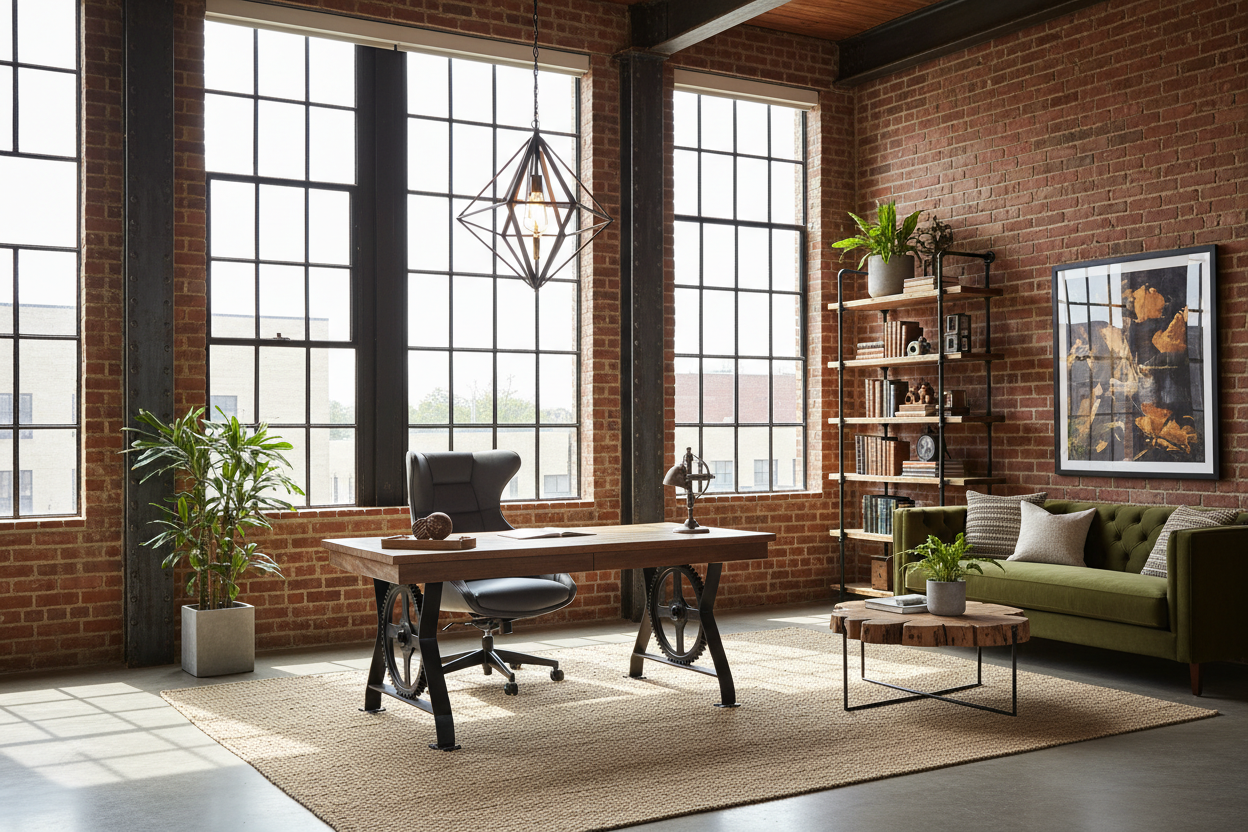
There is a fine line between a workspace that feels curated and architectural, and one that simply feels unfinished. Many homeowners attempt to recreate the New York loft aesthetic but end up with a space that feels cold, sterile, or cluttered. The secret to a successful industrial office lies not just in exposing brick and ductwork, but in the intentional layering of raw materials with ergonomic sophistication.
Key Elements of Industrial Design
- Material Integrity: Prioritize authentic materials like solid reclaimed wood, concrete, and powder-coated steel over faux-laminates.
- Architectural Lighting: Look for fixtures with exposed bulbs, metal cages, or matte black finishes to anchor the ceiling space.
- Neutral Palette: Stick to a monochrome base (greys, blacks, whites) warmed up by natural wood tones and leather.
- Functional Minimalism: Every piece should serve a purpose; open shelving and visible mechanics are hallmarks of the style.
Mastering the Material Mix
The foundation of any industrial office interior design is the interplay between warm and cool textures. If you lean too heavily on metal, the room becomes clinical. If you overuse wood, it drifts into farmhouse territory.
The Desk: Your Focal Point
For your primary workstation, avoid mass-produced particle board. A true industrial style office demands a desk with presence. Look for a slab of live-edge walnut or oak paired with heavy iron legs. If you are aiming for a modern industrial office design, a glass top on sawhorse legs offers a lighter visual footprint, which is crucial if you are working with limited square footage.
Seating: Where Ergonomics Meets Aesthetics
This is where many designs fail. While a vintage metal stool looks fantastic in photos, it is a nightmare for an eight-hour workday. For a functional industrial home office, invest in a high-quality ergonomic chair. Look for designs that feature ribbed leather upholstery (often called channel stitching) or mesh backs with chrome or aluminum frames. These options maintain the industrial chic office vibe without sacrificing your lumbar health.
Lighting and Ambiance
Lighting in an industrial theme office serves a dual purpose: task illumination and sculptural art. Overhead, a linear pendant light with exposed filament bulbs works wonders above a desk. However, be wary of glare.
For a modern industrial office space, layer your lighting. Use a metal architect’s lamp for focused task lighting. The articulated joints of these lamps contribute to the mechanical aesthetic while providing necessary adjustability. If your space lacks natural light, floor lamps with tripod bases—reminiscent of surveyor equipment—add height and visual interest to corners.
Optimizing Layouts for Different Spaces
Small Industrial Office Design
You do not need a warehouse to achieve this look. In a small industrial home office design, verticality is your best friend. Utilize wall-mounted pipe shelving to store books and decor. This keeps the floor clear and draws the eye upward, making the room feel larger. A floating desk anchored to the wall with industrial brackets can also save precious square footage.
The Executive Suite
If you have ample room, create zones. Use a cowhide or distressed wool rug to define the seating area separate from the desk. This adds softness and improves acoustics—a common issue in rooms with hard surfaces like concrete or brick.
Decor and Styling Nuances
Industrial office decor ideas should focus on "found" objects and mechanical details. A vintage typewriter, a large analog wall clock with visible gears, or framed blueprints serve as excellent wall art. However, keep it curated. Too many accessories can make an industrial look office feel like a flea market.
For a rustic industrial office design, incorporate plants. A large Fiddle Leaf Fig or a Snake Plant in a concrete planter introduces organic color that breaks up the greyscale palette, breathing life into the metal and wood environment.
Lessons from My Own Projects
I learned a hard lesson about surface materials early in my career while designing a loft space in Chicago. I specified a stunning, custom-fabricated sheet metal desk for a client. Visually, it was a masterpiece—sleek, riveted, and undeniably cool. However, two weeks after installation, the client called me.
The issue wasn't the look; it was the temperature. In the winter, that metal desk sucked the heat right out of his forearms, making it impossible to type comfortably for more than ten minutes. We ended up having to commission a custom leather desk blotter to cover the working area. Now, whenever I suggest industrial desk ideas involving metal tops, I always factor in the tactile experience. The "touch" is just as important as the "look." Another detail to watch is open pipe shelving; while beautiful, it collects dust rapidly. I always advise clients to keep open storage for items they use daily, so the dust doesn't have a chance to settle.
Conclusion
Creating a modern industrial home office is about celebrating the raw beauty of construction while ensuring the space remains habitable and inspiring. By balancing the coldness of metal with the warmth of wood and leather, you can build a workspace that is as durable as it is stylish. Focus on quality materials and ergonomic necessities, and your office will stand the test of time.
Frequently Asked Questions
How do I make an industrial office look less cold?
Texture is the antidote to coldness. Introduce a high-pile rug, leather seating, and heavy curtains. Adding plants and ensuring your lighting temperature is warm (2700K-3000K) rather than cool white will also make the space feel inviting rather than clinical.
Can I pull off an industrial look in a standard carpeted bedroom?
Yes. While concrete or hardwood floors are traditional, you can layer a large, distressed area rug over the carpet to anchor the furniture. Focus your industrial efforts on the vertical space—using metal shelving and wall art—to draw attention away from the flooring.
What are the best colors for an industrial home office?
Stick to a base of charcoal, slate grey, white, and black. Use brick red (terracotta), cognac leather, and natural wood tones as your secondary colors. Deep greens or navy blues can also work well as accent walls to add depth to a modern industrial office.

Leave a comment
This site is protected by hCaptcha and the hCaptcha Privacy Policy and Terms of Service apply.