










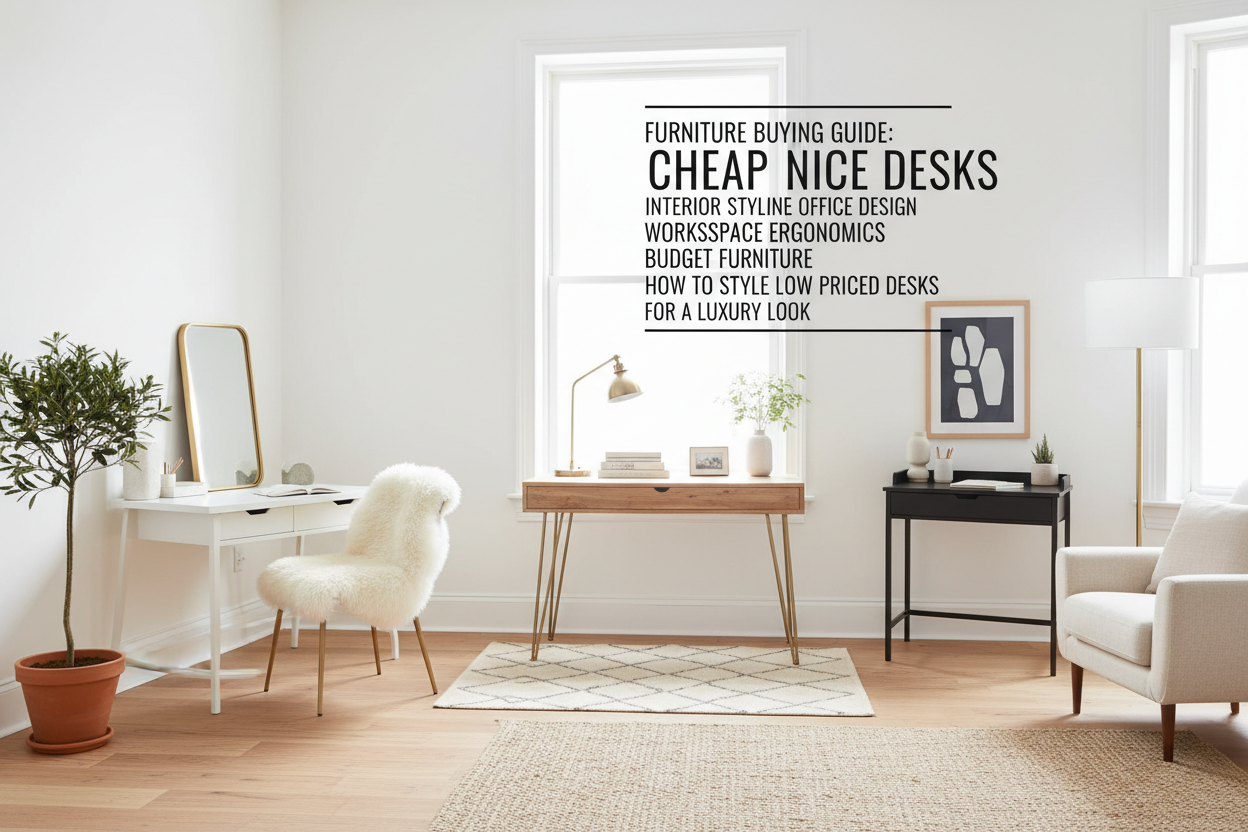
One of the most persistent myths in interior design is that a sophisticated workspace requires a four-figure investment. I frequently work with clients who are hesitant to allocate their budget to the workspace, fearing that anything affordable will look flimsy or utilitarian. However, creating a high-end aesthetic is less about the price tag and more about curation. You can absolutely find **low priced desks** that offer the visual weight and structural integrity of their more expensive counterparts if you know which details to scrutinize.
Key Features to Look For
- The Shake Test (Stability): Look for cross-bracing or a metal frame. A desk that wobbles ruins concentration regardless of aesthetics.
- Surface Texture: Avoid high-gloss laminates that scream "plastic." Opt for matte finishes or textured wood-grain laminates that mimic real veneer.
- Edge Banding: Check the edges. Seamless or thick edge banding indicates better longevity than thin strips that may peel.
- Hardware Quality: If the desk has drawers, ensure the glides are metal, not plastic.
- Visual Weight: Thicker tops (even if hollow core) generally look more substantial and expensive than thin sheets.
Navigating Materials: Beyond Solid Wood
When sourcing a simple desk cheap enough to fit a tight budget, you are rarely going to encounter solid walnut or oak. Instead, you will likely be choosing between particle board, MDF (Medium Density Fiberboard), or hollow-core composites.
From a design perspective, I often steer clients toward powder-coated metal frames topped with high-quality MDF. Metal provides the rigidity that cheap wood substitutes often lack. If you choose a wood-look laminate, examine the grain pattern. "Repeated" patterns that occur too frequently can look artificial. A darker walnut or charcoal finish often disguises the synthetic nature of the material better than lighter faux-maple finishes.
Silhouette and Space Planning
The profile of the furniture dictates the room's flow. For smaller apartments or multi-use spaces, a very cheap desk with a heavy, boxy design will make the room feel claustrophobic.
The Parsons Style
I frequently recommend the "Parsons" silhouette—a simple rectangular top with four legs and no overhang. It is timeless and creates a minimal visual footprint. Because the design is straightforward, manufacturers spend less on complex joinery, meaning you can often find cheap nice desks in this style that are surprisingly sturdy.
Leg Clearance and Ergonomics
Inexpensive desks often cut corners on scale. Ensure the desk height is standard (around 29 to 30 inches) and that there are no support bars blocking your knees. A desk that looks sleek but forces you to sit uncomfortably is a poor investment, regardless of the price.
Elevating the Aesthetic
Once you have the piece, the styling determines the perceived value. A low-cost desk is often a blank canvas. I always advise swapping out stock drawer pulls for brushed brass or matte black hardware. This simple ten-minute modification can make a mass-produced item look custom.
Furthermore, cable management is non-negotiable. Inexpensive desks rarely have built-in wire channels. Using adhesive clips or a spine to hide cords preserves the clean lines and mimics the functionality of high-end office furniture.
My Personal Take on Low Priced Desks
In my early years staging model apartments, I had to furnish entire home offices on shoestring budgets. I learned a specific lesson about "hollow core" desks that I now pass on to every client.
I once bought a sleek, white lacquer desk that looked stunning in photos. However, the moment the client sat down to work, the experience fell apart. Because the top was essentially a hollow drum, typing on a mechanical keyboard created a loud, echoing boom, and the front edge was sharp enough to leave indentations on the forearms.
The fix? A high-quality, felt or leather desk mat. It dampened the sound of the hollow core and protected the user's wrists from the sharp laminate edge. Now, whenever I source budget-friendly tables, a dense desk pad is an automatic add-on. It adds a tactile layer of luxury that masks the underlying construction.
Conclusion
Designing a workspace is about supporting your workflow and your aesthetic sensibilities. You do not need to overspend to achieve a professional look. By focusing on matte finishes, sturdy metal frames, and smart styling accessories, you can integrate budget-friendly furniture that feels intentional and permanent.
Frequently Asked Questions
How do I stop a cheap desk from wobbling?
Wobbling is usually caused by uneven floors or loose joinery. First, tighten all screws (a drop of thread-locker glue helps). If it persists, use adjustable furniture levelers on the feet, or place the desk partly on a rug to dampen movement.
Can I paint a laminate desk to make it look better?
Yes, but preparation is key. You cannot paint directly over slick laminate. You must sand the surface lightly to create a "key," apply a high-adhesion bonding primer, and then use an enamel paint for durability.
What is the weight limit for most low-priced desks?
Most budget desks are rated for 50 to 100 pounds. While this holds a laptop and monitor easily, be cautious with heavy monitor arms (clamps) on hollow-core desks, as they can punch through the thin exterior material.


Leave a comment
This site is protected by hCaptcha and the hCaptcha Privacy Policy and Terms of Service apply.