










I spent three years keeping my tax returns in a literal Nike box under my bed. Every April, I would crawl under there, covered in dust bunnies, to hunt for a receipt that had inevitably slipped through the cracks. For a long time, I convinced myself that owning a file cabinet was the ultimate surrender to being a 'boring adult.' I associated them with fluorescent lights, stale coffee, and that specific shade of putty-grey metal that seems designed to drain the joy out of a room. But after my cat decided my birth certificate was a fun chew toy, I realized my chaotic shoebox system was a disaster waiting to happen.
Quick Takeaways
- Skip the metal industrial units unless you are going for a strictly 'garage' aesthetic.
- Lateral file cabinets are more stable and double better as console tables.
- Always check for full-extension ball-bearing slides; if the drawer doesn't open all the way, you will lose papers in the back forever.
- Look for adjustable hanging rails that accommodate both letter and legal-sized folders.
The 'Shoebox System' Was Ruining My Life
Before I caved and bought real filing cabinets for home office use, I tried every 'hack' in the book. I bought those cute little accordion folders from the dollar spot at Target. I tried a mobile storage cabinet that was basically just a plastic cart on wheels. It was a mess. Every time I needed to find a medical record or a car title, it was a 45-minute excavation project. The reality is that paper accumulates whether you want it to or not, and a cabinet filing system is the only way to keep your sanity when the IRS comes knocking.
I finally admitted that home office filing cabinets are an unavoidable part of adulthood. But here is the thing: a file cabinet for home office storage doesn't have to be a vertical metal tower that screams 'corporate gloom.' I started looking for filing and storage cabinets that felt permanent. I wanted something heavy, something that wouldn't tip over if I opened the top drawer too fast, and something that actually fit the mid-century vibe of my apartment. I needed a file storage unit that held my life together without making my office look like a DMV waiting room.
Why Are Most Document Organizers So Profoundly Ugly?
The furniture industry seems to think that once you need to store a document, you lose all sense of taste. Most office file cabinets you see at big-box retailers are made of that flimsy, thin-gauge steel that dings if you breathe on it. They are loud, they clatter, and they look like they were stolen from a 1992 accounting firm. When you are trying to fit large office file cabinets into a cozy residential space, the visual weight of all that grey metal is just too much. It creates a 'work' energy that is impossible to relax around.
Cheap office cabinets are the worst offenders. They often use plastic rollers instead of metal glides, meaning the moment you fill that file folder cabinet with actual paper, the drawers start to sag. I have seen so many office filing cabinet furniture pieces that are just particle board with a grainy sticker on top. If you are going to invest in a nice filing cabinet, you have to look past the 'office supplies' section and start looking at real furniture. A document storage cabinet should be an asset to your room, not something you try to hide behind a curtain.
The 'Furniture First' Approach to Paper Storage
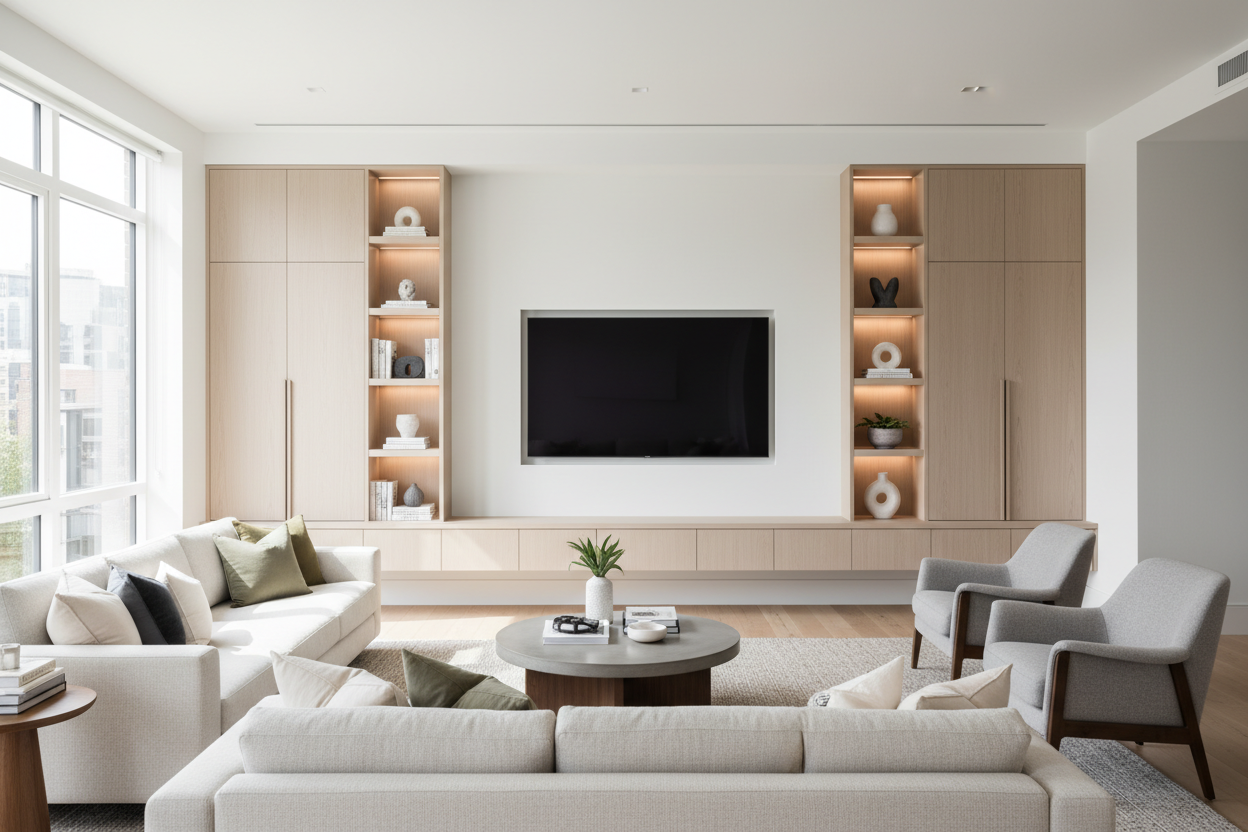
The breakthrough for me was searching for a drawer file cabinet that didn't identify as one. I stopped looking for 'office furniture' and started looking for a beautiful sideboard or console that happened to have deep, reinforced drawers. This shift to file cabinet furniture changed everything. I found pieces with kiln-dried oak finishes, tapered legs, and brass hardware that looked like they belonged in a curated living room. A cabinet with file drawers can easily masquerade as a media console or an entryway table if the proportions are right.
I eventually landed on a double wide filing cabinet in a dark walnut finish. It has the internal hanging rails needed for a proper file storage home setup, but from the outside, it just looks like an executive file cabinet or a high-end credenza. This is the 'furniture filing cabinet home' dream—having a dedicated filing unit that stores your mortgage papers and your old tax returns, but also provides a surface for a table lamp and a stack of art books. Whether you go for a filing cabinet furniture piece or a full office wall unit with file drawers, the goal is to hide the utility behind a solid wood face. It makes the whole room feel more expensive and less like a workspace.
What to Look For (Besides Just Looking Pretty)
Once you find a filing cabinet and shelf combo that catches your eye, you have to get technical. Paper is incredibly heavy. A standard 24-inch drawer full of files can weigh 50 to 100 pounds. If you buy a flimsy furniture file cabinet home model, the bottom of the drawer will literally fall out within a year. Look for dovetail joinery or at least thick plywood bottoms. Avoid anything where the drawer base is that weird, floppy hardboard that feels like thick construction paper. You want a file drawer cabinet that feels like a tank but looks like a Ferrari.
Safety is the other big one. If you have kids—or just nosy houseguests—you probably want a filing cabinet with a lock. Most home office file storage doesn't come with high-security locks, but a simple cam lock is enough to keep your social security card away from prying eyes. Also, check for an anti-tip mechanism. A giant filing cabinet with both drawers open is a tipping hazard. The best file cabinet systems only allow one drawer to open at a time, which is a life-saver if you have a heavy document drawer cabinet. Smooth-gliding rails are non-negotiable; I prefer the soft-close variety so I don't wake up the whole house every time I file a bill.
Where I Put Mine So It Doesn't Scream 'Office'
I ended up placing my living room file cabinet right under my gallery wall. By styling it as an archive cabinet with a tray of decanters on top, it completely disappears into the decor. No one ever suspects that my living room filing cabinet is actually holding five years of utility bills and my passport. If you are tight on space, a file cabinet for living room use can even double as a TV stand. Just make sure the height is right—usually around 28 to 30 inches is the sweet spot for viewing.
If you have a dedicated room, a filing cabinet armoire or a filing cabinet with shelves on top can create a massive amount of storage without making the room feel 'officey.' I’ve even seen people use an office side cabinet as a nightstand. The deep drawers are perfect for extra blankets on the bottom and current files on the top. The 'at home filing cabinet' doesn't have to live in a dark corner. When you choose a piece with an office file cabinet design that mimics high-end furniture, you can put it anywhere. My office storage and file cabinet is now my favorite piece of furniture, mostly because I never have to look at a Nike box again.
FAQ
Is a lateral or vertical file cabinet better for a small home?
Lateral is almost always better. They are shallower (usually 18 inches deep) so they don't stick out into the walking path as much as a vertical cabinet, which can be 22 to 28 inches deep. Plus, you get more surface area on top for decor.
Can I turn a regular dresser into a filing cabinet?
You can, but you'll need to buy a 'file rack cabinet' insert. Just be careful—dressers aren't always built to handle the concentrated weight of hanging files, so you might blow out the drawer slides if you overfill them.
What is the difference between a file cabinet and a filing cabinet?
Absolutely nothing. People use the terms interchangeably. Whether you call it a file storage unit or a filing cupboard, it's the same thing. Just focus on the build quality and the drawer depth.


Leave a comment
This site is protected by hCaptcha and the hCaptcha Privacy Policy and Terms of Service apply.