










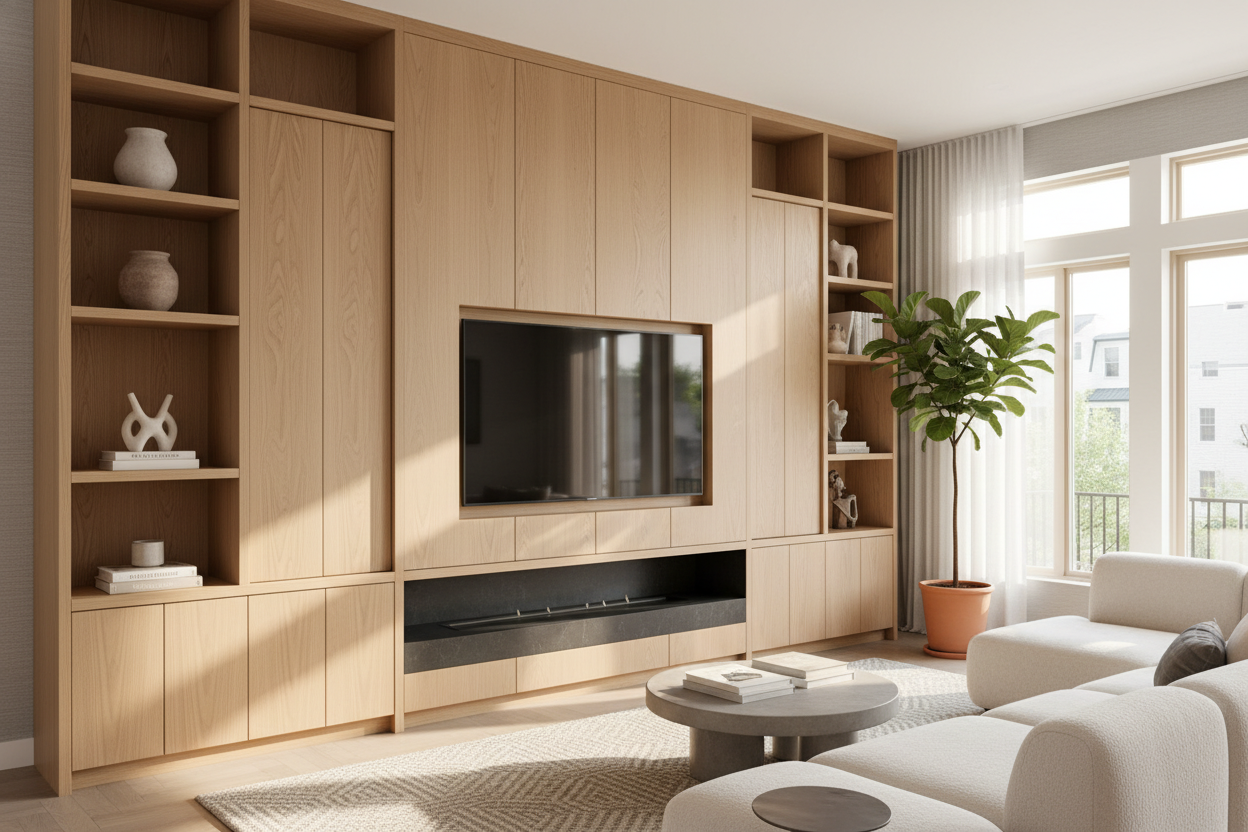
I spent three weekends in my garage trying to make two sixty-dollar bookshelves look like they were born in my 1920s bungalow. I bought the crown molding, I caulked the seams, and I even painted them a moody forest green. But every time I sat on my sofa, I didn't see a 'built-in.' I saw two cheap boxes with a gap at the baseboard that mocked my lack of carpentry skills. Eventually, I realized that a wall unit custom built for the space was the only way to stop the madness.
- Total Cost: Expect to pay $1,200–$2,500 per linear foot for professional carpentry.
- Material Matters: 3/4-inch cabinet-grade plywood beats MDF for longevity and weight capacity.
- The Secret Sauce: Integrated lighting and scribe molding are what make it look like part of the architecture.
- Timeframe: From deposit to final coat of paint, my project took exactly seven weeks.
The Breaking Point: Why My 'Clever' Hacks Finally Failed
We've all seen the TikToks. Someone takes a few flat-pack units, adds a 1x4 base, and calls it a day. I tried that. The problem is that most big-box shelves are 11 or 12 inches deep. My living room needed 16 inches to actually hold my oversized art books and hide the printer. Because the floors in my old house have a two-inch slope, the DIY units leaned forward like they were trying to escape.
I realized that 'faking it' only works from a distance. Up close, the particle board started to sag under the weight of my vinyl collection. The seams where the units met were never quite flush, no matter how many wood screws I drove through them. I wanted something that felt permanent and structural, not something that would wobble if the dog ran past it too fast.
What Does a Custom Wall Unit Actually Cost?
I called three local carpenters for a 12-foot custom wall unit. The quotes were a reality check. The lowest bid was $6,500 for basic MDF with no doors. The highest was $18,000 for white oak with integrated LED strips. It's not just the wood you're paying for; it's the 40 hours of labor to scribe the wood to your wonky walls so there isn't a single visible gap.
I ended up choosing a mid-range quote of $9,200. We went with a paint-grade maple for the frames and 3/4-inch plywood for the shelves. Unlike the cheap stuff, these shelves won't bow if I decide to store a literal lead weight on them. If you want a custom wall unit that lasts twenty years, you have to pay for the joinery, not just the lumber.
Pricing Out a Custom Wall Cabinet vs. Open Shelving
Here is where the budget gets tricky: doors. A custom wall cabinet is significantly more expensive than an open shelf because of the hardware and the labor to hang them perfectly level. Each pair of shaker-style doors added about $350 to my quote. If you're looking to save, keep the top half open and only put doors on the bottom for the 'messy' storage.
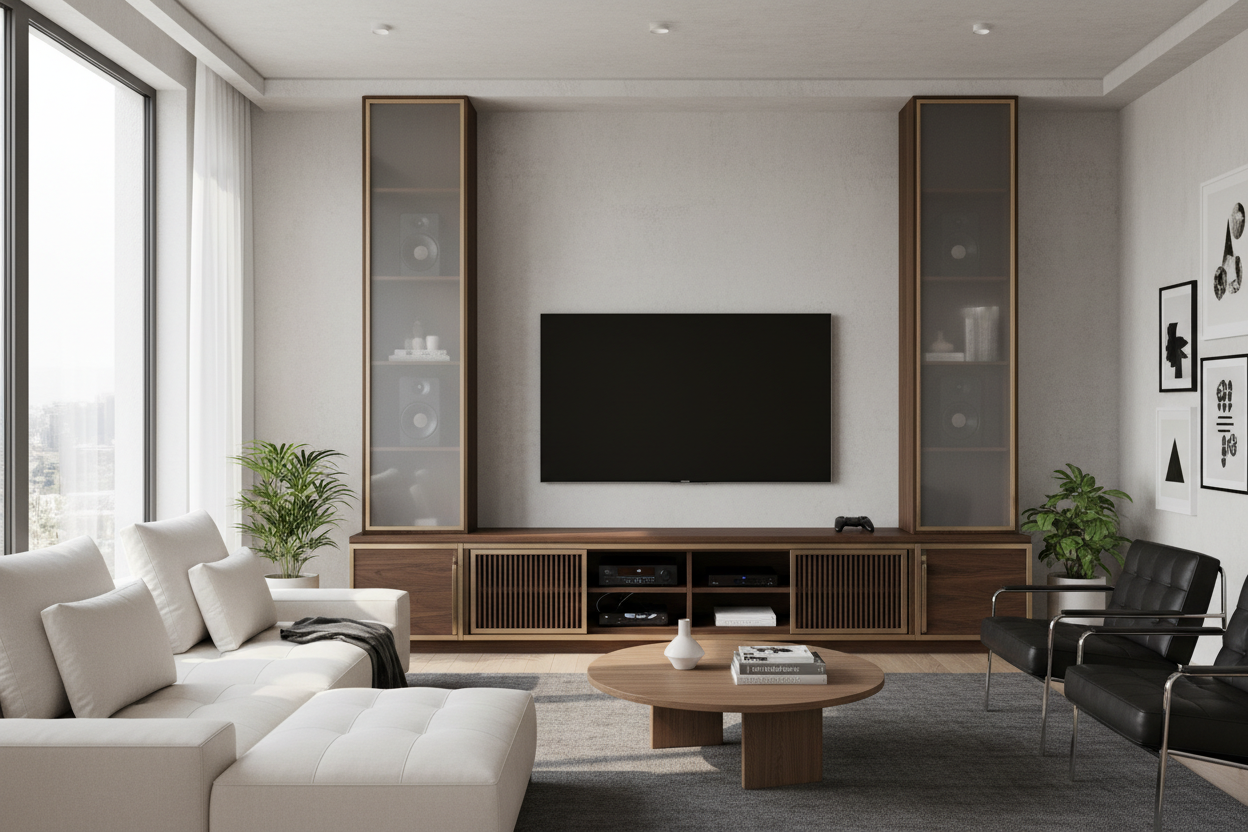
One trick I considered to lower the cost was buying a high-quality black cabinet with glass doors and having the carpenter build the shelving around it. It gives you that high-end look without requiring the carpenter to spend three days building intricate door frames from scratch.
Modular vs. Built-In: When to Fake It and When to Pay Up
If you're in a 'forever home,' go built-in. But if you're in a rental or a starter home, a custom built-in wall unit might be a waste of money because you can't take it with you. There are some incredible modular systems now that use heavy-duty brackets and thicker gables to mimic the look of a custom wall unit without the permanent price tag.
I actually upgraded to a media wall unit in my previous apartment that was essentially a high-end modular system. It looked great and saved me thousands, but it still didn't have that floor-to-ceiling, seamless integration that wall units custom made by a pro provide. The difference is in the trim—a pro will wrap your existing baseboards and crown molding around the unit so it looks like it was built with the house in 1925.
The 3 Design Details That Make or Break a Custom Built-In Wall Unit
If you're hiring this out, be annoying about the details. First, insist on cord management channels. I had my guy drill 2-inch grommets behind every shelf where electronics might live. There is nothing worse than a $10,000 unit with a messy white power cord dangling down the side. Second, get integrated lighting. Small LED pucks or recessed strips make the whole thing look like a gallery.
Third, don't skip the crown molding. It needs to match your room's existing trim exactly. Once the carpenter is done, you'll need to style it for a custom look by mixing textures—think ceramic vases, stacks of books, and maybe a piece of framed art leaning against the back panel. It breaks up the 'library' feel and makes it feel like a curated home.
Is the Splurge Worth It? (My Honest Verdict)
After living with it for six months, I can say it's the best money I've spent on this house. My living room finally feels finished. It’s not just about the shelves; it’s about the organization. We even had him build custom wardrobe wall units in the hallway that match the living room style, which solved our 'no coat closet' problem instantly.
Does it add resale value? Most realtors say yes, especially if the design is timeless. But even if it didn't, the lack of clutter and the fact that I no longer have to look at sagging Billy bookcases is worth every penny of that $9,000. If you can swing the budget, stop hacking and start hiring.
FAQ
How long does the installation take?
The actual install usually takes 2 to 3 days. The carpenter builds the 'boxes' in their shop and then spends the time on-site doing the trim work and final adjustments.
Should I paint it or stain it?
Painted units are easier to repair if they get scratched. Stained wood is beautiful but much harder to modify or fix later if you decide to change your room's color palette.
What is the best wood for a custom wall unit?
For a painted look, use maple or birch plywood. For a natural look, white oak and walnut are the current gold standards for durability and grain pattern.


Leave a comment
This site is protected by hCaptcha and the hCaptcha Privacy Policy and Terms of Service apply.