










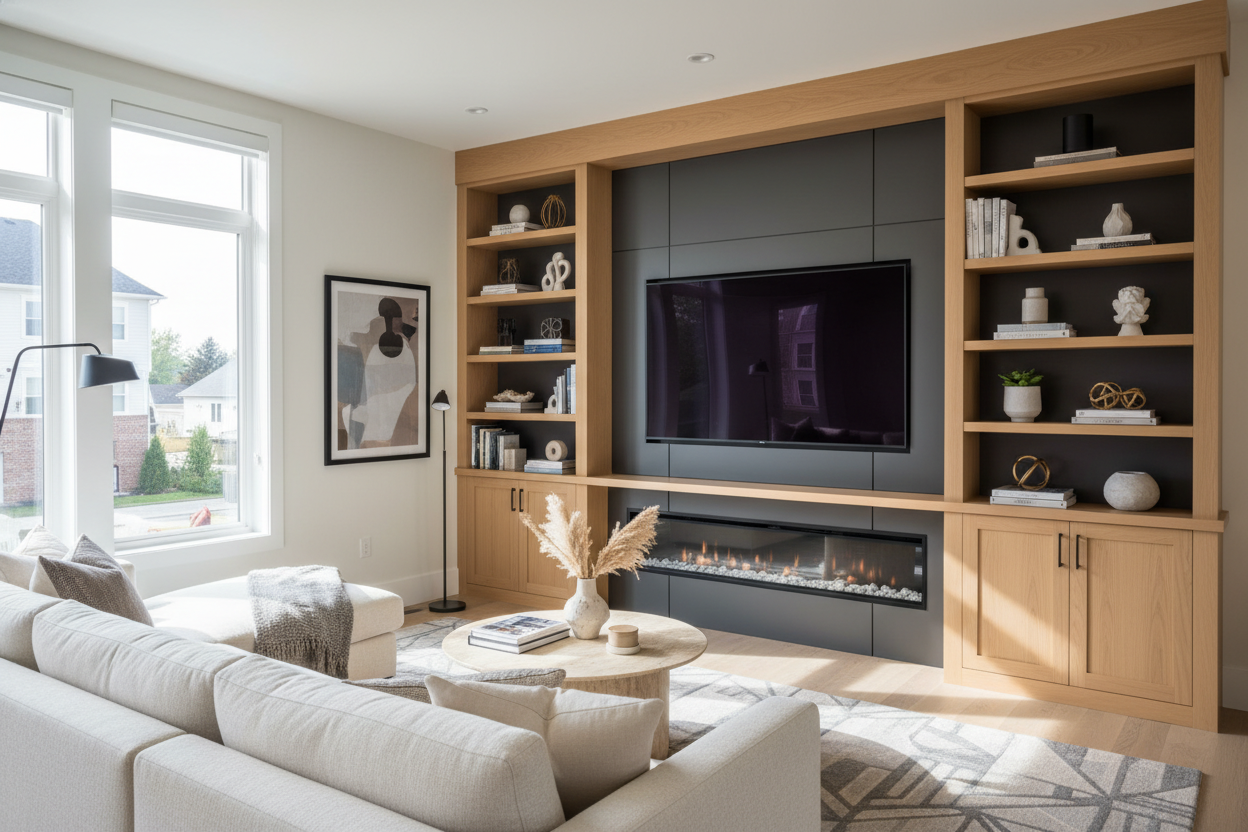
I spent three years staring at a 65-inch TV perched on a console that was barely 50 inches wide. It looked like a bodybuilder balancing on a footstool. The wall behind it was a vast, depressing expanse of builder-grade 'Agreeable Gray' that made the whole room feel unfinished, no matter how many expensive candles I lit or throw pillows I fluffed.
The fix wasn't a bigger TV or more art. It was a media wall unit. Moving away from the 'stand-alone' furniture mindset and toward something that actually occupies the vertical plane turned my living room from a temporary landing pad into a space that feels intentional and, frankly, expensive. Here is how I finally killed the 'dorm room' vibe for good.
Quick Takeaways
- Scale is everything; your furniture should always be wider than your screen to avoid a top-heavy look.
- Vertical shelving draws the eye upward, making standard 8-foot ceilings feel significantly taller.
- Enclosed storage is the mandatory solution for hiding 'tech nests' of routers and messy cables.
- Modular units provide a custom built-in look for a fraction of a contractor's quote.
The 'Giant Screen on a Blank Wall' Epidemic
We have all seen it—or lived it. You buy a massive, beautiful 4K screen, mount it on the wall, and then realize it looks like a black hole sucking the soul out of your decor. I tried to fix this initially with a wide tv stand entertainment stand. While the stand was high quality, it still left three feet of awkward dead space on either side and a massive void above the TV.
The problem is scale. Modern 65-inch and 75-inch TVs are so physically dominant that a standard console, even a 'wide' one, often looks dwarfed. It creates a visual 'island' effect where the TV is just floating in a sea of drywall. You end up trying to fill the gaps with random floor plants or leaning mirrors, but it never quite gels. It feels like you are decorating around a problem rather than solving it.
What Exactly Counts as a Media Wall Unit Anyway?
A tv entertainment wall unit is more than just a place to put your remote. It is a comprehensive piece of furniture that frames your television. Think of it as a bridge between your tech and your architecture. While a console just sits on the floor, a full wall unit incorporates vertical piers, a bridge across the top, and often integrated lighting.
The magic happens when you integrate your technology with dedicated book media storage. Instead of your living room looking like a mini Best Buy, it starts to look like a library or a curated lounge. By surrounding the screen with books, ceramics, and personal items, the TV becomes just one part of a larger composition rather than the sole focal point. It softens the 'big black rectangle' effect that plagues most modern dens.
Why This Swap Completely Changed the Room's Vibe
The moment we finished assembling our tv media wall unit, the room felt twice as big. That sounds counterintuitive—adding more furniture to make a room feel larger—but it works. By taking the furniture nearly to the ceiling, you force the eye to track upward. It emphasizes the vertical volume of the room rather than just the floor space.
I considered a floating tv stand wall mounted media console for a while. They are great for ultra-modern, minimalist spaces, but they can feel a bit cold and 'thin' if you have a lot of wall to fill. For my space, I wanted the grounded, substantial feeling of media wall furniture. It adds a sense of permanence. It feels like the room was designed around the furniture, rather than the furniture being an afterthought thrown against a wall.
It Finally Hid Every Single Cord (and the Ugly Router)
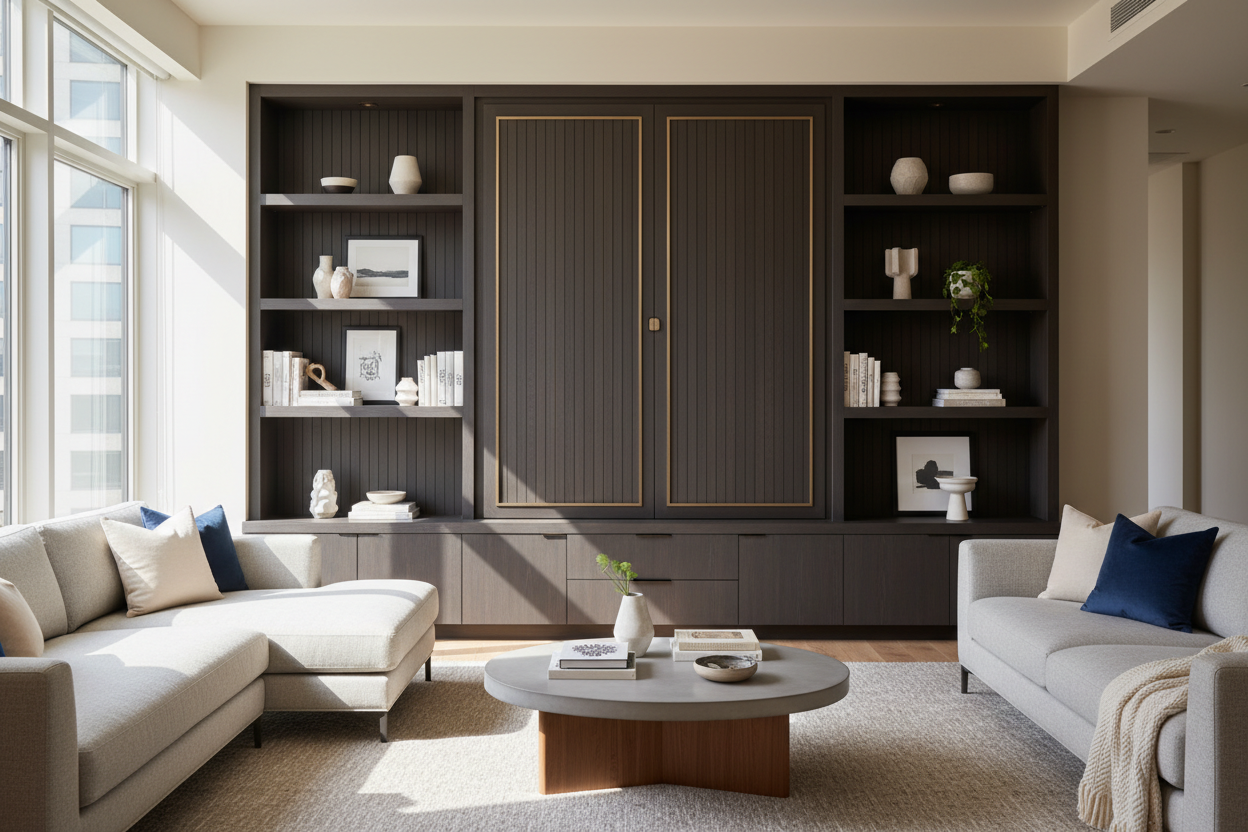
Let's talk about the 'cable spaghetti' behind your TV. It is a visual nightmare. Most standard stands have one little hole in the back that gets overwhelmed the second you plug in a Soundbar, a PlayStation, and a router. My new unit has integrated wire management channels and deep enclosed cabinets. I finally tucked the blinking lights of the router behind a solid door, and my stress levels honestly dropped. If you can see your power strip, your living room isn't finished yet.
I Actually Have Room for Decor Now
The best media wall units for living room spaces act as a giant shadowbox for your life. Before, I had no place to put my oversized art books or the ceramics I've collected over the years. Now, the TV is flanked by shelving that I can style and restyle. It turned the 'TV wall' into a 'personality wall.' Pro tip: Use the 70/30 rule—70% books and decor, 30% empty space—to keep the shelves from looking cluttered.
The Cost: Modular Units vs. Custom Built-Ins
I called a local carpenter to quote me for custom built-ins. The price? $6,500 plus materials. I love my home, but I don't $7,000-love a permanent fixture I can't take with me if I move. High-quality modular units offer a middle ground. You can get a massive, sturdy setup for $1,500 to $2,500 that looks 95% as good as a custom job.
Before you pull the trigger, check out this guide to your perfect living room hub to make sure you're measuring correctly. I almost bought a unit that was two inches too wide for my alcove because I forgot to account for the baseboard molding. Don't be like me—measure twice, buy once.
FAQ
Will a wall unit make my small room look crowded?
Actually, it usually does the opposite. By consolidating your TV, books, and storage into one wall-spanning unit, you eliminate the need for multiple smaller pieces of furniture, which actually opens up the floor plan.
How do I know if my TV will fit?
Always check the 'TV opening' dimensions, not just the overall width. You want at least 2-3 inches of clearance on all sides of the screen so it doesn't look like you're shoehorning it in.
Are they hard to assemble?
I won't lie: the big ones are a project. It took me and a friend about four hours and two pots of coffee. But once it's anchored to the wall, the stability and look are far superior to the cheap flat-pack stuff you'd find at a big-box store.


Leave a comment
This site is protected by hCaptcha and the hCaptcha Privacy Policy and Terms of Service apply.