








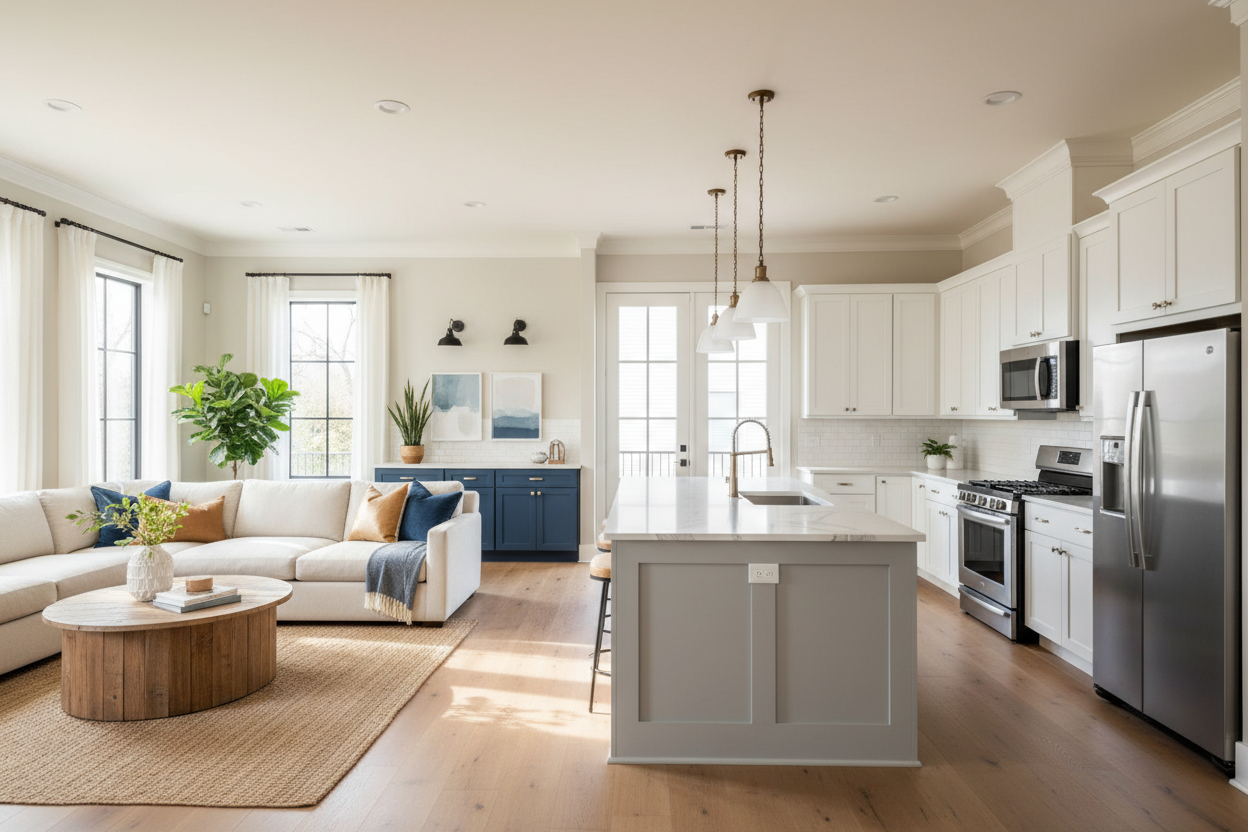
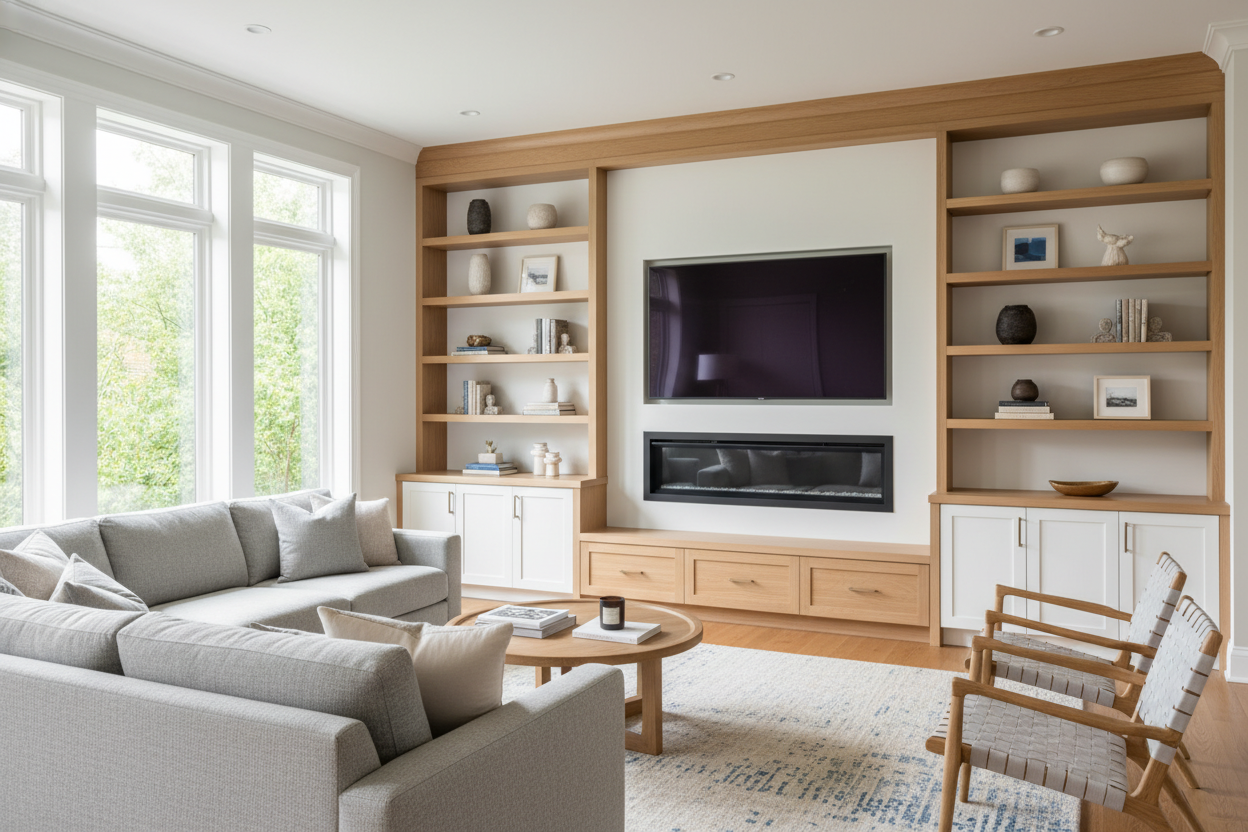
I spent three weeks staring at a blank wall in my living room, convinced that a custom built-in entertainment center with fireplace was the only way to save my home's awkward layout. I had the Pinterest boards to prove it—floor-to-ceiling shelving, a sleek linear electric fireplace, and a hidden compartment for the messy tangle of HDMI cables. I thought I could get it done for maybe five grand if I played my cards right.
Then the actual quotes started rolling in. It turns out that what looks like a simple weekend project in a 30-second TikTok is actually a complex feat of engineering involving three different trades and enough lumber to build a small shed. If you're currently hovering over the 'send' button on an inquiry form to a local cabinet maker, grab a coffee. We need to talk about the numbers.
- Custom millwork starts around $10,000 and can easily climb to $25,000 depending on materials.
- Electricians and drywallers are usually separate costs from the cabinet maker's quote.
- Heat clearance is the most overlooked safety factor—you can't just shove a TV directly above a heater.
- Modular units can save you 60% of the cost while giving you 90% of the look.
The Initial Sticker Shock Was Very Real
I called four different contractors and custom cabinet shops in my area. I expected a bit of a range, but I wasn't prepared for the gap between 'affordable' and 'bespoke.' The lowest quote I received for a 12-foot custom entertainment center with fireplace was $11,500, and that didn't even include the fireplace unit itself or the painting. The highest? A cool $28,000. For a wall. I've bought cars that cost less than that.
One guy told me straight up that his shop doesn't even unload the truck for less than $10k. It was a wake-up call. When you see those beautiful media walls on Instagram, you aren't just looking at wood and screws. You're looking at specialized labor, design time, and the overhead of a professional shop. I realized quickly that my 'budget-conscious' plan was going to require some serious pivoting or a much bigger savings account. Most shops wanted a 50% deposit just to put me on the schedule for three months out.
I also learned that 'custom' means every single inch is accounted for. If your floors are uneven (and trust me, they are), the builder has to scribe the baseboards to fit perfectly. That level of detail is why the price tag feels like a punch in the gut. You aren't just buying furniture; you're buying a permanent architectural change to your home that requires precision tools and decades of experience to get right.
What Actually Drives the Price Up?
The biggest variable in a custom fireplace entertainment center is the material choice. I wanted white oak veneers because I'm a sucker for that Scandi-modern look. That choice alone added $3,000 to the quote compared to paint-grade MDF. If you want solid wood doors instead of slab fronts, keep adding zeros. Labor is the other monster. A media wall takes about 40 to 60 hours of shop time, plus another two days for installation. You're paying for a craftsman's hands, not just a factory machine.
Then there's the 'custom' depth issue. Standard cabinets are 12 or 24 inches deep. My wall needed 16 inches to accommodate the specific electric fireplace I liked without eating up too much floor space. That meant every single box had to be built from scratch rather than using pre-cut components. Looking back, there was a lot what I got wrong about my built-in project, specifically how much those 'small' tweaks to dimensions would blow up the labor costs. I didn't account for the fact that every non-standard cut adds time to the build.
Paint matching is another hidden time-sink. If you want the built-in to match your existing trim perfectly, the shop has to do custom spray finishes. This isn't just a guy with a roller; it's a multi-stage process of sanding, priming, and spraying in a controlled booth. It looks miles better than a DIY paint job, but you'll pay for that factory-smooth finish. I was quoted $2,500 just for the professional spray finish on a 10-foot unit.
The 'Hidden' Fees Nobody Warns You About
When a cabinet maker gives you a quote, they are usually only quoting for the wood and the install. I learned the hard way that a custom built-in entertainment center with fireplace requires a village. First, I needed an electrician. My existing outlets were exactly where the fireplace framing needed to go. Moving those and adding a dedicated 20-amp circuit for the heater cost me an extra $800. You don't want your fireplace tripping the breaker every time you turn on the vacuum.
Then there's the drywall. Once the old baseboards were ripped out and the new framing went up, the surrounding walls looked like a disaster zone. I had to hire a taper to come in and smooth everything out so the built-in didn't look like it was just slapped onto a messy wall. That was another $500 I hadn't planned for. Even if you're handy, getting a seamless transition between a new cabinet and an old ceiling is a nightmare without professional help.
Don't forget about permits. In many cities, adding a permanent heating element—even an electric one—requires a basic electrical permit. It’s not a huge cost, maybe $150, but the time spent waiting for an inspector to sign off can add a week to your timeline. If you skip this, you might run into massive headaches when you eventually try to sell your house and the inspector flags unpermitted work. It's one of those boring costs that adds zero aesthetic value but is absolutely necessary.
Custom vs. High-End Modular: The Verdict
After seeing the $15k+ quotes, I started looking at high-end modular entertainment center options. There are some incredible systems out there now that use 'filler strips' to bridge the gap between the cabinet and your wall, giving you that built-in look for about a third of the price. You lose the ability to specify the exact depth to the millimeter, but you gain about $10,000 in your bank account. For most people, that's a trade-off worth making.
If your room has weird alcoves or you're trying to hide a massive structural column, fully custom is the only way to go. It solves problems that furniture can't. But if you have a standard flat wall, I’d argue that modular is the smarter play. I actually know someone who faked a fireplace with an entertainment center by using a high-quality mantel unit and flanking it with stock shelving. From five feet away, you genuinely cannot tell it isn't custom millwork, and they spent less than $3,000 total.
My verdict? Go custom if this is your 'forever home' and you have a specific architectural problem to solve. If you just want a cozy focal point and a place to hide the PlayStation, save your money. The ROI on a $20,000 built-in is rarely 100% when it comes time to sell. Most buyers would rather have the extra cash or a neutral wall they can use however they want. Custom is a luxury, not a necessity.
3 Rules if You Decide to Go Fully Custom
If you've got the budget and you're ready to pull the trigger, don't just sign the first contract you see. Rule number one: Check your heat clearances. Most electric fireplaces require at least 8 to 12 inches of space between the top of the heater and your TV to prevent the internal components from frying. If your contractor says 'it'll be fine' without checking the manufacturer's manual, fire them immediately.
Rule number two: Plan for the future of tech. Don't let them build a TV 'cubby' that only fits a 55-inch screen. In five years, you'll want a 75-inch, and you'll be kicking yourself. Keep the TV area open or oversized. Finally, get a detailed wire management plan in writing. You want access panels to reach the plugs behind the cabinets without having to rip the whole thing off the wall when your router dies. If you can't reach the plug, it's not a functional design.
How long does it take to build a custom media wall?
Expect about 4-6 weeks for the shop to build the units and 2-4 days for the actual installation in your home. This doesn't include the lead time for the contractor, which can be months.
Do I need a special type of fireplace for a built-in?
Yes, you need a 'front-venting' or 'recessed' electric fireplace. If the heat comes out of the top or back, it will get trapped inside your cabinetry and create a major fire hazard.
Is MDF or Plywood better for built-ins?
If you are painting the unit, MDF is actually superior because it doesn't expand and contract like wood, meaning your paint seams won't crack over time. For stained wood looks, use furniture-grade plywood.

Leave a comment
This site is protected by hCaptcha and the hCaptcha Privacy Policy and Terms of Service apply.