










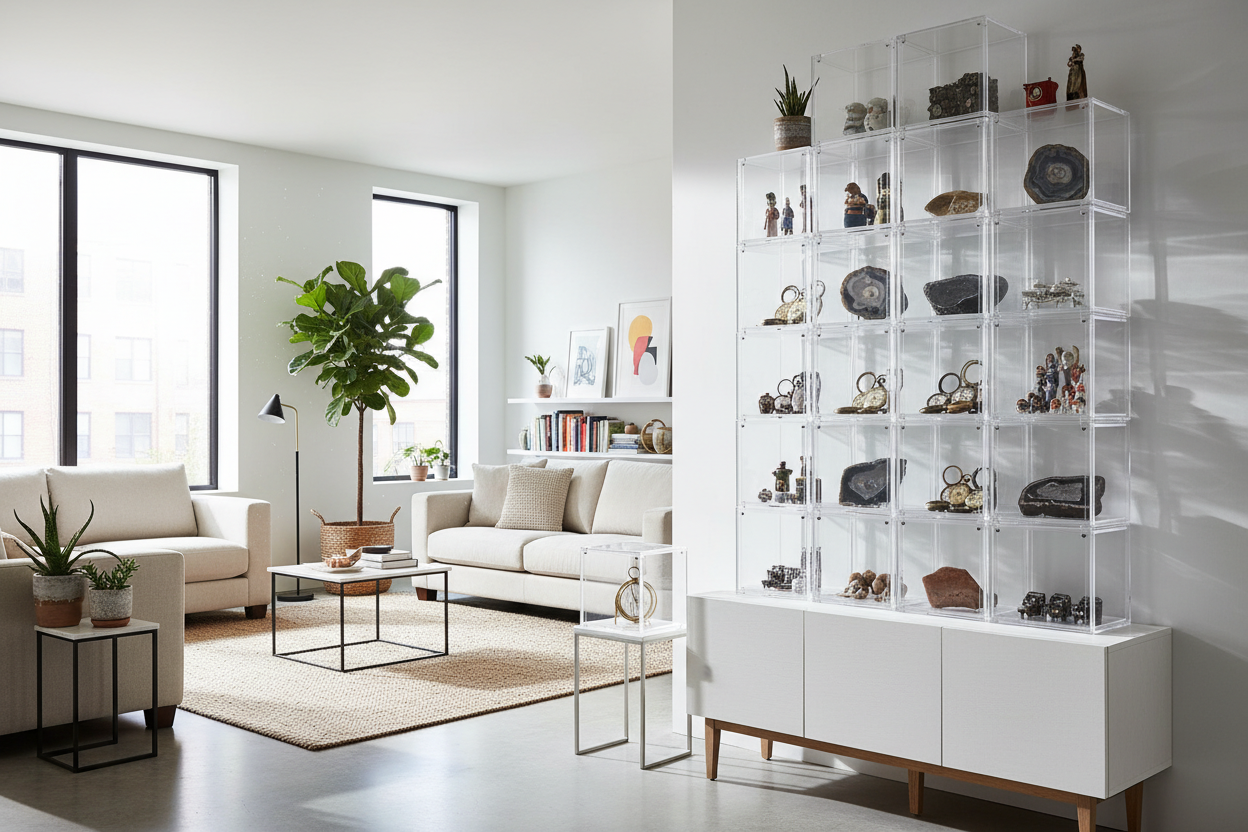
I remember the exact moment I hit the wall—literally. I was holding a new limited-edition vinyl figure, staring at my 'full' bookshelf, and realized I was about to start double-stacking items. It is a slippery slope that leads to a cluttered mess where you cannot even see the things you actually spent money on. That is when I bought my first stackable acrylic display case.
- Scalability: Buy what you need now, add more as your collection grows.
- Clarity: High-grade acrylic offers better transparency than cheap, green-tinted glass.
- Protection: Keeps dust and curious cats away from fragile items.
- Weight: Significantly lighter than traditional furniture, making it renter-friendly.
The 'I Have No More Room' Dilemma
The frustrating reality of collecting is that your shelf space always disappears faster than your paycheck. I spent years shoving my favorite pieces into the 'dark zone'—the back half of deep shelves where they were basically invisible. It felt like I was hoarding rather than curating.
When you run out of built-in space, the instinct is to go buy a massive, heavy cabinet. But those are expensive, a nightmare to move, and they rarely fit the specific dimensions of your latest obsession. I needed something that could grow alongside my hobby without requiring a U-Haul every time I rearranged the room.
Why I Finally Tried a Stackable Acrylic Display Case
I was skeptical at first. I thought plastic would look cheap or feel flimsy. But I was desperate. I ordered one unit, and the unboxing changed my mind. Unlike a flat-pack MDF shelf that weighs 80 pounds and requires three types of screwdrivers, this arrived ready to go and weighed less than my laptop. It felt like the time for stackable display cases had finally arrived for my sanity.
The first thing I noticed was how it didn't dominate the room. Because it is clear, it does not have the visual 'heaviness' of a wooden cabinet. It just sits there, doing its job and letting the item inside be the star of the show. I put a vintage camera inside, and suddenly it looked like a museum piece instead of a thrift store find.
The Hidden Genius of Stackable Display Boxes
The real magic happens when you buy the second and third units. These stackable display boxes are designed with interlocking grooves. They do not just sit on top of each other like a precarious tower of cards; they lock into place. I have a stack of six right now that is rock solid, even when my dog decided to do a zoomie right into the side of the desk.
Does Clear Plastic Actually Look Good in a Living Room?
This is the elephant in the room. Nobody wants their living room to look like a sneaker shop or a dorm room. The key is the material quality. When testing glass vs acrylic collectible cases, I found that modern, high-grade acrylic actually has better light transmission than glass. It does not have that murky green edge you see on cheap tempered glass shelves.
The acrylic 'disappears.' It creates this floating effect that makes a room feel larger because your eyes can see all the way to the wall. One downside? Static electricity. For the first 48 hours, these things are dust magnets. Pro tip: wipe them down with an anti-static cloth immediately after unboxing, or you will be cleaning fingerprints off them every five minutes.
How to Style a Modular Wall So It Looks Intentional
To avoid the 'cluttered store' look, do not just stack them in a perfectly symmetrical grid. I like to stagger mine or leave a few empty boxes to act as 'windows' to the wall behind them. This creates negative space that prevents the display from feeling overwhelming.
Group your items by color or theme within the boxes. If you have twelve boxes, don't put one of everything in each. Put all your monochromatic items in the middle row. It draws the eye and makes the whole setup look like a curated exhibit rather than a collection of random stuff you bought on eBay at 2 AM.
When I Still Prefer a Traditional Freestanding Cabinet
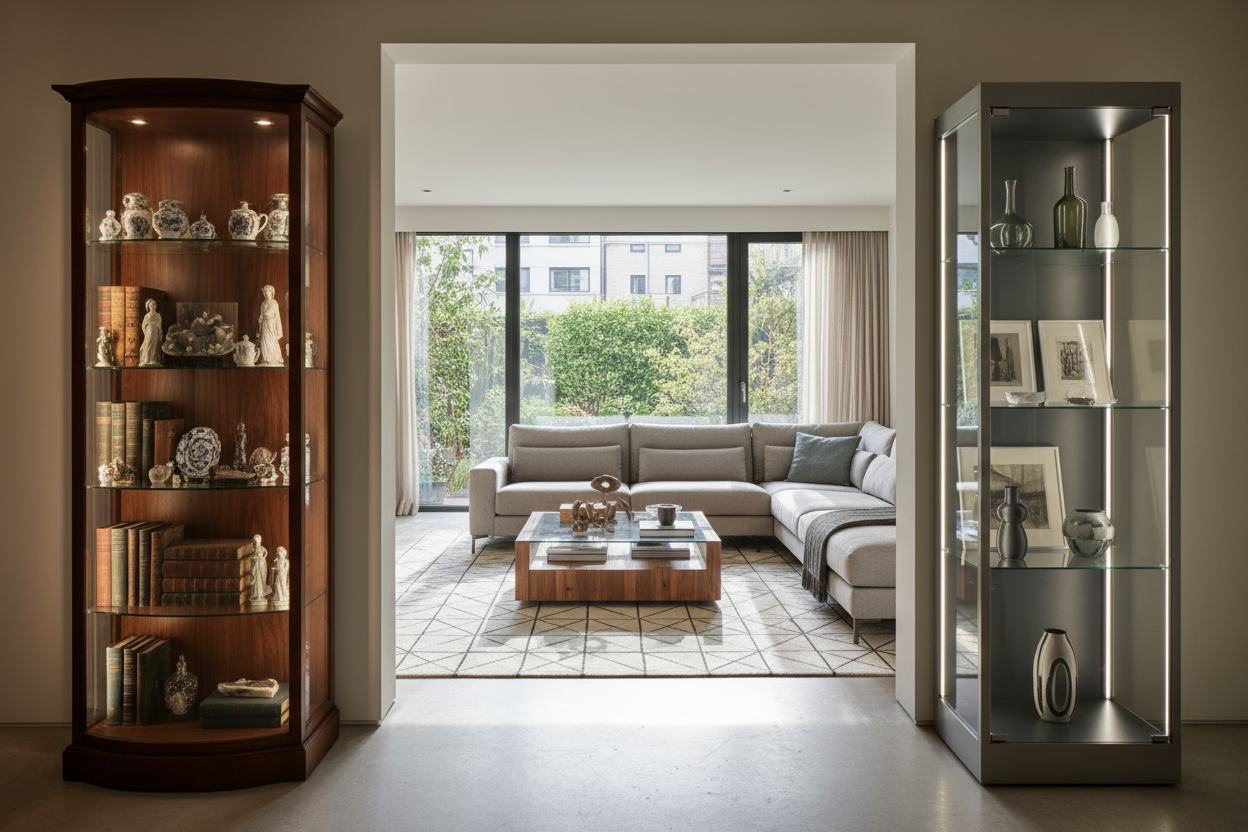
I am a modular convert, but I am not a zealot. Acrylic has its limits. If you have a 40-pound bronze bust or a massive antique clock, please do not put it in a plastic box. For those heavy-duty, statement pieces, a traditional glass door display case with LED lights is still the better choice for structural integrity and sheer presence.
But for 90% of what we collect—action figures, sneakers, ceramics, or tech—the modular route is the smartest way to save your budget and your floor space. I started with one. Now I have twelve, and I don't regret a single one.
FAQ
Are stackable acrylic cases sturdy enough for heavy items?
They are great for most collectibles, but I would cap it at about 5-10 pounds per unit depending on the brand. If you are stacking them high, keep the heaviest items in the bottom boxes to lower the center of gravity.
How do you keep the acrylic from scratching?
Only use microfiber cloths. Never use paper towels or Windex—the ammonia and rough fibers will create tiny micro-scratches that make the plastic look cloudy over time. Use a dedicated plastic cleaner or just mild soap and water.
Can I wall-mount these?
Some models come with pre-drilled holes, but most are designed for floor or tabletop stacking. If you want to wall-mount, make sure you are hitting studs, as the weight of the cases plus your collection adds up fast.


Leave a comment
This site is protected by hCaptcha and the hCaptcha Privacy Policy and Terms of Service apply.