










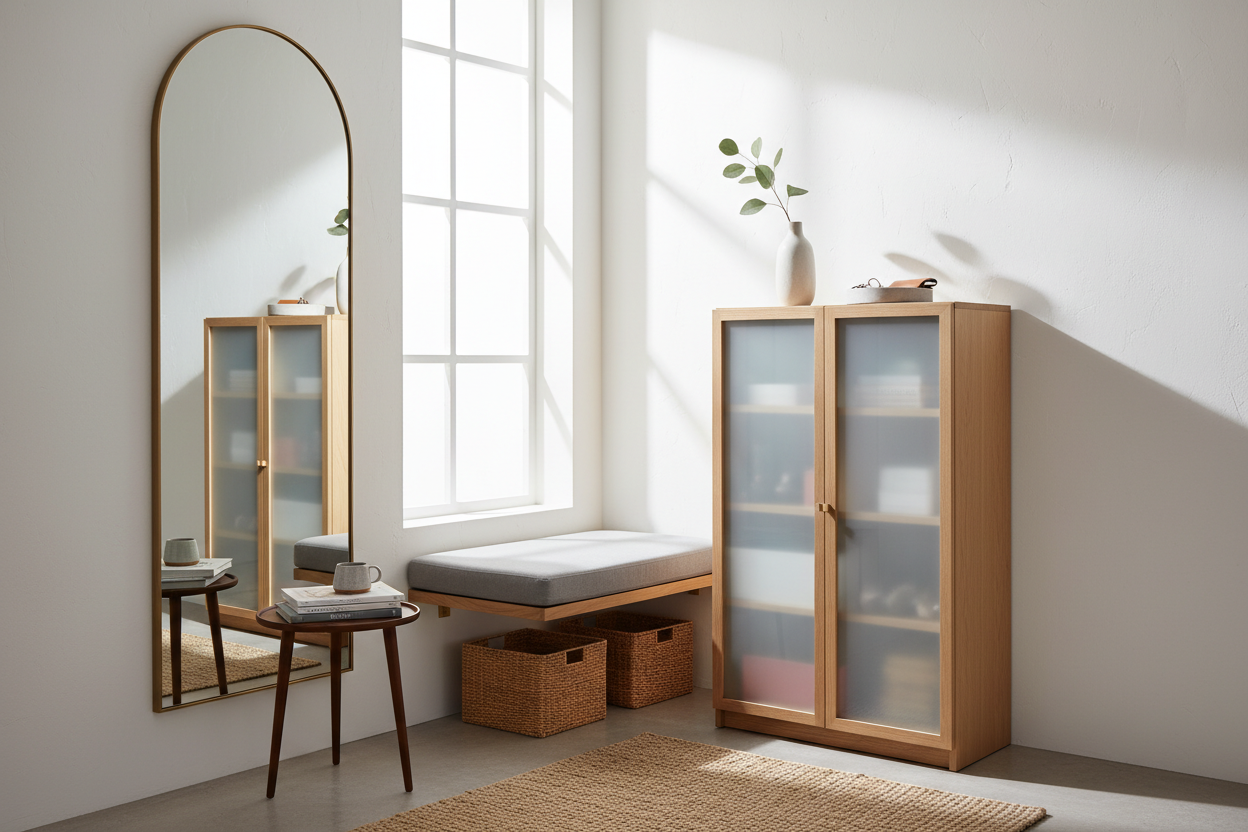
I spent three years pretending my mid-century console table worked. It was a beautiful piece of walnut-veneer furniture that looked incredible in the listing photos, but in my 40-inch wide hallway, it was a literal hip-bruiser. Every time I came home with two bags of groceries, I had to do a weird side-shuffle just to get past the mail pile. The 'open concept' legs didn't help either; they just acted as a display case for dusty sneakers and half-broken umbrellas that I really didn't want to look at every morning.
I finally hit my breaking point when a guest tripped over a stray boot and nearly took out my favorite ceramic vase. I realized I was trying to force a 'look' that didn't fit my life. I didn't need a table; I needed a narrow storage cabinet that could actually hide my baggage—both literal and metaphorical. If you are living in a space where your front door hits your furniture, it is time to admit the console table is lying to you.
- Consoles are for foyers; narrow cabinets are for real-life hallways.
- A 10-to-12-inch depth is the sweet spot for high-traffic zones.
- Closed doors reduce visual noise and mental stress instantly.
- Vertical space is your only friend when floor square footage is at a premium.
Why I Finally Ditched My Entryway Console
The problem with open-leg tables is that they invite chaos. You drop your keys, then your mail, then a random receipt you will never look at again. Before you know it, the floor underneath is a graveyard for stray flip-flops and dust bunnies that could pass for small pets. It is the classic Pinterest trap: a thin table looks airy in a 2,000-square-foot house with a dedicated mudroom, but in a real apartment, it just looks unfinished and messy.
I realized I didn't need a display surface; I needed a way to swallow the mess whole. It was the moment I saw a small standing cabinet in a friend's tiny studio that I realized I was fighting a losing battle. A slim cabinet doesn't just hold things; it creates a boundary. It tells your clutter it has a home, and that home is behind a closed door where I don't have to look at it while I'm eating dinner. My entryway went from a bottleneck to a functional transition zone the second I stopped trying to make 'airy' work in a space that needed 'organized.'
The Magic of a Freestanding Narrow Cabinet
Most people do not realize how much 6 inches matters until they have to navigate a tight corner with a laundry basket. A standard console is 16 to 18 inches deep. That is nearly half the width of a standard hallway. A perfect narrow storage cabinet usually clocks in around 10 to 12 inches. That is the difference between walking through your front door comfortably and banging your elbow every single Tuesday. When you are measuring your space, do not just look at the floor; check the door swing. If your front door clears the cabinet by an inch, you have won.
A freestanding narrow cabinet uses vertical height—think 30 to 45 inches tall—to give you three times the storage volume of a table without eating your floor alive. When you're shopping for a narrow standing cabinet, look for something with a recessed base or 'toe kick.' This allows the unit to sit flush against the wall even if you have thick baseboards, which is a detail most cheap furniture makers ignore. If there is a gap between the cabinet and the wall because of your molding, it is going to wobble every time you open a door, and that is how things get broken.
What Actually Fits Inside a Slim Cabinet?
You would be surprised how much you can cram into a slim storage cabinet if you are smart about the interior layout. I fit six pairs of my size 11 sneakers in a unit that is only 11 inches deep by using a version with tilted interior shoe racks. It is a bit of a puzzle, but it works. On the flat shelves, I have got three woven baskets: one for 'action' mail like bills, one for dog leashes and poop bags, and one for those reusable grocery bags that usually end up stuffed in a pile behind the fridge.
Even a narrow freestanding cabinet can handle the 'everyday carry' items. I use the top shelf for a wooden bowl that holds keys and my wallet, and the lower shelves for things I only need once a day, like my umbrella or my gym bag. It is about density, not just footprint. By moving everything behind a door, the entire hallway feels three feet wider because the visual clutter is gone. I even tucked a small power strip inside mine to create a hidden charging station for my phone and watch.
Other Cramped Spots Begging for Hidden Storage
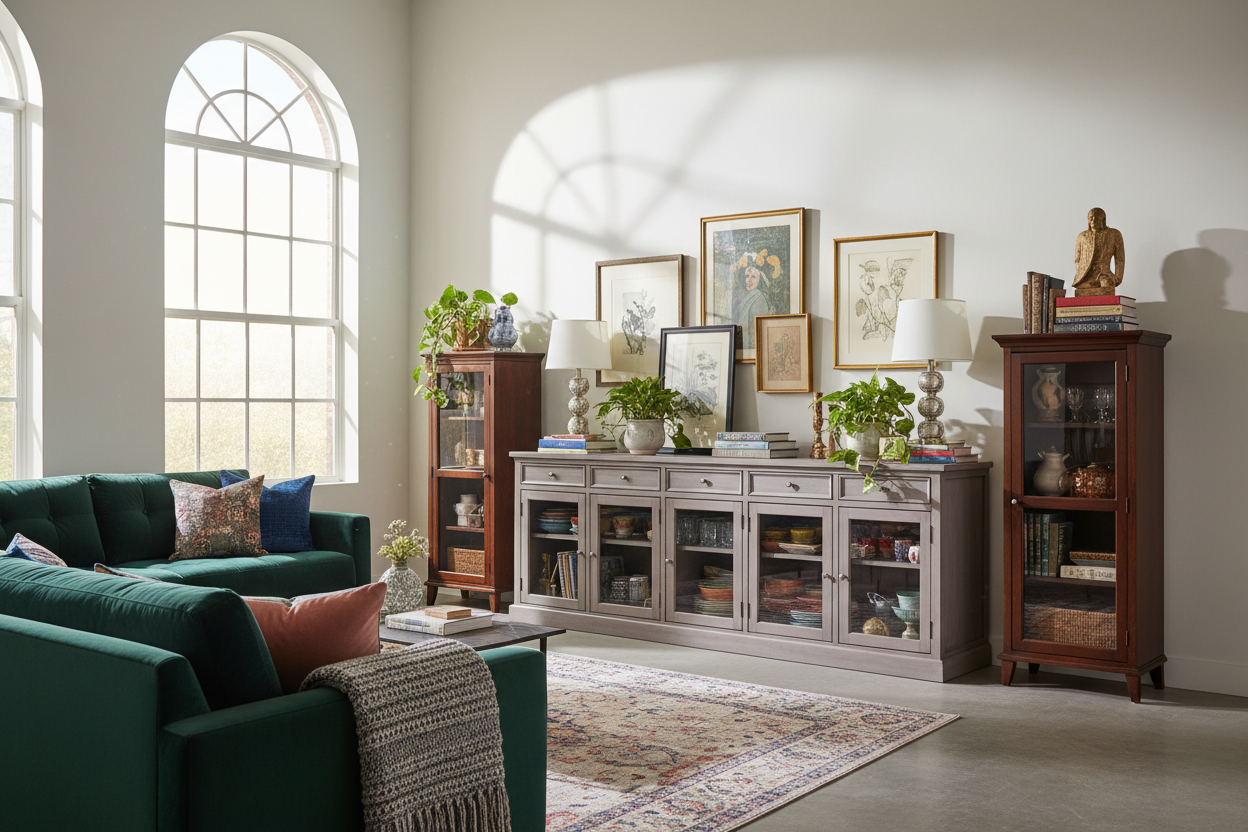
Once you solve the entryway, you start seeing 'dead zones' everywhere. That awkward 12-inch gap at the end of a dark hallway? Put a slim cabinet there for extra linens or those bulky Costco paper towel rolls. That tiny bathroom landing where you currently trip over a stack of toilet paper? A narrow standing cabinet fits perfectly. In a dining room, a black cabinet with glass doors can hold your wine glasses and linen napkins without protruding into the space where people actually sit. It gives you the storage of a sideboard without the massive footprint.
To keep these pieces from looking like cheap office furniture, pay attention to the hardware. If you buy a budget-friendly slim cabinet, swap the stock plastic handles for something substantial—think solid brass or matte black steel. It is a ten-minute fix that makes a massive difference in how the piece feels. Also, style the top with a single, high-quality object like a heavy stone tray or a small lamp with a narrow base. Don't over-decorate the top, or you are just sliding back into the console table problem you just solved.
Personal Experience: The Wobbly Disaster
My first attempt at this was a disaster. I bought a $60 unit from a big-box store that was made of what I can only describe as 'hardened cardboard.' The first time I closed the door too hard, the whole thing shimmied like it was in an earthquake. I eventually upgraded to a solid pine version with a weighted base. If you are putting this on carpet, get the shims out. Leveling is non-negotiable if you want the doors to actually stay shut and aligned. Also, I learned the hard way: always check the weight limit on the shelves. Particle board sags faster than you think under the weight of heavy books.
FAQ
Will a narrow cabinet tip over easily?
Yes, it absolutely will if you do not anchor it. Because they have such a shallow footprint, they are naturally top-heavy once you fill them. Use the anti-tip kit that comes in the box, or buy a heavy-duty one from the hardware store. It is not worth the risk.
Can I store large boots in a slim cabinet?
Usually, no. Most slim units are designed for sneakers or flats. If you have tall boots, you will need a cabinet with adjustable shelves, or you will have to lay them on their sides. I keep my winter boots in the closet and use the narrow cabinet for the daily-wear stuff.
Is 10 inches really enough depth for storage?
For most hallways, 10 inches is the sweet spot. It is deep enough for a standard pair of shoes (if the shelves are angled) and plenty of room for mail, keys, and small electronics. Anything deeper starts to feel like a bulky obstacle in a tight corridor.

Leave a comment
This site is protected by hCaptcha and the hCaptcha Privacy Policy and Terms of Service apply.