










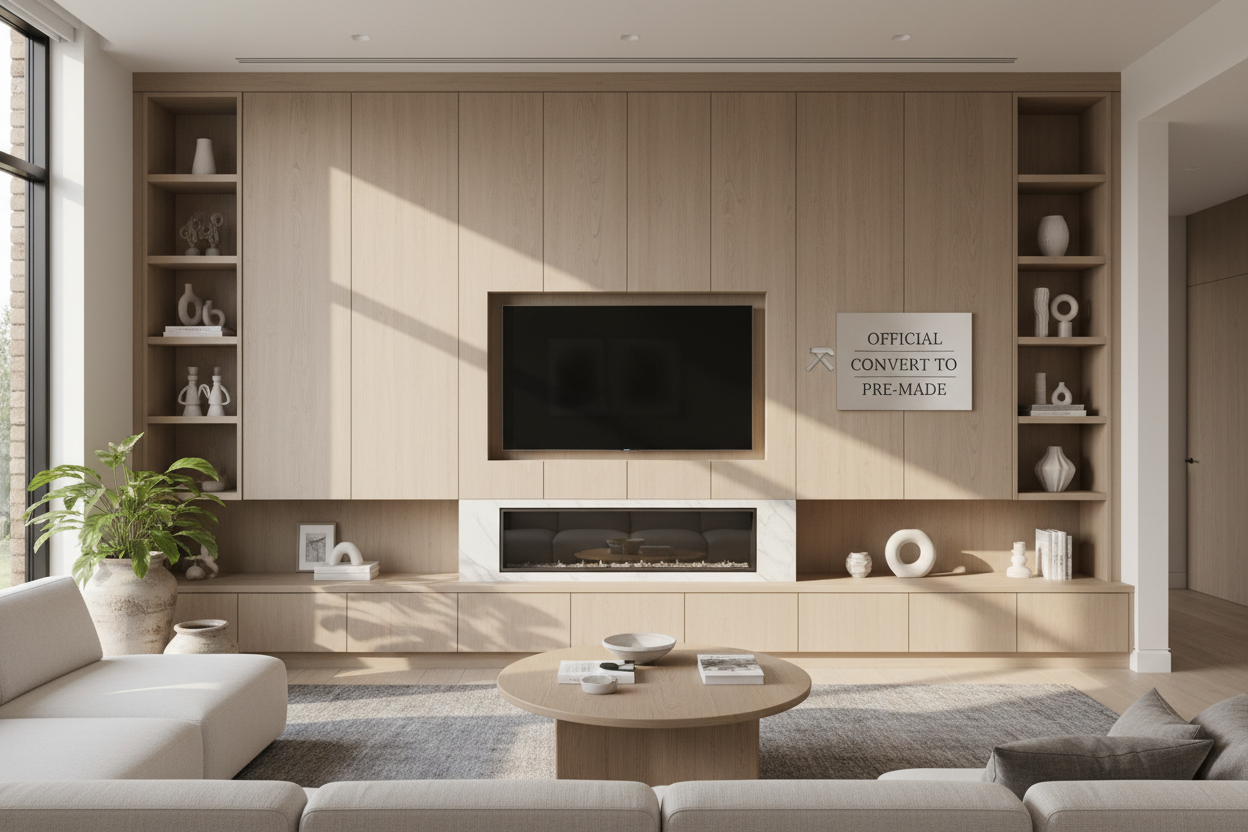
I spent three months staring at a stack of books on my floor because a local carpenter told me he 'might' be able to start my library wall by next Christmas. I am officially over the chase. After years of insisting that only bespoke, hand-sawn millwork was worthy of my living room, I finally caved and bought pre made built in cabinets. I expected to feel like a sell-out; instead, I feel like a genius who actually has a finished house.
- Speed is the ultimate luxury: You can go from an empty wall to a finished look in a weekend, not a quarter of a year.
- Price transparency: You know the cost of the box before it hits your driveway—no surprise 'lumber surcharges.'
- Quality varies wildly: You have to hunt for plywood boxes and solid wood face frames; avoid the particleboard junk.
- The finish matters: The secret to the custom look isn't the cabinet itself, but how you shim and trim it to the wall.
The Custom Carpentry Waitlist Finally Broke Me
I used to be a purist. I thought if a piece of furniture didn't involve a man in a dusty apron measuring my alcoves three times, it wasn't 'real' architecture. But then I tried to get a quote for a fireplace project last year. Three guys never called back, and the fourth quoted me $9,500 for two basic cabinets and some floating shelves. That is when the dream of the artisan-crafted home hit the reality of a 2024 budget.
I started researching why your fireplace wall is begging for custom built-in cabinets and realized that the 'custom' part doesn't have to mean 'built from scratch in my driveway.' The frustration of skyrocketing lumber prices and six-month lead times forced me to pivot. I needed a solution that didn't involve me begging a contractor to take my money. I realized that if I could find high-quality boxes that were already built, I could handle the 'built-in' part myself with some clever molding and a nail gun.
What Are Prefabricated Built-In Cabinets, Actually?
Let's clear something up: we aren't talking about those flimsy, cam-lock bookshelves you buy at a big-box blue-and-yellow store. True prefabricated built-in cabinets are modular units designed with structural integrity in mind. They usually feature 1/2-inch or 3/4-inch plywood boxes and, most importantly, a solid wood face frame that can be nailed into. Unlike a freestanding bookcase, these are meant to be anchored to your studs and then 'trimmed out'—meaning you add baseboards and crown molding so they look like they grew out of your walls.
When you start looking for built-in storage cabinets with doors, you're looking for units that offer a flush fit. You want doors that sit perfectly within or over the frame without massive gaps. The goal is to eliminate the 'furniture' look and achieve an architectural look. I opted for units with shaker-style doors because they hide a multitude of sins and match almost any molding profile you can find at a local hardware store. The difference between these and a standard cabinet is the 'scribe'—the extra bit of wood on the sides that you can shave down to fit your likely-crooked walls.
How to Filter Through the Built-In Cabinets for Sale Online
Searching for built-in cabinets for sale online is a bit of a minefield. You'll see prices ranging from $200 to $2,000 for what looks like the same white box. Here is my rule of thumb: if the description says 'MDF doors and particleboard sides,' keep scrolling. You want a kiln-dried hardwood face frame. Why? Because you’re going to be nailing trim into it. Particleboard will crumble under the pressure of a finishing nail, and your crown molding will eventually sag like a sad noodle.
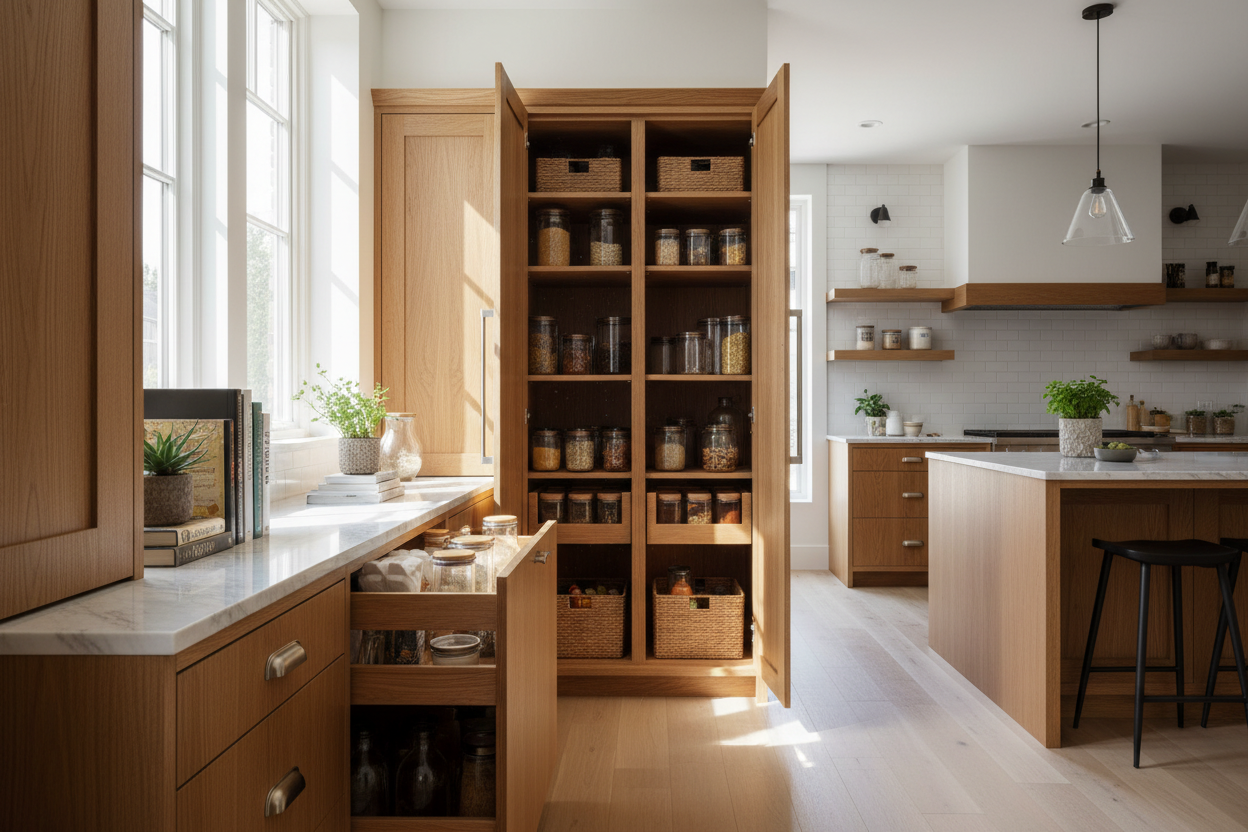
Check the hardware, too. If the listing doesn't brag about soft-close hinges or full-extension drawer slides, they’re probably using the cheap stuff that rattles every time you close a door. I apply these same quality-check principles whether I am looking for low media consoles or tall pantry cabinets. If it's going to be a permanent part of your home, the 'bones' have to be solid. I've found that mid-range prefab units—the ones that arrive fully assembled rather than flat-packed—are the sweet spot for durability and ease of installation.
The Installation Reality: Are They Really Plug-and-Play?
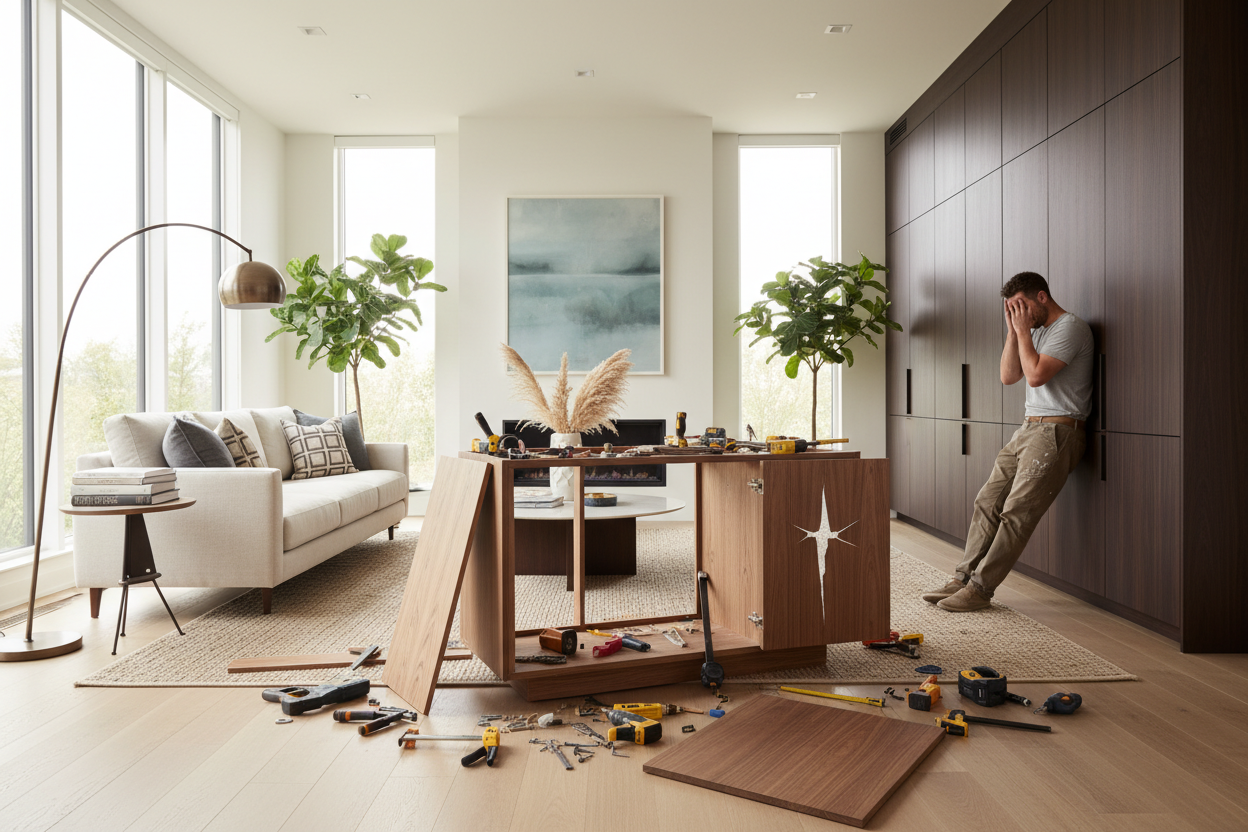
I’m going to be honest with you: 'pre made' does not mean 'zero work.' If you think you're just going to slide these against the wall and be done, you’re going to be disappointed. No wall in the history of residential construction is perfectly plumb or level. My 1920s bungalow has corners that are basically suggestions. You will spend 20% of your time unboxing the cabinets and 80% of your time shimming, leveling, and scribing.
You’ll need a few basic tools: a 4-foot level, a pack of cedar shims, and a circular saw or a power sander for the scribe. I made the mistake of not checking my floor level first and ended up with a 1/4-inch gap at the end of a six-foot run. I had to pull the whole thing out and start over with shims under the base. But even with that headache, I was done in two days. Compare that to the weeks of dust and noise that come with a carpenter building on-site. The 'plug-and-play' refers to the boxes; the 'built-in' refers to your ability to use a tube of caulk like a pro.
My Final Verdict: Save Your Money (and Your Sanity)
After living with my 'fake' built-ins for six months, I can tell you that exactly zero people have noticed they weren't custom-built for the space. Once you paint the cabinets, the trim, and the walls the same color, the seams disappear. I saved roughly $5,000 and about four months of waiting by going the pre-made route. For 90% of homes, this is the superior way to renovate. You get the high-end look without the high-end ego or the 'bespoke' price tag.
FAQ
Can I paint pre made cabinets?
Yes, but buy them 'unfinished' or 'primed' if you can. If they come with a factory finish, you’ll need to scuff-sand them and use a high-quality bonding primer like Stix or Zinsser BIN before your topcoat, otherwise, the paint will peel off in sheets.
How do I fill the gap between the cabinet and the wall?
That is what 'filler strips' are for. You buy a matching piece of finished wood, cut it to the exact width of your gap, and nail it to the face frame. A little caulk makes the line between the filler and the wall invisible.
Are they strong enough for heavy books?
If you buy plywood boxes with 3/4-inch shelves, yes. Avoid 1/2-inch MDF shelves for books; they will start to 'smile' (sag) under the weight of a hardback collection within a month.

Leave a comment
This site is protected by hCaptcha and the hCaptcha Privacy Policy and Terms of Service apply.