











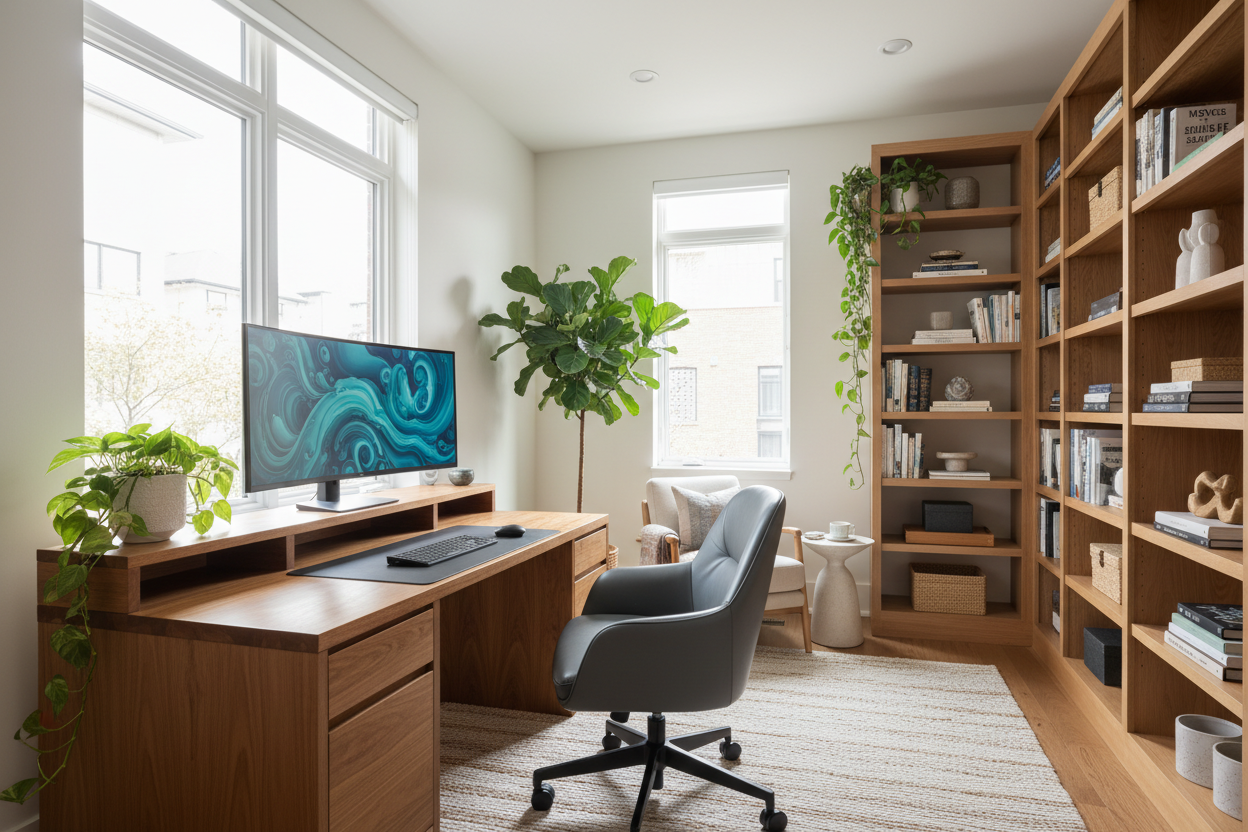
We have all been there: trying to conduct a high-stakes Zoom call while the lighting casts unflattering shadows and the domestic clutter behind us looms large. While a quick trip to a furniture retailer might solve the immediate need for a desk, it rarely solves the underlying issues of workflow, acoustics, and long-term comfort. This is where a professional home office design service shifts from a luxury to a strategic career asset. Is it truly necessary for your space? Let’s analyze the value beyond the aesthetics.
Core Deliverables to Expect
- Spatial Planning: 2D and 3D layouts that optimize traffic flow and video-call backgrounds.
- Ergonomic Assessment: Customizing desk heights and seating based on your specific body metrics.
- Lighting Architecture: A layered approach combining task, ambient, and accent lighting to reduce eye strain.
- Acoustic Control: Material selections (rugs, drapery, acoustic panels) to dampen echo during calls.
- Cable Management: Integrated solutions to hide unsightly wires for a clean visual field.
The Architecture of Focus: Space Planning
The primary failure point in DIY office setups is poor zoning. A designer looks at the "reach radius"—the immediate area around your chair where 90% of your work happens. We ensure that storage, technology, and surface area are positioned to minimize unnecessary movement. Furthermore, we consider the "command position." This Feng Shui principle, which is highly practical in design, positions your desk so you face the door without being directly in line with it. This reduces subconscious anxiety and establishes a powerful visual backdrop for virtual meetings.
Materiality: Durability Meets Aesthetics
When selecting finishes, the tactile experience is just as vital as the visual one. A professional service will steer you away from materials that look good in a catalog but fail in practice.
Solid Wood vs. Veneer
While solid wood offers prestige, it reacts to humidity and can warp if your office lacks climate control. High-quality architectural veneers often provide better stability for large desk surfaces. We also consider the "hand" of the material—how cold or warm it feels against your wrists after four hours of typing. Glass tops, for instance, are often discouraged due to their cold surface temperature and the constant maintenance required to keep them fingerprint-free.
The Lighting Plan
Lighting is the unsung hero of productivity. A single overhead fixture creates harsh shadows and eye fatigue. A design service implements a three-tier strategy:
- Ambient: General illumination (often dimmable).
- Task: Focused light at 4000K (cool white) to aid concentration.
- Accent: Warm light (2700K) to soften the room's edges and make the space inviting.
My Personal Take on Home Office Design Services
Lessons from My Own Projects
I distinctly remember a project for a client who insisted on a "floating" desk in the center of a large room. It looked stunning in the renderings—sculptural and airy. However, during the install, we hit a snag that only experience predicts: cable management. Without a wall nearby, the power cords for his dual monitors and hard drives had nowhere to go but drape across the floor.
Because we were engaged as a full design service, we didn't just tape the wires down. We brought in an electrician to install a floor outlet directly beneath the desk leg and routed the cabling through a hollow channel in the custom joinery. If the client had bought a retail desk and attempted this layout alone, he would have been left with a trip hazard and a visual mess. That specific detail—the invisible infrastructure—is usually what you are actually paying for.
Conclusion
Investing in a design service is ultimately an investment in your own output. By resolving the friction points of your environment—be it bad lighting, poor ergonomics, or visual chaos—you clear the path for deep work. Treat your workspace with the same respect you treat your career.
Frequently Asked Questions
How long does the design process usually take?
For a single room, the design phase typically takes 2-4 weeks, including revisions. However, lead times for custom furniture or millwork can extend the project to 8-12 weeks depending on the manufacturer.
Can a designer work with my existing furniture?
Absolutely. A good designer can integrate cherished pieces, such as an antique credenza or a specific ergonomic chair, into the new layout. We often refinish or reupholster existing items to bridge the gap between old and new styles.
Is a design service worth it for a small nook?
Small spaces often require more design ingenuity than large rooms. Custom joinery and vertical storage solutions can double the utility of a closet office or alcove, making professional planning highly valuable for tight square footage.


Leave a comment
This site is protected by hCaptcha and the hCaptcha Privacy Policy and Terms of Service apply.