










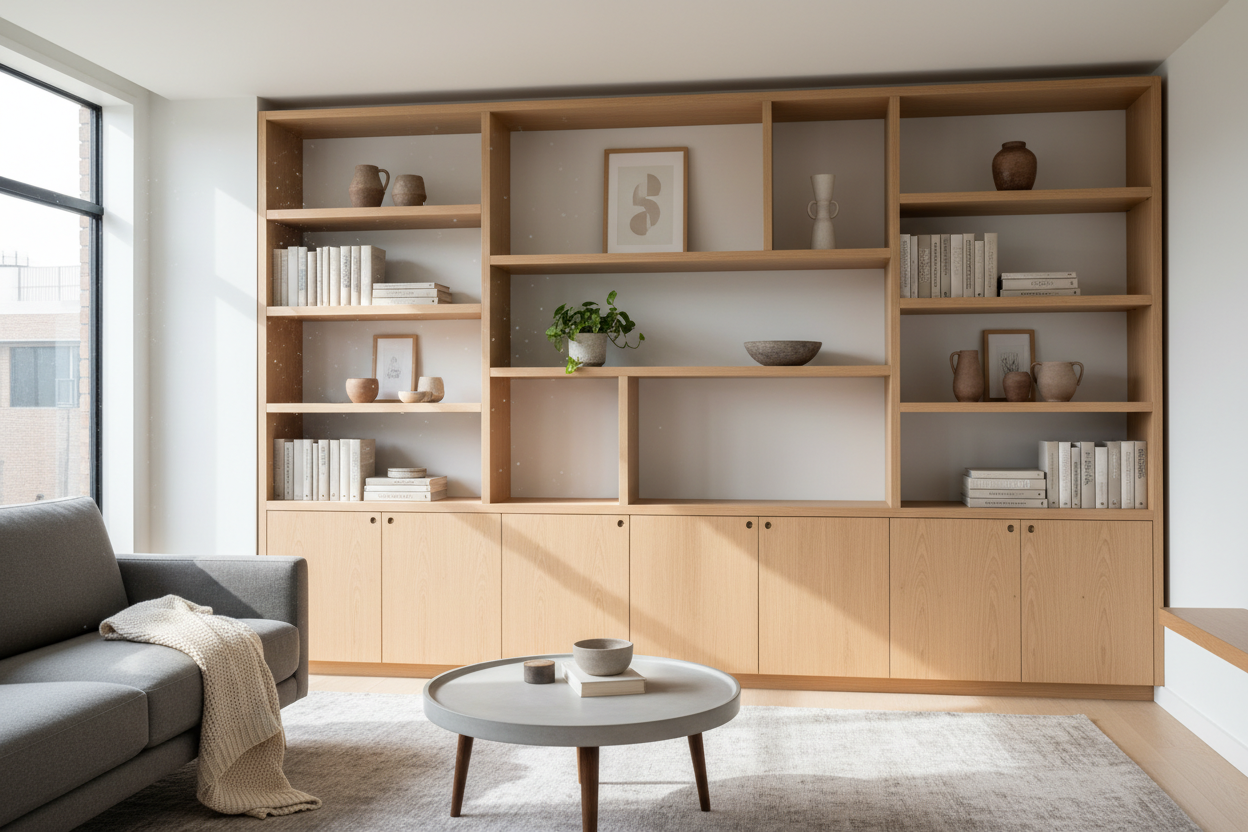
We have all seen those perfectly curated open shelves on social media. But in a real North American home, where mail piles up and kids leave toys everywhere, pure open shelving often just looks like organized chaos. That is exactly why a shelving cabinet unit is one of my most recommended pieces of furniture. It gives you the best of both worlds: a place to display your beautiful objects and closed doors to hide the ugly reality of daily life. In this guide, I will walk you through how to choose, place, and style these pieces so they look built-in and purposeful.
Quick Decision Guide
- Measure for depth: Ensure the lower cabinet portion does not block walkways; leave at least 36 inches of clearance for comfortable traffic flow.
- Check the hinges: Soft-close, adjustable European hinges are non-negotiable for doors that stay aligned over time.
- Balance the visual weight: Choose a unit where the closed storage makes up no more than the bottom third to keep the room feeling airy.
- Anchor it: Any tall storage piece must be secured to a wall stud, regardless of how stable it feels when empty.
Space Planning and Layout
Adding a large piece of casegoods to a room can quickly overwhelm the space if you are not careful about proportions. A shelf unit with cabinet bases usually carries heavy visual weight at the bottom. This grounds the piece, making it ideal for flanking a fireplace or centering on a large blank wall in an open-concept living area.
Getting Proportions Right
In smaller suburban family rooms or apartments, you want to maximize vertical space. Look for a shelving unit with cabinet sections that reach close to the ceiling. Leaving a large gap between the top of the unit and the ceiling cuts the wall in half and makes the room feel shorter. If you cannot afford custom built-ins, buying two or three matching units and pushing them together creates a high-end, architectural look for a fraction of the cost.
Material Matters: Longevity and Maintenance
When shopping for a shelving storage cupboard, the materials dictate not just the price, but how the piece will handle daily life. Solid wood is incredibly durable but reacts to humidity shifts in North American homes, meaning doors might stick in the summer. High-quality wood veneer over an MDF core is often a better choice for stability, as it resists warping while maintaining that rich, natural grain.
Hardware is the Real Tell
You can often spot a cheap shelving unit cupboard by opening the doors. Flimsy hardware will sag after a few months of use. Always look for adjustable hinges. Over time, heavy items stored inside will cause slight shifting, and you need to be able to tweak the doors so they sit flush against the frame.
Lessons from My Own Projects
Over the last 15 years, I have sourced dozens of shelving units with cupboards for clients, and I have learned a few hard truths. A few years ago, I bought a stunning matte black shelf and cabinet unit for a client's home office. It looked incredibly chic on installation day. However, I learned the hard way that matte black veneer shows every single fingerprint and speck of dust.
We ended up having to swap the hardware to oversized pulls just so the client's family would not touch the door fronts when opening them. Another caveat: adjustable shelves in the upper portion are a must. Fixed shelves rarely accommodate standard coffee table books or tall vases, rendering the display area frustratingly useless. Always check the shelf clearance before buying.
Frequently Asked Questions
How do I style a shelving cabinet unit without it looking cluttered?
Stick to the rule of thirds: one-third books, one-third decorative objects, and one-third negative space. Group items in odd numbers and vary the heights to keep the eye moving naturally across the shelves.
Is it better to have doors or drawers on the bottom?
Doors offer more versatile storage for bulky items like board games, oversized albums, or baskets. Drawers are better for small, loose items, but they significantly drive up the cost of the furniture due to the expensive track hardware.
Can I use this type of unit in a dining room?
Absolutely. They work beautifully as alternative china cabinets. You can display your favorite glassware and ceramics on the open shelves while hiding table linens, extra flatware, and seasonal serving dishes in the lower cabinet.


Leave a comment
This site is protected by hCaptcha and the hCaptcha Privacy Policy and Terms of Service apply.