










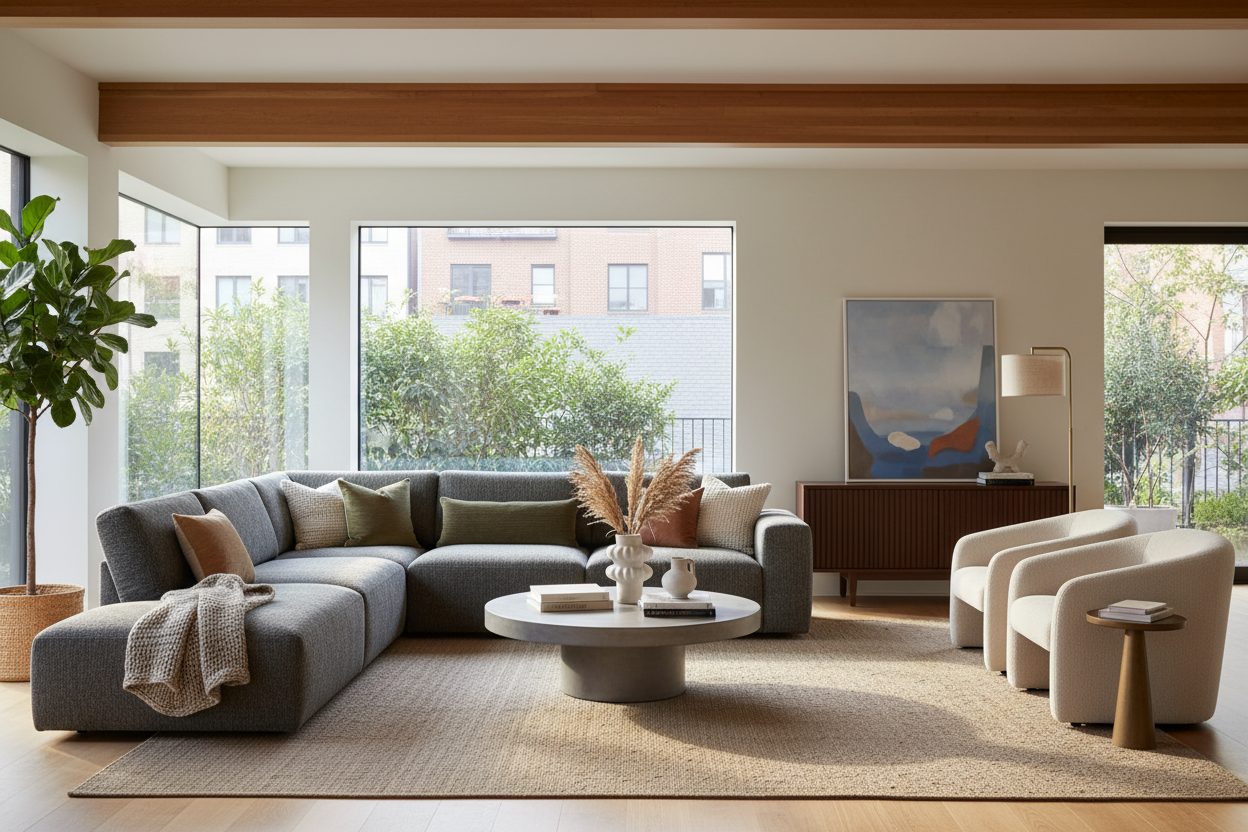
Selecting the right seating is often the most daunting decision a homeowner makes. It anchors the space, dictates the flow of traffic, and serves as the primary gathering spot. The challenge with living room sectionals is that they dominate the visual field; get the scale wrong, and the room feels suffocating. Get the fabric wrong, and it looks tired within six months.
As an interior designer, I see clients struggle to balance aesthetics with the practical need for lounging. Whether you are furnishing a formal sitting area or a casual haven, this guide cuts through the noise to help you make an investment-grade decision.
Key Features to Look For
- Joinery & Frame: Look for kiln-dried hardwood frames. Avoid particleboard if you want longevity.
- Suspension System: Eight-way hand-tied springs offer the gold standard for support, whereas sinuous springs are a common, budget-friendly alternative.
- Cushion Fill: High-density foam wrapped in down provides structure without constant fluffing. 100% down requires daily maintenance.
- Modularity: Consider if the piece needs to adapt to future moves or layout changes.
- Upholstery Codes: Check the cleaning code (W, S, or WS) and double-rub count for durability.
Mastering the Layout and Flow
The most frequent error I witness is ignoring the "negative space" around the furniture. Sectionals for living room layouts require breathing room. You need at least 30 to 36 inches of walkway clearance around the sofa to prevent the room from feeling like an obstacle course.
L-Shape vs. U-Shape
An L-shaped configuration is versatile and works exceptionally well in open-concept floor plans to define the living zone without closing it off. Conversely, living room sectional sets in a U-shape are best reserved for large media rooms or conversation pits where the focus is internal. If you place a U-shape in a narrow room, you inadvertently create a "corridor effect" that destroys the room's energy.
Materiality: Beyond the Swatch
When browsing living room sectional furniture, the fabric choice is about more than just color. It is about how the material interacts with light and lifestyle. For high-traffic areas, I recommend performance velvets or crypton fabrics. They offer the tactile luxury of natural fibers but repel stains effectively.
Be wary of cheap sectional living room sets that use bonded leather or low-grade polyester. While the price point is attractive, these materials often peel or pill within a year. If budget is a constraint, opt for a simpler silhouette in a higher-grade canvas or tweed rather than a complex shape in a poor-quality material.
Styling and Visual Balance
A large sectional can feel heavy. To counter this, pay attention to the legs. A sofa with exposed legs (stiletto or tapered wood) allows light to pass underneath, making the piece feel lighter and the room larger. For a sectional sofa family room setup where comfort is king, a skirted or block-base design is acceptable, provided you balance it with lighter coffee tables or glass elements.
Lessons from My Own Projects
I want to share a candid reality from a project I worked on last year. We sourced a stunning, deep-seated "cloud" style modular sectional for a client's loft. It looked architectural and incredible in the photos. However, the reality of living with it was different.
Because the pieces were modular and sat on a sleek, finished concrete floor, the connectors (the alligator clips underneath) weren't strong enough to hold the lightweight units together during aggressive lounging (i.e., kids jumping). The sections would drift apart constantly, creating annoying gaps. We ended up having to install heavy-duty rubber grip pads and upgrade the metal brackets post-installation. Furthermore, the linen fabric, while beautiful, showed "puddling" (stretching) where the dog sat every day. My advice? If you choose modular, check the weight of the individual pieces and the quality of the connectors before you buy. Heavy furniture stays put; lightweight furniture migrates.
Conclusion
Your sectional is more than just a place to sit; it is the architectural anchor of your living space. By focusing on the internal construction and respecting the scale of your room, you can find a piece that elevates your home rather than cluttering it. Measure twice, check the rub count, and prioritize a silhouette that will remain timeless.
Frequently Asked Questions
How do I know if I need a Left-Arm Facing (LAF) or Right-Arm Facing (RAF) sectional?
Stand directly in front of where the sectional will go, facing the spot. If you want the arm to be on your right side as you look at the sofa, you need a Right-Arm Facing piece. This is crucial for directing traffic flow away from walls or doorways.
Can I put a large sectional in a small apartment?
Yes, but you must choose a low profile. Living room furniture sectionals with low backs and narrow arms preserve sightlines, making the room feel taller and more open, even with a substantial footprint.
What is the best cushion fill for a tidy look?
If you hate the "lived-in" look of wrinkled cushions, avoid 100% down or feather fill. Opt for a high-resiliency foam core wrapped in a layer of Dacron or a down-blend. This retains the sharp shape of the sofa while providing adequate comfort.

Leave a comment
This site is protected by hCaptcha and the hCaptcha Privacy Policy and Terms of Service apply.