










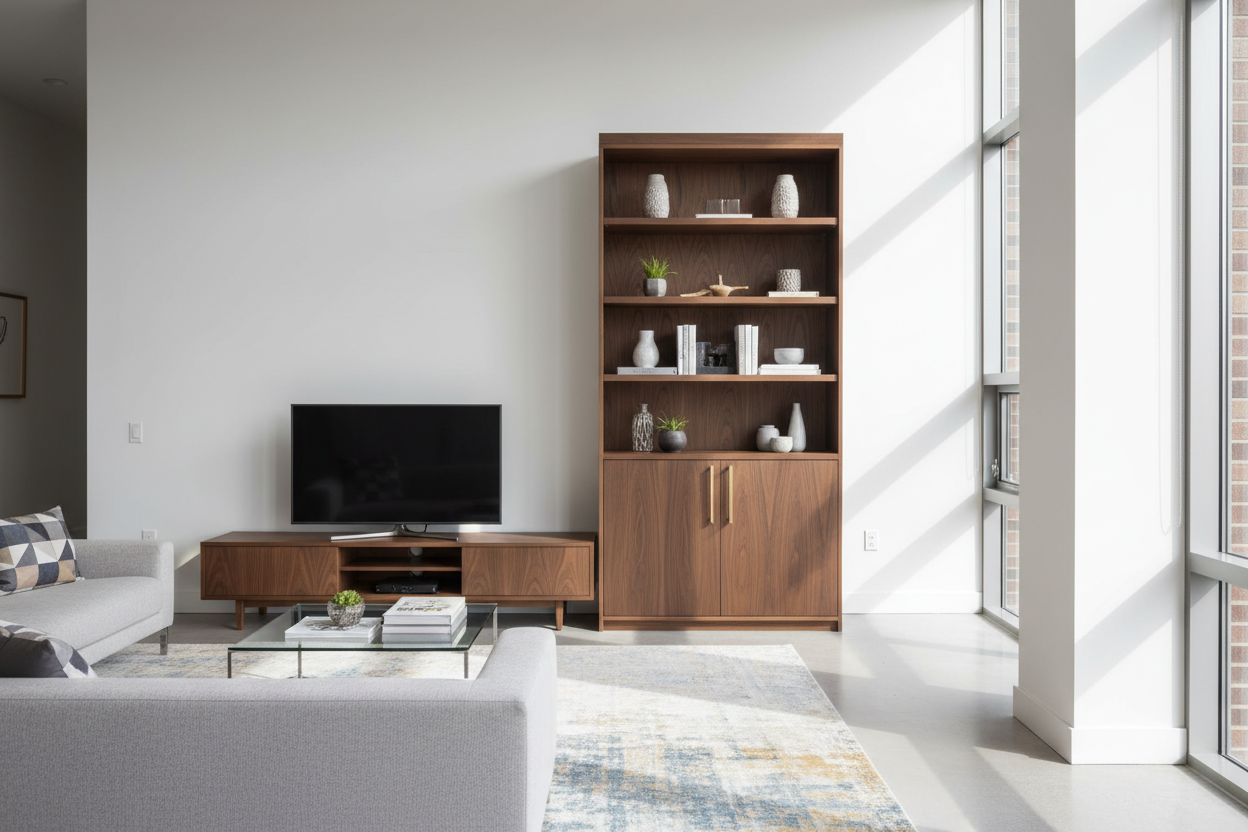
Have you ever looked at your living room and felt like something was missing? Often, we furnish a room horizontally—sofas, coffee tables, media consoles—leaving the upper half of the walls bare and unbalanced. This creates a flat, heavy feeling in the space. Adding a living room tall cabinet is one of the most effective ways to draw the eye upward, balance your room's proportions, and secretly swallow the clutter of everyday life. By the end of this guide, you will know exactly how to scale, place, and choose the right vertical storage for your home without making the room feel cramped.
Quick Decision Guide
- Scale to your ceilings: Leave at least 12 to 18 inches of negative space between the top of the cabinet and your ceiling to avoid a cramped look.
- Balance visual weight: If your sofa is heavy and blocky, opt for a tall cabinet with glass doors or slender legs to keep the room airy.
- Prioritize closed storage: A tall living room cabinet with doors is vastly superior for hiding board games, routers, and random cables compared to open shelving.
- Anchor it properly: Any piece over 30 inches tall must be secured to a wall stud. Never skip the anti-tip hardware.
Space Planning: Getting the Proportions Right
When introducing a tall cabinet for living room layouts, the biggest mistake I see is ignoring the room's existing visual weight. A massive piece of furniture placed incorrectly can make a standard 8-foot ceiling feel uncomfortably low.
Mastering Placement and Clearance
Never place a towering piece of furniture right next to the entrance of a room. It creates an immediate bottleneck and blocks the line of sight. Instead, position your cabinet for living room tall storage on the wall furthest from the door, or in a recessed alcove. Ensure you maintain a minimum of 36 inches of clearance for walkways, especially if the cabinet has outward-swinging doors.
Blending Storage with Your Decor
A decorative tall cabinet should feel like an intentional part of your architecture, not an afterthought you bought just to hide the internet router.
Materials and Finishes
If your living room already features a lot of heavy, dark upholstery, adding a solid mahogany cabinet will anchor the room too aggressively. Instead, look for a decorative tall storage cabinet featuring reeded glass, cane webbing, or a lighter oak finish. These textures break up the visual mass. Conversely, if your room is full of delicate, mid-century modern peg legs, a solid, darker cabinet can provide much-needed grounding. When sourcing decorative tall cabinets for living room spaces, contrast is your best friend.
Maximizing Utility Without Sacrificing Style
Vertical storage is the ultimate cheat code for small North American apartments and open-concept suburban homes alike.
The Case for Concealment
While open bookshelves are beautiful for styling, they require constant curation. A tall storage cabinet living room addition works harder for you. Opting for a tall living room cabinet with doors allows you to hide the less glamorous aspects of daily life—toy bins, dog leashes, and ugly electronics. If you want the best of both worlds, look for a piece with glass upper doors for displaying ceramics and solid lower doors for concealing the mess.
Designer's Honest Take: Lessons from My Own Projects
Early in my career, I sourced a stunning, solid walnut cabinet for a client's relatively compact condo. In the showroom, it looked magnificent. In their living room, it looked like a monolith that had landed from outer space and was threatening to swallow the sofa. The dark wood absorbed all the natural light, and because it sat flush against the floor without legs, it felt incredibly heavy.
I learned a hard lesson about proportion that day. Now, unless a room gets abundant natural light and has 10-foot ceilings, I almost always specify cabinets that sit at least 4 to 6 inches off the ground on legs. Being able to see the floor continue underneath the piece tricks the eye into believing the room is larger than it is. Also, be wary of cheap veneer over MDF. I have seen water spots from a single over-watered pothos plant ruin the top shelf of a budget cabinet in days. If you plan to put plants on it, invest in solid wood or high-quality metal.
Frequently Asked Questions
How deep should a living room tall cabinet be?
For most living rooms, a depth of 15 to 18 inches is ideal. This is deep enough to store board games, books, and vinyl records, but shallow enough that it will not encroach significantly on your seating area.
Can I place a tall cabinet next to my TV?
Yes, but balance is key. If you place a tall cabinet on one side of your media console, you need something of similar visual weight on the opposite side—like a large floor plant, a floor lamp, or a matching cabinet—to prevent the room from feeling lopsided.
How do I keep a tall cabinet from looking messy?
If you have glass doors, treat the interior like a display case. Leave at least 30 percent of the shelf space empty (negative space) so the eye has room to rest. Group items in odd numbers and use solid baskets on the lower shelves to corral smaller, visually noisy items.

Leave a comment
This site is protected by hCaptcha and the hCaptcha Privacy Policy and Terms of Service apply.