










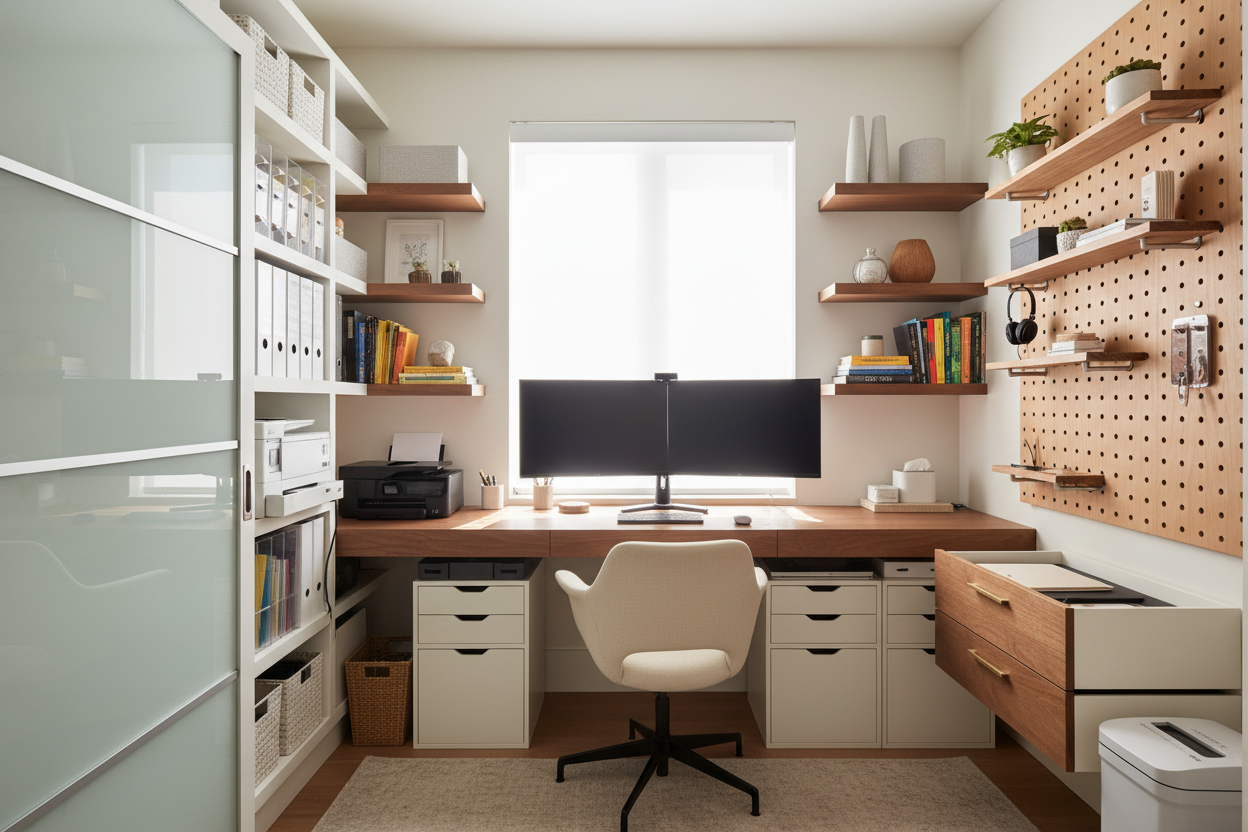
There is nothing quite as distracting in a workspace as the psychological weight of a chaotic storage area. We often focus heavily on the desk silhouette or the ergonomic chair, treating the closet as a catch-all void behind closed doors. However, as an interior designer, I argue that the backbone of a productive environment lies in how you manage your inventory. Implementing thoughtful office closet organizing ideas is not merely about tidying up; it is about designing a workflow that minimizes visual noise and maximizes mental clarity.
Key Features of a High-Functioning Office Closet
- Zoning Strategy: Categorize items by frequency of use (daily essentials at eye level, archives up high).
- Ergonomic Accessibility: Ensure heavy equipment like printers or safes are placed at waist height to prevent strain.
- Lighting: Integrated motion-sensor LED strips are essential for deep shelves to prevent dark corners.
- Adjustability: Opt for slotted systems or adjustable shelving pins to accommodate changing equipment sizes.
- Visual Uniformity: Use matching bins and file holders to create a cohesive, calming aesthetic.
Structuring Your Layout: The Zoning Method
When planning home office closet storage, treating the space as a single unit is a mistake. Instead, I approach closet design using the "Prime Real Estate" theory. The area between your shoulders and knees is your prime zone. This is where active project files, charging stations, and daily stationery should reside.
The upper shelves, often difficult to reach, should be reserved for long-term archives or seasonal decor. The floor level is best suited for rolling carts or heavy shredders. By adhering to this hierarchy, you reduce the physical friction of retrieving items, allowing you to maintain focus on your work.
Selecting the Right Systems: Built-ins vs. Modular
The debate between custom millwork and modular home office closet organization systems often comes down to budget and permanence.
Custom Millwork
For a seamless, luxury aesthetic, custom cabinetry is unrivaled. It allows us to utilize every fractional inch of width. I often recommend a mix of closed cabinetry (to hide visual clutter) and open shelving for display. Material selection here is paramount; a high-quality walnut veneer adds warmth and texture, whereas a matte lacquer finish can make a small closet feel more expansive.
Modular Systems
If flexibility is your priority, modular systems (like Elfa or Boaxel) offer excellent utility. The key to making these look "designed" rather than "temporary" is in the finishing details. Opt for solid fascia trims to cover the metal brackets and choose wood-effect shelves over wire grates to prevent items from tipping over.
Refining the Aesthetic: Baskets, Bins, and Visual Balance
Closet office storage ideas often fail when the containers don't match the interior design. Mismatched plastic tubs degrade the look of even the most expensive joinery. To achieve a showroom-quality look, stick to a strict palette of two materials.
For example, pair felt structured bins (which absorb sound and add softness) with acrylic dividers for paper management. If you prefer a more organic organic look, woven seagrass baskets introduce texture but ensure they are lined with fabric so they do not snag on papers or cables. The goal is repetition; repeating the same container style creates a rhythm that the eye finds soothing.
Lessons from My Own Projects: The "Printer Heat" Oversight
I want to share a specific hurdle I encountered during a renovation for a client in a historic brownstone. We designed a beautiful, flush-mount closet system intended to hide all technology, including a high-performance laser printer. The joinery was exquisite, but I made a miscalculation regarding ventilation.
We placed the printer on a pull-out shelf inside the closet. However, I didn't account for the heat buildup when the closet doors were closed during long print jobs, nor the depth required for the power plug protruding from the back. The printer overheated within a week, and the plug prevented the cabinet door from closing flush by exactly half an inch—a visual irritant that drove me crazy.
Since then, I always specify a ventilated back panel for tech cupboards and measure the "active depth" of equipment (device + plug + cable bend radius) before finalizing the millwork depth. It’s these unglamorous details that determine the longevity of your design.
Conclusion
Transforming your storage is an investment in your own efficiency. By selecting the right materials, planning for ergonomics, and curating your containers, you turn a cluttered cupboard into an asset. Remember, the best office closet is one that you don't have to think about—it simply works.
Frequently Asked Questions
What is the ideal depth for office closet shelves?
For general office supplies and binders, a depth of 12 to 14 inches is standard. However, if you plan to store a printer or large storage bins, aim for 18 to 24 inches deep to accommodate the equipment and necessary cable clearance.
How do I light a closet without hardwiring?
If hiring an electrician isn't feasible, use rechargeable, motion-sensor LED bar lights. These attach magnetically to the underside of shelves and provide excellent task lighting without the need to route cables through the walls.
Should I use clear or opaque bins for storage?
From a design perspective, opaque bins reduce visual clutter and look tidier. However, if you are visually oriented and need to see contents quickly, use clear acrylic bins, but limit them to specific zones to maintain a clean aesthetic.

Leave a comment
This site is protected by hCaptcha and the hCaptcha Privacy Policy and Terms of Service apply.