










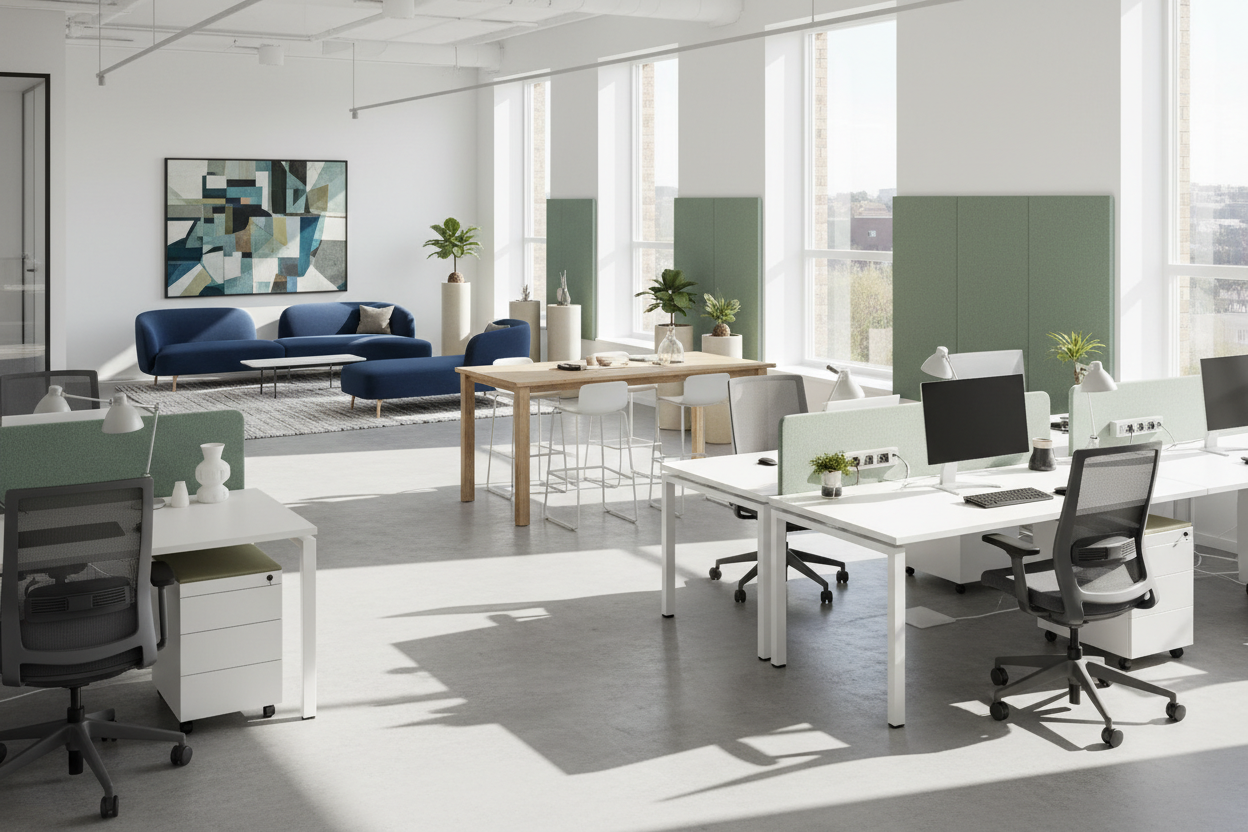
There is nothing that kills productivity faster than visual noise and poor spatial planning. When a client walks into a workspace, they shouldn't just see desks and chairs; they should feel a sense of purpose and clarity. However, achieving that balance between high-end aesthetics and rigorous functionality is a challenge that trips up even seasoned professionals. Whether you are refreshing a home study or overhauling a corporate floor, the right design for office interior is about managing behavior as much as it is about selecting furniture.
Key Features to Look For
- Ergonomics & Biomechanics: Prioritize chairs with lumbar adjustability and desks that accommodate sit-stand transitions to reduce fatigue.
- Acoustic Control: Incorporate soft materials (rugs, acoustic panels, upholstered partitions) to dampen sound reverberation in open areas.
- Lighting Layers: Ensure a mix of ambient (overhead), task (focused), and accent lighting to prevent eye strain and create depth.
- Material Durability: Select high-performance laminates or sealed woods for high-touch surfaces to resist scratching and staining.
- Traffic Flow: Maintain clear pathways (minimum 36 inches) to prevent congestion and allow for easy movement.
Strategic Spatial Planning
The foundation of any successful workspace is the layout. Before buying a single piece of furniture, you must map the traffic flow. A common oversight in interior design office design is placing workstations in high-traffic corridors, which creates constant distraction. Instead, zone the space based on activity levels.
Place deep-work zones in the quietest corners, utilizing natural light but positioning screens perpendicular to windows to eliminate glare. Collaborative zones should be central, acting as a hub that doesn't disturb the periphery. Creating these distinct zones helps mentally switch gears when moving from a meeting to solitary work.
Materiality and Texture
In a professional setting, materials convey the brand's weight and the office's vibe. While glass and chrome suggest modern transparency, they can feel cold and sterile if not balanced correctly. I often advise clients to introduce natural wood grains or textured laminates to ground the space.
The Acoustic Factor
Hard surfaces bounce sound. If your design leans heavily on concrete floors and exposed ceilings, you must counterbalance with acoustic dampening. This doesn't mean ugly foam tiles; consider felt baffle ceilings, heavy drapery, or upholstered dividers. An experienced interior designer office design specialist knows that a quiet room feels more luxurious than a loud one, regardless of the furniture cost.
Lighting: The Invisible Architecture
Lighting is arguably the most critical element in setting the tone. Avoid the dreaded "interrogation room" effect caused by relying solely on cool, fluorescent overhead grids.
Aim for a color temperature around 3500K to 4000K for general work areas—this is crisp and alert without being clinical. Supplement this with warmer task lighting (2700K-3000K) at the desk level to create a pool of focus. This layering adds dimension and prevents the space from looking flat.
My Personal Take on design for office interior
I want to share a specific lesson I learned the hard way regarding "cable management" and minimal desks. A few years ago, I specified these stunning, architectural floating desks for a boutique law firm. They looked incredible in the renderings—sleek, airy, and modern.
However, once the IT team installed the dual monitors, docking stations, and phone systems, the reality set in. The lack of a modesty panel or substantial leg structure meant there was a "spaghetti junction" of black wires hanging visibly beneath every desk. It completely ruined the floating aesthetic. We had to retro-fit custom vertebrae cable spines and mount power bricks under the desktops with industrial velcro. Now, I always check the underside of a desk before the top. If there isn't a dedicated, hidden channel for a heavy power load, I won't recommend it for a heavy-tech user, no matter how beautiful the silhouette is.
Conclusion
Great office design is not just about impressing visitors; it is about sustaining the energy of the people who work there. By focusing on acoustic comfort, proper lighting layers, and honest materiality, you create an environment that supports success. Don't settle for generic setups—invest in a space that works as hard as you do.
Frequently Asked Questions
How much space do I need per employee?
Generally, you should allocate about 100 to 150 square feet per person if you include share of common areas and aisles. For the desk area alone, a footprint of 5x3 feet is standard for comfort without feeling cramped.
What is the best color for productivity?
While blue is often cited for focus and efficiency, it can feel cold. I recommend low-saturation blues or greens (biophilic tones) for focus areas, and pops of warmer tones like terracotta or ochre in breakout spaces to stimulate conversation.
Is custom furniture worth the investment for offices?
For reception desks or boardrooms, yes. These are focal points. However, for general workstations, high-quality modular systems from reputable manufacturers offer better warranty support, easier replacement parts, and flexibility as your team grows.


Leave a comment
This site is protected by hCaptcha and the hCaptcha Privacy Policy and Terms of Service apply.