










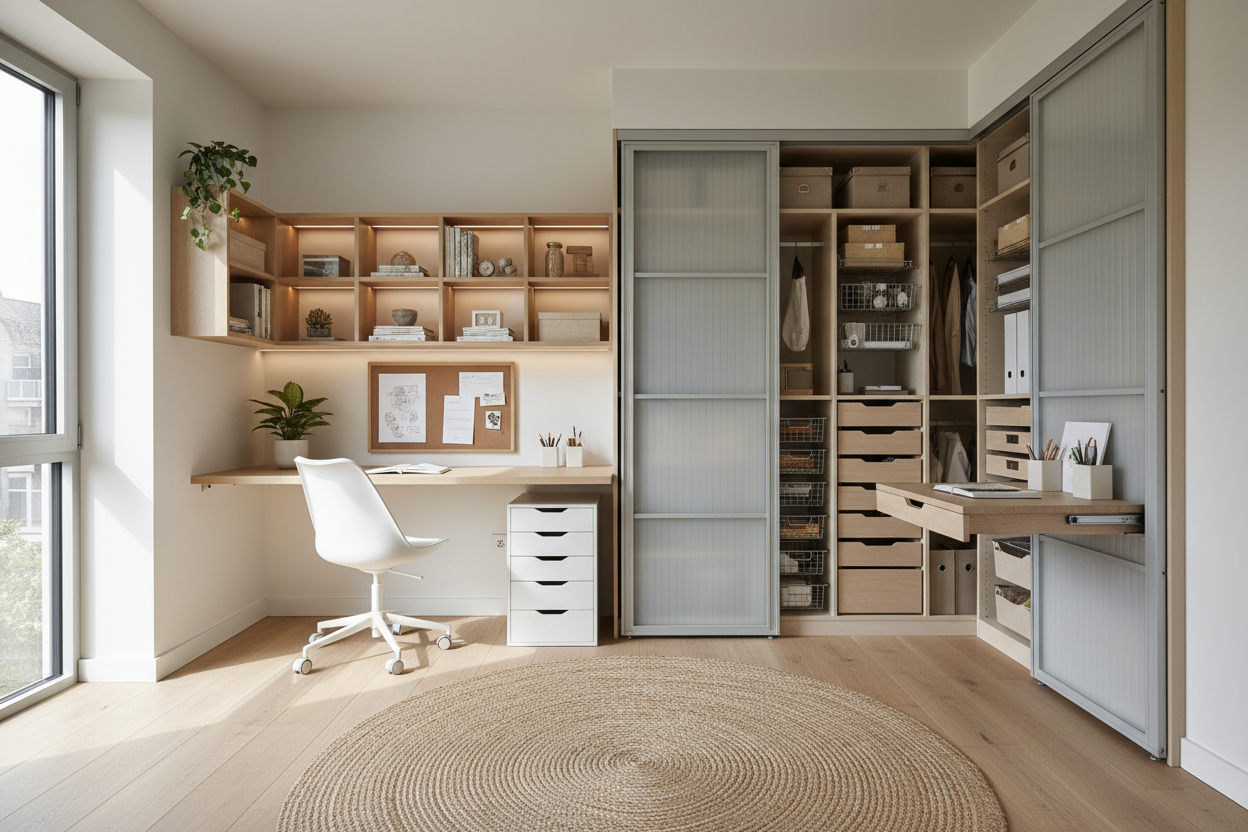
There is a distinct tension that exists in compact workspaces: the need for professional functionality versus the constraints of square footage. When clutter accumulates on a compact desk, it doesn't just occupy space; it occupies your mind, stifling creativity and focus. As an interior designer, I often see homeowners sacrifice aesthetics for storage, resulting in cramped, utilitarian boxes rather than inspiring studios. This guide explores sophisticated organization ideas for small home office layouts that balance ergonomic necessity with high-end design principles.
Quick Decision Guide: Essentials for Compact Workspaces
- Vertical Utilization: Prioritize floor-to-ceiling shelving units to draw the eye upward and maximize cubic footage.
- Visual Weight: Select materials like acrylic, glass, or light wood veneers to keep the room feeling airy rather than heavy.
- Multi-Functionality: Opt for desks with integrated cable management or ottomans with hidden file storage.
- Zoning: Establish a clear 'active work zone' (arm's reach) versus 'archive zones' (high shelves) to maintain flow.
- Lighting: Use wall-mounted sconces or clamp lamps to free up precious surface area on the desk.
Mastering Space Planning and Layout
When determining how to arrange a small office space, the goal is to maintain 'flow.' In a tight footprint, traffic patterns are nonexistent; instead, we focus on the range of motion. A common error is placing a heavy executive desk in the center of the room. For small spaces, perimeter layouts or floating desks are superior. They open up the floor area, creating an illusion of spaciousness.
Consider the 'triangle of efficiency.' Your chair, your digital work surface, and your physical reference materials should form a tight triangle. If you have to stand up and walk across the room to get a stapler, the organization has failed. Small office space organization ideas must prioritize reachability.
Materiality and Visual Balance
Small office organization is not just about where you put things; it is about how those storage solutions look. In a small room, dark, heavy mahogany bookcases can feel oppressive. Instead, look for small office organization solutions that utilize negative space.
Choosing the Right Textures
I recommend open shelving with metal armatures or light oak veneers. These materials reflect light rather than absorbing it. If you require closed storage to hide messy binders, opt for cabinetry painted in the same color as your walls. This 'built-in' look allows the storage to recede visually, making the room feel larger while solving the issue of how to organize an office in a small space.
Desk Organization for Small Spaces
The desk surface is prime real estate. To maintain a luxury aesthetic, surface clutter must be eradicated. Use a monitor riser with drawers underneath to hide post-its and pens. This elevates the screen to eye level (ergonomics) and reclaims the footprint (storage).
For small office organizer ideas inside the drawers, use felt or bamboo dividers. Plastic often rattles and feels cheap; felt dampens sound and adds a layer of tactile luxury every time you reach for a pen. This attention to detail elevates the experience of using the space.
Vertical integration: The Wall as a Canvas
When considering office organization for small space scenarios, walls are often underutilized. Install a pegboard or a slat wall system, but style it carefully. Avoid the 'garage workshop' look by choosing a board in a matte finish (brass, matte black, or sage green) and curating what hangs there. Only display tools that are beautiful or used daily. This transforms storage into a focal point.
My Personal Take on Organization Ideas for Small Home Office
I learned a hard lesson about small home office organization during a project for a client in a converted pre-war closet in Manhattan. I initially specified deep, solid walnut floating shelves—beautiful craftsmanship, but a functional disaster.
Once installed, the 12-inch depth felt imposing directly above the monitor. It made the client feel like the walls were closing in, and the dark wood absorbed the only source of natural light. I had to pivot. We swapped them for 8-inch deep, white powder-coated steel shelves. The difference was immediate. The lesson? In small spaces, depth perception matters more than storage capacity. Sometimes, shaving off four inches of storage depth is worth gaining a foot of psychological breathing room. Also, never underestimate the annoyance of a wire dangling against a clean wall—I now insist on routing channels into the drywall or using paintable cord covers before the furniture even arrives.
Conclusion
Transforming a cramped nook into a productive haven requires a blend of strategic vertical storage and visual trickery. By selecting materials that feel light and organizing with a 'reach-first' mentality, you can create a workspace that feels expansive regardless of the square footage. A well-organized office is not just about tidiness; it is about designing a space that respects your workflow.
Frequently Asked Questions
How do I manage paper clutter in a tiny office without a file cabinet?
Digitize aggressively. For the few physical papers you must keep, use vertical magazine holders or a stylish, lidded linen box on a high shelf. Avoid bulky metal filing cabinets; they consume too much floor space and disrupt the aesthetic.
What is the best desk placement for small space office organization?
Ideally, face the desk toward a window or into the room, rather than staring at a blank wall. If you must face a wall, use that vertical space for a pinboard or shelving to create depth and interest.
How to organize small office cables effectively?
Cable management is critical in small spaces where every detail is visible. Use velcro ties rather than zip ties (for adjustability) and mount a cable tray under the desk surface. A 'cable management box' on the floor can also hide power strips and excess cord length.

Leave a comment
This site is protected by hCaptcha and the hCaptcha Privacy Policy and Terms of Service apply.