










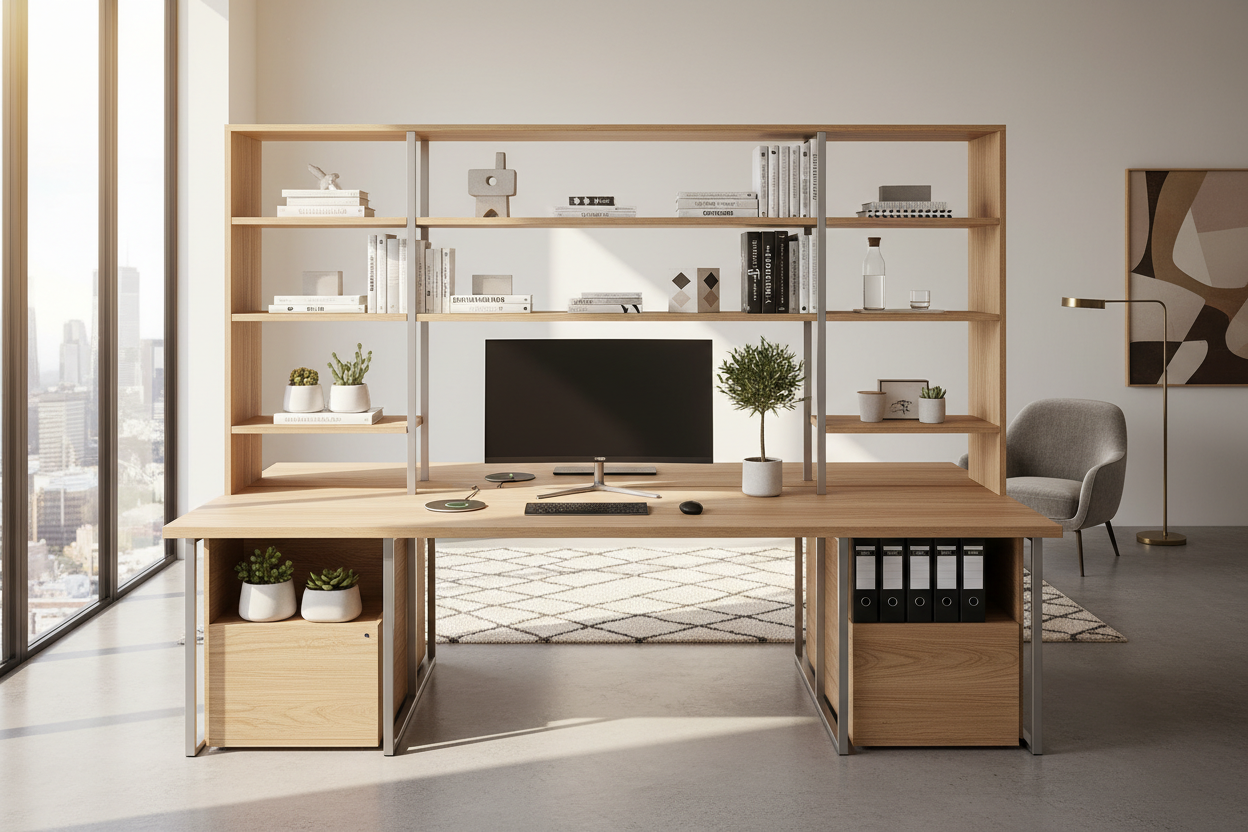
There is a specific kind of fatigue that comes from staring at a cluttered workspace. Paperwork migrates, coffee cups accumulate, and suddenly, your premium walnut writing desk looks more like a storage unit than a place of inspiration. As a designer, I often see clients try to solve this by buying larger desks, but the solution isn’t horizontal—it’s vertical. Integrating a well-curated office desk shelf is the most effective way to reclaim your surface area while adding architectural interest to the room.
Key Features to Look For
- Material Integrity: Prioritize solid wood or high-grade plywood over particle board to prevent sagging under the weight of monitors or books.
- Depth Ratios: Ensure the shelf depth does not exceed 50% of your desk's depth to maintain a functional writing surface.
- Mounting Mechanism: Decide between freestanding risers (flexibility) or clamp-on systems (stability and edge-clearing).
- Clearance Height: Verify there is at least 4-6 inches of clearance underneath for keyboard storage or hiding docking stations.
Choosing the Right Material Palette
When selecting office desk shelves, the material dictates both the longevity of the piece and the tone of the room. In high-end residential projects, we avoid standard melamine unless it is a specific high-pressure laminate (HPL) intended for heavy wear.
Solid Wood vs. Veneer
Solid wood—oak, walnut, or ash—adds warmth and tactile luxury. It ages beautifully, developing a patina that synthetic materials cannot mimic. However, be wary of weight; a solid oak shelf requires a sturdy desk base. High-quality wood veneers are a sophisticated alternative for shelves for office desk setups, offering the visual grain of timber without the heft, provided the edge banding is applied seamlessly.
Metal and Glass Accents
For a more industrial or modernist silhouette, powder-coated steel offers incredibly thin profiles that maintain high load-bearing capacities. This is ideal for smaller home offices where you want to avoid visual bulk. Glass, while elegant, can create glare from task lighting and requires constant maintenance to remain fingerprint-free.
Space Planning and Visual Balance
The placement of your shelving determines the flow of your work. A common error is creating a "wall" of storage that looms over the user. The goal is ergonomics mixed with aesthetics.
The Rule of Thirds
When styling your shelf, avoid filling every inch. Utilize the rule of thirds: one-third for functional storage (reference books, drive arrays), one-third for aesthetic objects (a sculptural vase, a small succulent), and one-third negative space. This negative space is crucial; it allows the eye to rest and prevents the setup from feeling claustrophobic.
Ergonomics and Reach Zones
Functionally, shelves for office desk applications must respect your reach zones. Primary items—those used daily—should be on the lower tier or the desk riser immediately in front of you. Secondary storage can go higher or to the periphery. If you are using a desk shelf as a monitor riser, ensure the total height places the top of your screen at eye level to maintain proper cervical alignment.
Lessons from My Own Projects
I want to share a specific realization I had while designing a home office for a financial analyst last year. We installed a beautiful, custom floating shelf unit directly onto a heavy-duty standing desk. It looked stunning in the photos.
However, two weeks later, the client called me about the "wobble." We hadn't accounted for the fact that clamp-on shelves, when loaded with heavy reference books, shift the center of gravity on a standing desk. Every time the desk raised or lowered, the monitor on the shelf would shudder. It was a functional failure despite the aesthetic success. We ended up swapping it for a freestanding riser with cork-lined feet. Another unpolished detail people rarely mention: check the texture of the shelf surface. We once used a raw reclaimed wood shelf that looked rustic and chic, but the client complained that it snagged their microfiber cleaning cloths every time they dusted. Now, I always run my hand over the finish to ensure it's sealed to a satin smoothness before recommending it.
Conclusion
Your workspace should be a reflection of your professional standard and personal style. By selecting the right materials and respecting the balance of the room, a shelf becomes more than storage—it becomes a frame for your best work. Curate your environment intentionally, and the productivity will follow.
Frequently Asked Questions
What is the ideal depth for a desktop shelf?
For most standard desks (24-30 inches deep), a shelf depth of 8 to 10 inches is ideal. This provides enough surface area for a monitor base or books without encroaching on your active writing zone.
Can I install heavy shelves on a glass desk?
I generally advise against clamp-on office desk shelves for tempered glass desks. The point-load pressure from the clamp can shatter the glass. Freestanding risers with soft silicone or cork feet are the only safe option for glass surfaces.
How do I hide cables when using an open shelf?
Look for shelves that feature a hollow cavity or routed channels underneath. If your shelf is solid, use velcro ties to bundle cables behind the legs of the riser, keeping the visual noise to a minimum.

Leave a comment
This site is protected by hCaptcha and the hCaptcha Privacy Policy and Terms of Service apply.