










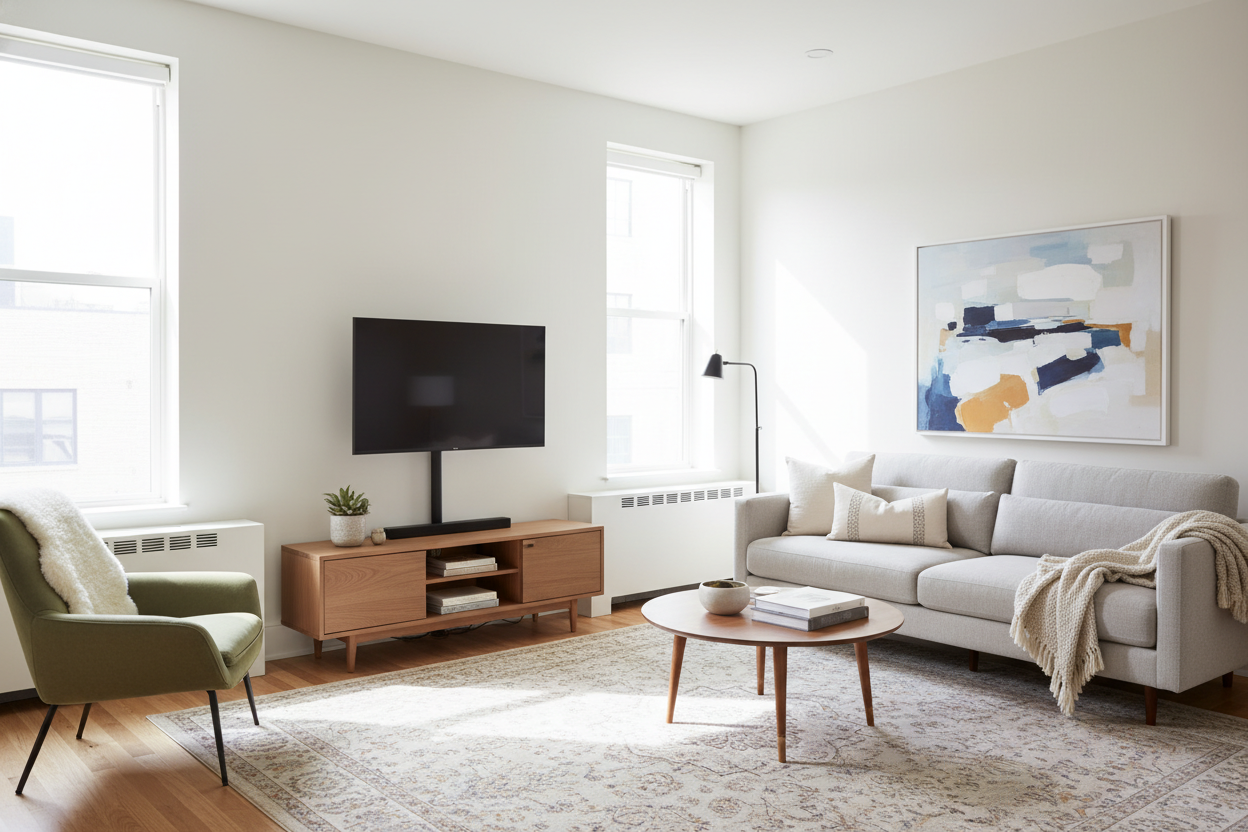
I spent three hours staring at my living room wall, tape measure in hand, slowly realizing I was defeated. The only wall that made sense for a TV was occupied by a six-foot-long, dust-caked baseboard heater. If I put a normal console there, I would be blocking the heat; if I tried to mount the TV, I would have to deal with weirdly thick 1920s molding that makes a bracket sit at a frustrating 5-degree tilt. That is when I discovered the back mount tv stand.
- Avoids drilling into rental walls or crumbling plaster.
- Clears baseboard heaters without blocking essential airflow.
- Saves significant floor space compared to deep, bulky credenzas.
- Hides the 'cable waterfall' behind a central steel spine.
The Baseboard Heater Dilemma (Why My Walls Were Off-Limits)
My landlord is chill, but my walls are made of plaster and prayers. When I finally realized my wall studs betrayed me, I hit a wall—literally. In older apartments, the layout is often dictated by the radiator. You cannot just shove a wood cabinet against an active heater unless you want a fire hazard or a warped piece of expensive furniture.
The molding was the second strike. It is about four inches thick and sits right at the base of the wall, meaning no piece of furniture can actually sit flush. This creates a gap where remotes go to die. I needed something that could stand on its own feet but hold the screen high enough to clear the 'heat zone' without looking like a temporary rolling cart from a high school AV club.
Wait, What Exactly is a TV Stand With Back Mount?
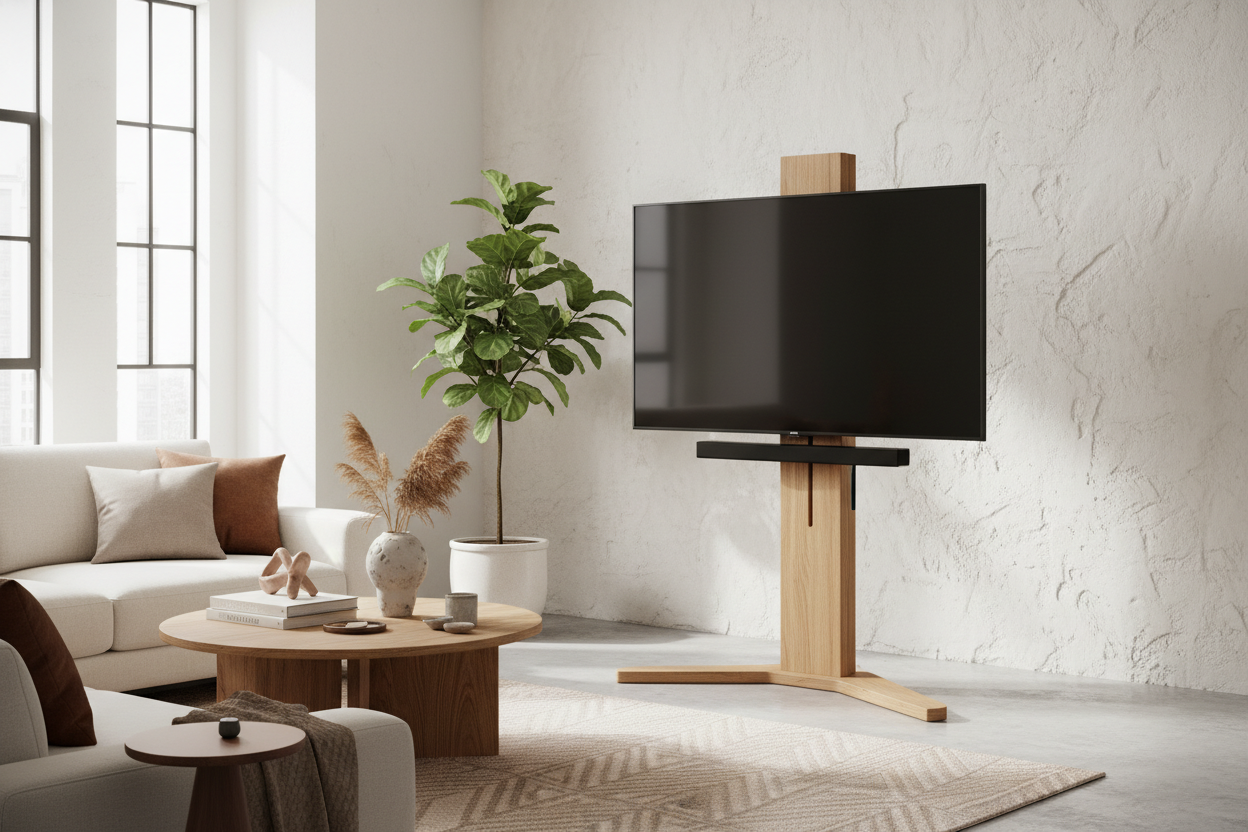
Think of it as a hybrid. It is not quite a wall mount, and it is not quite a cabinet. A tv stand with back mount is essentially a heavy-duty pedestal with a vertical spine. The base is usually a heavy slab of tempered glass or steel that slides under or right up to your baseboard, while the spine holds the VESA bracket for your screen.
I swapped my console for a TV stand with this integrated mount because it allowed the screen to hover about 12 inches above the radiator. This design creates a chimney effect where the heat can rise behind the TV rather than cooking the internal processors. It is a specialized solution for a very specific, very annoying architectural problem.
Three Features That Actually Matter When You Can't Drill
First, weight. Do not buy the cheapest one you find on a clearance site. If the base is light, a 65-inch screen becomes a giant lever that will tip the whole thing over if someone sneeze near it. Look for a base that weighs at least 25 to 30 pounds. I learned this the hard way with a cheap model that wobbled every time my dog barked.
Second, cable management. The spine should be hollow or have clips. You do not want a sleek floating screen with five black cords dangling like vines. I ended up choosing a model that mimicked the look of a mid-century modern TV stand, which used a wood-veneer pillar to hide the mess while keeping the floor clear.
Third, height adjustability is non-negotiable. Because of my baseboard heaters, I needed the bottom of the TV to sit exactly 38 inches off the floor. Most standard consoles sit at 24 inches. A back mount gives you that extra foot of clearance that makes the difference between a melted TV and a cozy evening.
Why I Didn't Just Buy Another Bulky Credenza
I love the look of a massive storage credenza with sliding glass doors, but in a 12x14 room, they feel like a tank. They eat up three feet of depth once you account for the heater gap. The back mount unit has a much smaller footprint, which makes the whole room feel airier.
There is also the 'renter's tax' to consider. Every time I move, I have to patch holes. With a freestanding mount, I just unplug, unscrew the bracket, and go. No spackle, no paint matching, and no lost security deposit. It is the ultimate furniture hack for people who move every two years.
The Final Layout: Floating Safely Above the Heat
Now, my TV sits exactly where it should, centered on the wall and safely above the radiator. The room looks intentional rather than cluttered. If you are just exploring standard TV stands, you might not realize how much of a problem heat and molding are until you are actually trying to assemble the room at 10 PM on a Tuesday.
FAQ
Will it tip over on carpet?
Most are fine on low-pile carpet, but if you have a thick shag rug, you might want to place a small piece of plywood under the base or choose a model with a wider footprint for stability.
Can I add shelves to these?
Yes, many models come with one or two adjustable glass shelves for a soundbar or a gaming console. Just check the weight limit for the shelves specifically.
Does the heat from the baseboard damage the TV?
As long as there is a 6-10 inch gap between the heater and the bottom of the TV, the rising heat usually dissipates enough. Just don't let the cables rest directly on the heater fins.


Leave a comment
This site is protected by hCaptcha and the hCaptcha Privacy Policy and Terms of Service apply.