











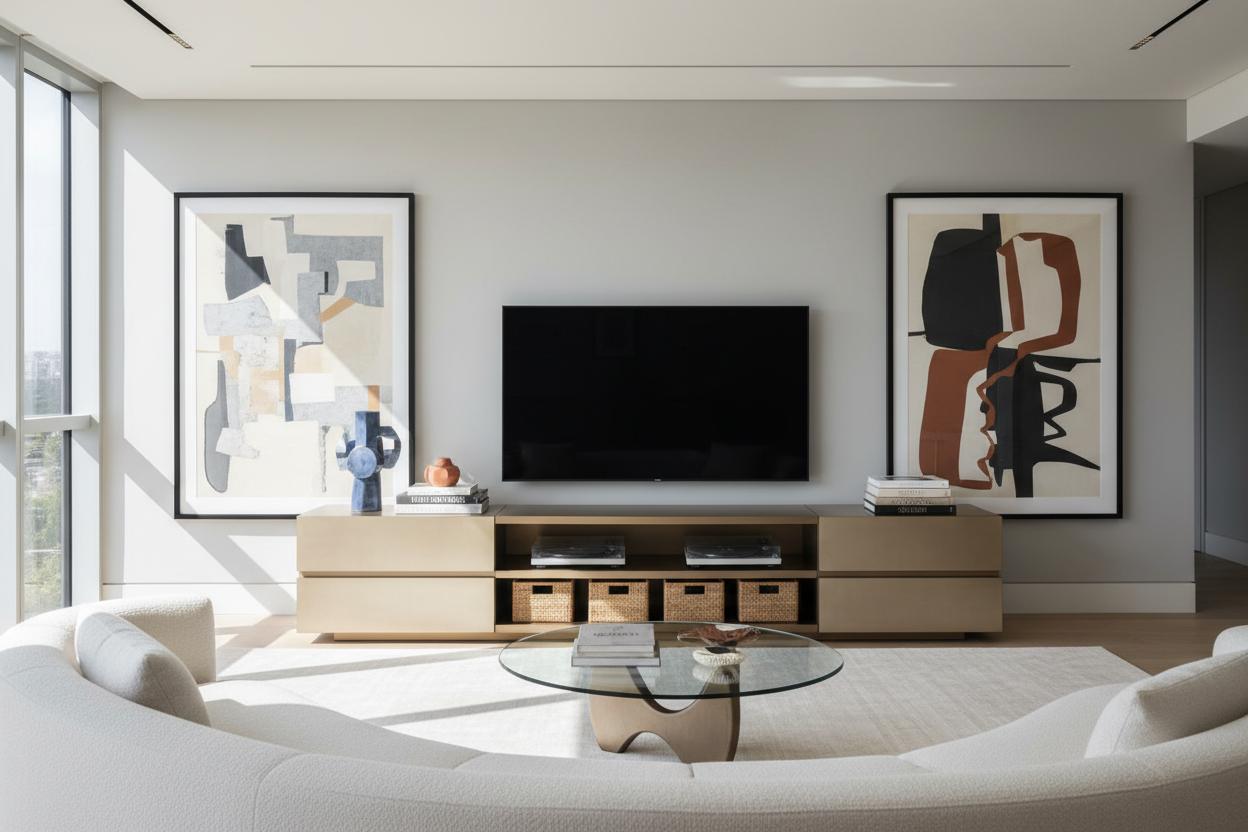
We have all seen it happen. You scroll through architectural digests, fall in love with a bold, chunky, geometric living room setup, and decide to bring that energy home. But when the delivery arrives, your living room suddenly feels less like a curated gallery and more like a confused retro diner. Integrating a postmodern tv stand into a typical North American home is one of the trickiest design tightropes to walk. These pieces demand attention, and if your room isn't prepared for that visual weight, the entire layout can quickly feel overwhelmed.
By the end of this guide, you will understand exactly how to balance the aggressive curves and striking colors of 80s-inspired design with the practical realities of modern living. We will cover scale, material maintenance, and how to mix eras so your space feels intentional, not accidental.
Quick Decision Guide
- Balance the geometry: If your console features heavy curves or tubular shapes, contrast it with crisp, straight lines in your rug or sofa silhouette.
- Measure internal depth: Vintage and reproduction postmodern pieces often have shallow cabinets that will not fit modern, bulky AV receivers.
- Embrace negative space: These stands act as focal points; leave at least 36 inches of empty wall or floor space around them to let the design breathe.
- Watch the finish: High-gloss laminates and lacquers show every single fingerprint and dust particle—matte or textured finishes are much more forgiving for daily life.
Balancing Bold Silhouettes and Visual Weight
Postmodern design is inherently rebellious. It rejects the minimalist 'less is more' philosophy in favor of playful proportions, contrasting materials, and sometimes chaotic color blocking. Placing a piece like this in a standard suburban living room requires a careful eye for visual weight.
Mixing Eras Gracefully
The secret to making a post modern media console work is not to buy an entirely postmodern living room set. That quickly veers into theme-park territory. Instead, treat the console as the star of the room and surround it with quiet, supportive actors. Pair a chunky, glossy console with a low-profile, neutral linen sofa and a simple, textured wool rug. This tension between loud and quiet creates a sophisticated, layered interior.
Making Room for a Statement Piece
Space planning around eccentric furniture is rarely straightforward. Standard design rules often assume you are working with rectangular, predictable footprints. Postmodern pieces often feature asymmetrical shelving, staggered heights, or oversized cylindrical legs.
Scale and Proportion in Real Homes
In an open-concept living room with eight-foot ceilings, a massive, brightly colored post modern tv console can visually lower the ceiling if not grounded correctly. Keep the overall height of the unit under 28 inches if your ceilings are average height. This keeps the sightlines open and prevents the room from feeling top-heavy. Remember to float the furniture slightly away from the wall—even just two inches of shadow line gives the piece a more sculptural, deliberate presence.
Form vs. Function in Everyday Life
We need to talk about the physical realities of living with these designs. The 1980s and 90s championed materials that prioritized aesthetics over long-term durability, and many modern reproductions follow suit.
The Reality of Laminate and Lacquer
Many postmodern pieces rely on high-gloss lacquers, burl wood veneers, or brightly colored laminates to achieve their signature look. While a glossy black or primary red finish looks incredible in a showroom, it acts as a magnet for pet hair, dust, and toddler fingerprints. If you have an active household, consider a piece that incorporates ribbed glass, matte metals, or solid wood accents to hide daily wear and tear while still delivering that geometric punch.
Lessons from My Own Projects
A few years ago, I sourced a stunning, authentic 1980s postmodern console for a client's loft in Chicago. It had a gorgeous asymmetrical black lacquer frame with a massive tubular chrome pillar on one side. It looked incredible in the space, but I learned a hard lesson about vintage proportions that week.
The internal cabinets were only 13 inches deep. My client's home theater receiver was 16 inches deep, plus the wiring. We ended up having to carefully cut out the back panel of this expensive, vintage piece just to make the equipment fit. Furthermore, the high-gloss black lacquer required daily dusting. The client loved the look, but admitted that keeping the surface pristine became a frustrating part-time job. If I were to do it again, I would specify a custom reproduction with modern internal dimensions and a satin finish.
Frequently Asked Questions
What defines a postmodern tv stand?
Postmodern stands typically feature bold, unconventional geometry, contrasting materials (like mixing chrome with burl wood), asymmetrical shapes, and playful or exaggerated proportions that challenge traditional, functionalist design.
How do I hide cords in a postmodern media console?
Because many of these pieces prioritize form over function, they often lack modern cable management. Use adhesive cord clips along the back of the thickest legs, and consider using a matching cable sleeve to bundle wires together before routing them to the outlet.
Does a postmodern tv console work in a small apartment?
Yes, but you must scale down the rest of your furniture. If you use a bold, chunky console in a tight space, opt for a glass coffee table and an armless sofa to reduce visual clutter and let the console command the room without suffocating it.

Leave a comment
This site is protected by hCaptcha and the hCaptcha Privacy Policy and Terms of Service apply.