










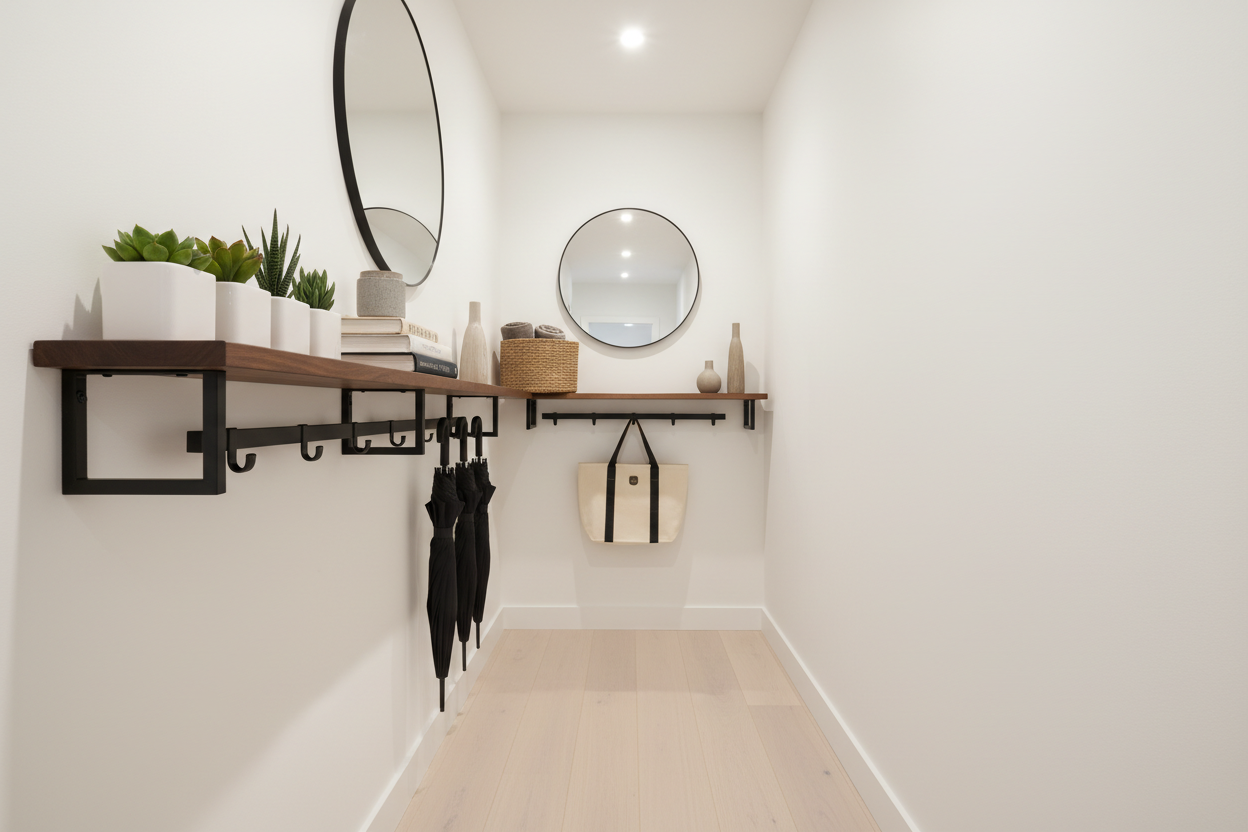
Most homeowners treat hallways as mere arteries of the house—spaces you move through to get somewhere else. Consequently, these corridors often become cluttered dumping grounds for mail, keys, and shoes, or they remain stark, empty tunnels lacking personality. The challenge lies in the dimensions. Standard furniture simply does not fit in a corridor that is only three or four feet wide. The solution is finding a specifically designed narrow hallway shelf that maximizes utility without encroaching on your walking path. By utilizing vertical space and selecting pieces with a depth of 10 inches or less, you can transform a cramped corridor into a functional, organized, and stylish transition zone.
The Reality of Living with Tight Corridors
I learned the importance of proper hallway dimensions the hard way in my second apartment. The entry hall was barely wide enough for two people to pass each other sideways. Enthusiastic about storage, I bought a standard console table that was 16 inches deep. It looked beautiful in the store, but once installed, it became a daily obstacle. I bruised my hip on the corner of that table more times than I care to admit, and carrying groceries past it was a nightmare. That experience taught me that in a thoroughfare, clearance is everything. A narrow shelf for hallway applications must acknowledge the flow of traffic. Eventually, I swapped that bulky table for a floating ledge that was only six inches deep. It held my keys and a small plant just as well, but suddenly, the hallway felt open again.
Measuring for the "Hip Test"
Before you even look at designs or materials, you need to understand the spatial limitations of your specific hall. A tape measure tells you the width of the wall, but it doesn't tell you how the space feels. Interior designers often refer to the clearance zone. Ideally, you want to maintain at least 36 inches of clear walking space. If your hallway is 42 inches wide, your narrow hallway shelves cannot exceed 6 inches in depth.
Perform a physical test before buying. Tape a piece of cardboard cut to the depth of your potential shelf onto the wall or stack books on the floor to mimic the footprint. Walk past it rapidly, carrying a laundry basket or a bag of groceries. If you have to twist your body or slow down to avoid hitting the marker, the shelf is too deep. For many homes, a small hallway shelf needs to be significantly shallower than standard living room furniture to function correctly.
Choosing the Right Type of Storage
Once you have your measurements, you have three main categories to consider. Each serves a different structural and aesthetic purpose.
Floating Wall Shelves
For the tightest spaces, a narrow hallway wall shelf is usually the superior choice. Because these units have no legs, they keep the floor visible. This optical trick makes the hallway appear wider than it actually is. Floating shelves are excellent for radiators covers or areas where baseboards might prevent a piece of furniture from sitting flush against the wall. When installing these, ensure they are anchored into studs. Even a small shelf can become a safety hazard if it pulls away from the drywall when someone leans on it.
Freestanding Consoles
If you are renting or have heavy plaster walls that are difficult to drill into, a freestanding unit is a viable alternative. Look for "skinny" console tables. The key here is visual weight. A solid wood cabinet will make a small hall feel claustrophobic. Instead, opt for open metal frames or glass tops. These materials allow light to pass through, reducing the visual bulk of the furniture. A small hall shelf with hairpin legs, for example, provides a surface for decor without blocking the view of the flooring.
Recessed Shelving
This is the most labor-intensive option but offers the best space economy. If you are renovating, you can build narrow hallway shelves directly between the wall studs. This allows you to have storage that sits flush with the wall surface, taking up zero walking space. This is particularly effective for book storage or displaying collections in corridors that are too narrow for any protruding objects.
Styling Without Cluttering
The danger of adding storage to a small area is that it invites clutter. A flat surface in an entryway is a magnet for junk. To keep your small hallway shelves from becoming a mess, you need to style them with intent. Use the "landing strip" concept. Place a specific, small bowl for keys and a dedicated tray for mail. If an item doesn't fit in those vessels, it doesn't belong on the shelf.
Lighting plays a massive role here as well. Hallways are often dark. If your shelf is deep enough, a slender table lamp can add warmth. If space is too tight for a lamp base, consider installing a rechargeable picture light above the shelf or mounting a sconce. Illuminating the shelf draws the eye to the decor rather than the narrowness of the walls.
Mirrors are the best friend of the small hallway shelf. Hanging a large mirror directly above a narrow console reflects light and doubles the perceived depth of the space. It turns a cramped utility area into a dressing station where you can check your appearance before leaving.
Material Durability and Traffic
Hallways are high-traffic zones. People brush against walls, bags scrape against furniture, and wet umbrellas get leaned against surfaces. The material of your narrow hallway shelf matters. Delicate lacquers or untreated softwoods may scratch or stain easily in this environment. Hardwoods like oak or walnut, or metals with powder-coated finishes, tend to stand up better to the daily abuse of a busy corridor.
If you are looking at small hallway shelves that are low to the ground (perhaps for shoe storage), ensure the material is moisture-resistant. Wet shoes can ruin particle board quickly. Metal racks or treated wood are safer bets for lower-level storage.
Making the Final Decision
Transforming a corridor requires a shift in perspective. You stop looking at the hallway as just a path and start seeing it as a room in its own right. Whether you choose a minimalist metal ledge or a warm wooden console, the addition of a narrow shelf for hallway organization changes the dynamic of the home. It provides a pause point, a place for organization, and an opportunity to display personality in an otherwise forgotten space. By adhering to strict depth measurements and prioritizing clearance, you can add significant value and function to even the most slender of spaces.
Frequently Asked Questions
What is the ideal height for a hallway shelf?
For a floating shelf or console intended for keys and mail, the standard height is between 30 and 36 inches from the floor. This places items at an easy reaching distance without requiring you to stoop. If you are hanging a shelf purely for decorative art, you might place it higher, around 55 to 60 inches, to align with eye level.
How do I secure a shelf in a narrow hallway to prevent bumping?
In narrow spaces, bumping is inevitable, so security is paramount. Always use wall anchors rated for the weight of the shelf plus its contents, or screw directly into wall studs. For freestanding tall units, use an anti-tip kit or L-brackets to secure the back of the unit to the wall, preventing it from tipping over if someone brushes past it forcefully.
Can I use a picture ledge as a hallway shelf?
Absolutely. Picture ledges are often the perfect solution for extremely narrow halls because they are usually only 3 to 4 inches deep. While they won't hold a lamp or a large bowl, they are perfect for leaning framed art, holding a phone, or organizing keys on small hooks attached to the underside.

Leave a comment
This site is protected by hCaptcha and the hCaptcha Privacy Policy and Terms of Service apply.