










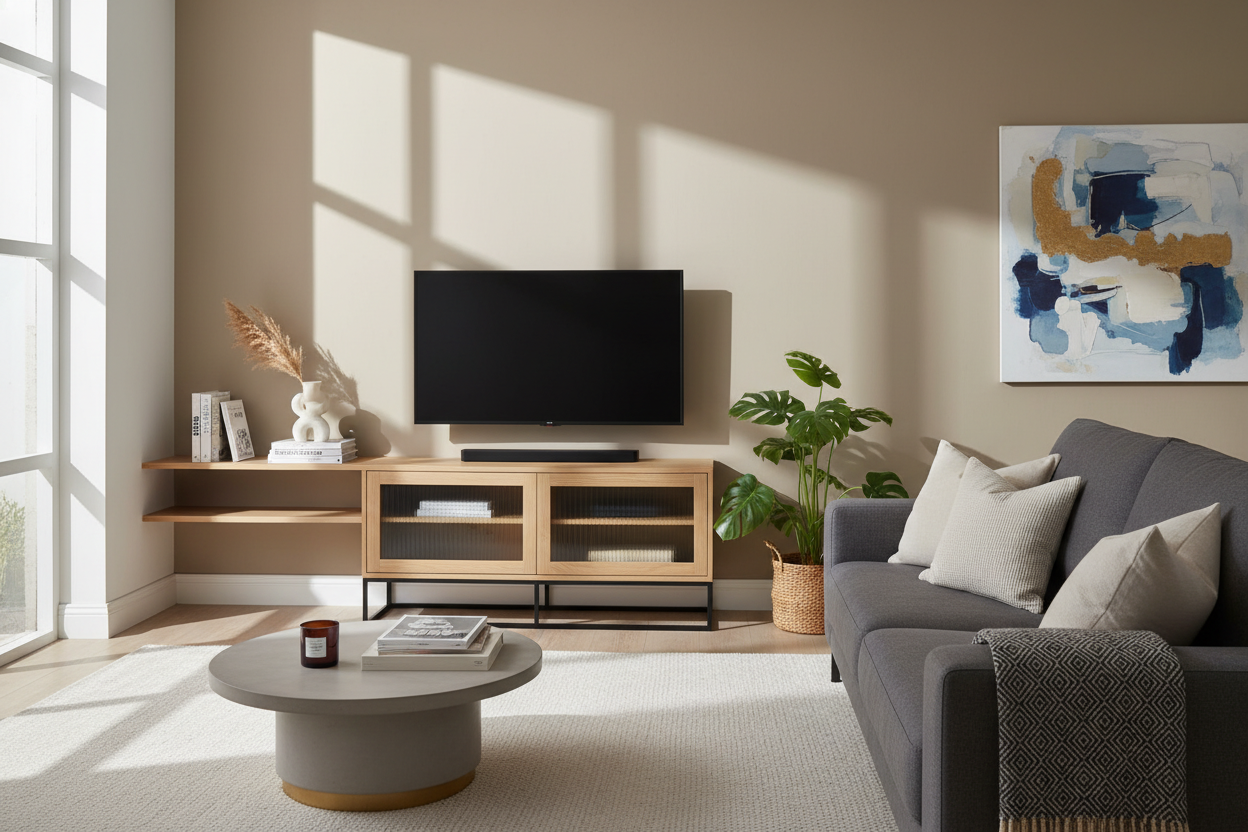
I remember walking into a client's new apartment last year. They'd just moved from a suburban house to a 700-square-foot downtown space. Their old 72-inch entertainment center dominated the living room, making it feel like a storage unit rather than a place to relax. They were convinced they needed to sacrifice their TV setup entirely. That's when I introduced them to the right small entertainment units. It wasn't about giving up function—it was about choosing smarter.
Quick Takeaways
- A compact entertainment cabinet under 50 inches wide can fit in spaces where a sofa arm would normally go.
- Look for units with adjustable shelves—media boxes keep changing size.
- Leave 4-6 inches of clearance behind the unit for cables and airflow.
- Lighter colors and legs create visual space; darker, solid units anchor a room.
Why Small Entertainment Units Are the Smart Choice for Modern Living
Many people think 'small' means 'less than.' I've found the opposite. In my 200+ home projects, the most common mistake is overscaling furniture. A massive entertainment unit in a 12x14 living room leaves you with 24-inch walkways—that feels cramped, not luxurious. A well-chosen small entertainment cabinet does three things better: it defines the TV area without consuming it, keeps essential items within reach (remote, game controller, a book), and leaves floor space for living. I worked with a couple in a loft who used a 42-inch wide unit to separate their living and dining areas without a wall. The unit held their soundbar, console, and records, while the open back didn't block light. The misconception? That you need deep storage. Most modern components—Apple TV, slim game consoles—are under 12 inches deep. A unit 16 inches deep is often plenty.
Design Principles for Compact Entertainment Spaces
The key is proportion. If your sofa is 84 inches long, look for a unit between 50 and 70 inches wide. It should be about two-thirds the sofa's length visually. Scale matters too: a unit with tall, skinny legs will feel lighter than one sitting directly on the floor. For walls, leave at least 12 inches of blank wall space on each side of the unit if possible. This frames it. I always consider visual weight. A solid walnut unit has more weight than a white oak one with metal legs. In a small room, heavier units work against a wall you want to emphasize; lighter ones help the room breathe. For more on this balance, explore our guide on space-saving furniture solutions.
Measuring Your Space: The Critical First Step
Grab a tape measure. First, measure the wall where the unit will go. Note the width, and subtract at least 24 inches for traffic flow if it's a walkway. Then, measure the depth. Remember to account for baseboards—they can add an inch. I once installed a unit that fit perfectly between two windows, but the outlet was behind it. We had to cut a small access panel. Now, I always check outlet and vent locations. For the unit itself, note the interior shelf heights. A standard Blu-ray player is about 2 inches tall, but a gaming console might be 4 inches. Adjustable shelves are non-negotiable for me.
The Scale Illusion: Making Small Units Feel Substantial
A 48-inch unit can feel lost on a large wall. Here's my trick: flank it with floor plants in 10-inch pots or stack two large art books vertically beside it. This creates a 'grouped' look that fills visual space. Another method is to choose a unit with a solid back panel in a contrasting color. It stops the eye, making the piece feel intentional. I avoid units that are too short—under 20 inches tall—unless you're mounting the TV above. A height of 24-28 inches gives presence without overwhelming.
Storage Solutions That Actually Work in Small Units
The goal is accessible, not cavernous. I prioritize vertical dividers for game cases and media, and at least one enclosed cabinet for routers or messy cables. For a unit 36 inches wide, I'd specify two adjustable shelves inside the main compartment. Door style matters: lift-up doors need clearance above; sliding doors need side space. I recently used a unit with pocket doors that slide into the sides—perfect for a tight corner. Remember, modern multi-functional entertainment units can include shallow drawers for remotes, which beats a cluttered top.
Cable Management for Compact Setups
Nothing ruins a clean look like a cable nest. I specify units with at least two rear cable grommets (1.5-inch diameter) and one central hole for power strips. Use Velcro straps, not twist ties. For a clean install, mount a power strip inside the unit's back panel, and run a single cord to the outlet. I've seen clients use adhesive cable channels along the back edge if the unit lacks management.
Vertical Storage: The Often-Forgotten Dimension
Inside the cabinet, think up. Stack media players if they don't overheat—check manuals. Use standoffs between them for airflow. I add slim, vertical organizers on the inner door for controllers or magazines. For units with open shelving, stack books horizontally to create platforms for decor, maximizing the height without adding bulk.
Style Selection: Finding Your Aesthetic in Compact Form
Your small entertainment unit should complement your existing pieces. For a mid-century room, look for tapered legs and walnut veneer. For industrial, metal frames with open shelving work. A common question: should it match the coffee table? Not necessarily. I often choose a unit that contrasts slightly—a light oak unit with a dark walnut table adds depth. See our modern black entertainment center for a sleek option, or the wood grain entertainment center for warmer tones.
Material Choices for Small Spaces
Materials affect light and space. Glass shelves and doors make a unit feel airy but show dust. I use them in apartments with great natural light. Solid wood (like kiln-dried oak) feels substantial and durable, but can be heavy. Engineered wood with a good veneer (at least 0.5mm thick) is lighter and stable for smaller sizes. Metal frames add a linear, open feel—good for studios where you want division without blockage.
Color Psychology in Compact Furniture
Light colors recede, dark colors advance. A white or light gray unit will make the wall feel further back. A navy or charcoal unit will anchor a room and can make a large TV feel more integrated. I often use a dark unit in a room with white walls to create a focal point. For a cohesive look, pick up one of the unit's accent colors in throw pillows or a rug.
Real Solutions for Common Small Space Challenges
Awkward corner? Look for a corner unit designed for 45-degree walls—they often have triangular shelves. Limited wall space? Consider a narrow, tall unit (like 24 inches wide by 60 inches tall) that holds components vertically. For multi-functional rooms (living/home office), I choose units with a closed section for office supplies and an open section for media. One client used a 54-inch unit to separate their living area from a dining nook, with baskets on one side for toys. When facing specific layout issues, browsing our full entertainment center collection can spark ideas.
Your Next Steps: Finding the Perfect Small Entertainment Unit
Start with your measurements—wall width, depth allowance, and component list. Prioritize adjustable shelves and cable management. Choose a style that fits your room's vibe, not just a trend. Finally, think about future needs: will you add a gaming system? Plan for it now. In my experience, investing in a solidly built unit from materials like plywood core (not particleboard) pays off. It might cost 20% more, but it won't sag in a year.
Personal Experience: The Honest Downside
I once specified a beautiful, minimalist small entertainment unit for a client's sleek condo. It was only 18 inches deep, with open shelving. It looked stunning in the showroom. After installation, they realized their cable box and soundbar didn't fit depth-wise with the cables plugged in. We had to swap it for a unit 22 inches deep. The lesson: always add 2-3 inches to the deepest component's measurement for cable clearance. Small units require precision—there's less margin for error than with a sprawling console.
FAQ
How much should I spend on a small entertainment unit?
For a quality unit (solid wood or good veneer, sturdy hardware), expect $300-$800. Under $300 often means thinner materials that may warp.
Can I put a 65-inch TV on a small unit?
Yes, if the unit's top is at least 50 inches wide and rated for the weight (check specs—often 100+ lbs). The TV should not overhang the sides by more than 3 inches per side for stability.
What's the ideal height for the unit?
For seated viewing, the center of your TV should be at eye level when sitting (about 42 inches from the floor). Choose a unit height that places the TV bottom 4-8 inches above the unit.
How do I clean and maintain a small unit?
Dust weekly with a microfiber cloth. For wood, use a damp cloth followed by a dry one. Avoid harsh chemicals that can damage finishes. Check and tighten hardware (screws, hinges) every 6 months.

Leave a comment
This site is protected by hCaptcha and the hCaptcha Privacy Policy and Terms of Service apply.