










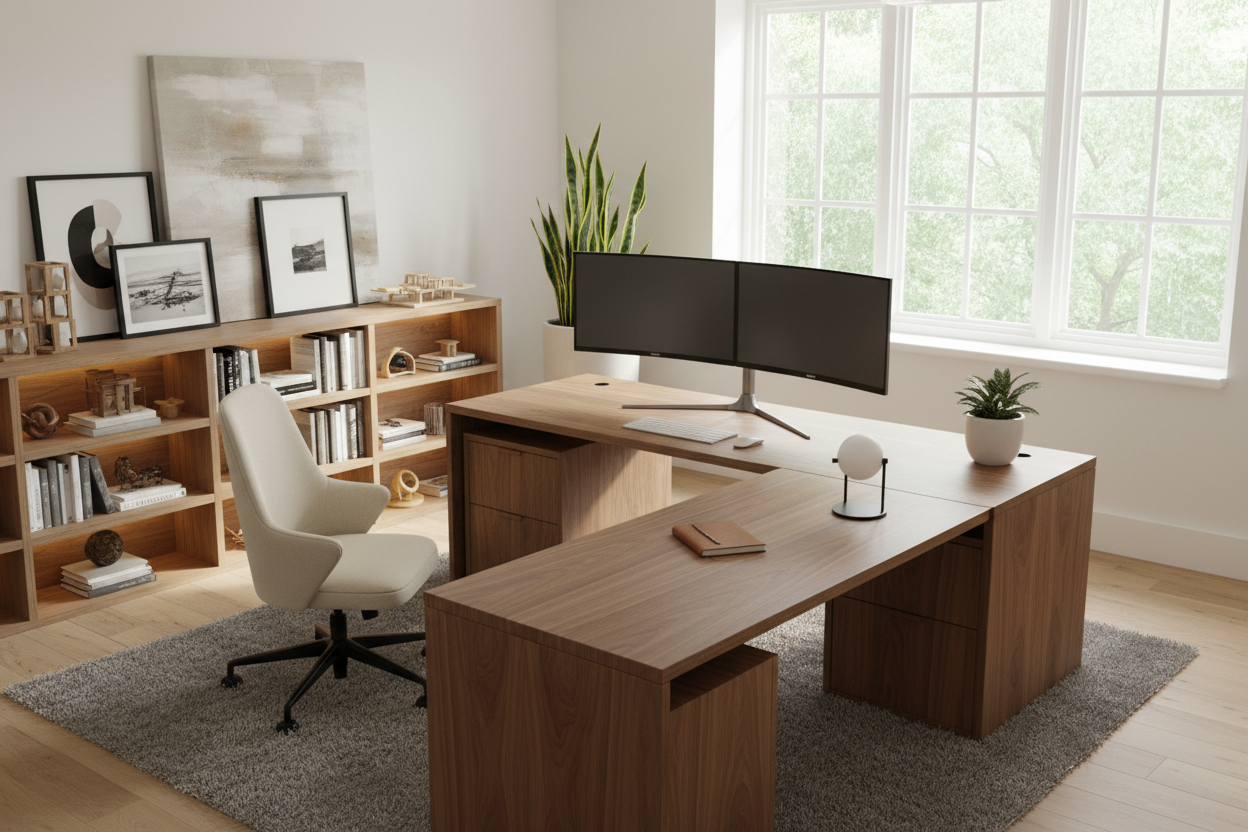
We have all walked into a room where a workspace feels like an afterthought—a bulky table shoved into a corner or a flimsy surface that wobbles with every keystroke. As an interior designer, I see clients prioritize the aesthetic of a piece over its integration into the room's flow. A truly effective workspace isn't just about buying furniture; it is about curating desk solutions that balance architectural weight with ergonomic necessity. Whether you are carving out a niche in a master bedroom or outfitting a dedicated study, the goal is to create a focal point that serves your workflow without dominating the visual landscape.
Key Features to Look For
- Visual Weight & Scale: Does the desk's silhouette overwhelm the room, or does it breathe? Look for legs that allow light to pass through in smaller spaces.
- Material Tactility: Consider how the surface feels against your skin for hours. Solid wood develops a patina; glass can feel cold and clinical.
- Cable Management: A luxury finish is ruined by a rat's nest of wires. Look for integrated grommets or hidden channels.
- Ergonomic Clearance: Ensure there is at least 30 inches of clearance behind the chair for movement and proper knee space height (typically 28-30 inches).
Defining the Material Palette
The material you choose dictates the mood of the entire room. In my consultations, I often steer clients away from high-gloss lacquers if they plan to use the desk daily—fingerprints and micro-scratches are inevitable and will drive you mad within a week. Instead, consider a matte-finished walnut or white oak. These materials offer warmth and forgive minor wear, eventually developing a character-rich patina.
For a more industrial or modern office desk solution, metal and leather combinations work beautifully. A leather-wrapped desktop isn't just an aesthetic choice; it functions as a built-in writing pad that softens the acoustics of the room, dampening the sound of equipment and writing instruments.
Balancing Form and Function
The Silhouette Strategy
In interior design, we talk about "negative space." If your room is small, avoid a desk with heavy pedestal drawers on both sides (a "double pedestal"). This creates a blocky look that shrinks the floor plan. Instead, opt for a Parsons-style desk or a cantilevered design. These open silhouettes expose more flooring, tricking the eye into perceiving the room as larger than it is.
Storage vs. Minimalism
The most common friction point in home offices is the lack of immediate storage. However, clutter on the desktop destroys focus. I recommend separating your storage from the desk itself. Use a credenza behind you or floating shelves above. This allows the desk to remain a clean slate for deep work, rather than a holding cell for paperwork.
My Personal Take on Desk Solutions
I learned a hard lesson early in my career regarding glass-top desks. I specified a stunning, architectural glass desk for a client who wanted a "floating" look for their high-rise apartment. It looked immaculate in the photos. Two weeks later, the client called me with a complaint I hadn't anticipated: "My wrists are freezing."
It sounds trivial, but resting your forearms on cold glass for eight hours a day in an air-conditioned room is physically uncomfortable. Furthermore, because the glass was transparent, every single cable dropping down to the wall outlet was visible, ruining the clean lines we aimed for. I ended up having to design a custom leather blotter to cover the cold glass and install a cable sleeve that looked like a structural column to hide the wires. Now, I always test the "temperature" of a material and check the viewing angles for wiring before recommending a piece. It is these unpolished, practical details that define whether a piece is livable or just photographable.
Conclusion
Selecting the right furniture is about predicting how you will inhabit the space. By prioritizing tactile materials, appropriate scale, and smart cable integration, you elevate a simple work surface into a design element that enhances your home. Don't settle for a generic setup; curate a space that respects both your architecture and your ambition.
Frequently Asked Questions
What is the ideal depth for a home office desk?
For a laptop setup, 24 inches is sufficient. However, if you use external monitors, aim for a depth of 30 inches. This ensures the screens are at an ergonomic viewing distance, preventing eye strain.
How do I protect a solid wood desk surface?
Avoid harsh chemical cleaners which can strip the oil finish. Dust regularly with a microfiber cloth and use coasters. If the wood looks dry after a year, re-oiling it with a high-quality furniture oil can restore its luster and depth.
Can I place a desk in the center of the room?
Absolutely, this is often the best "power position." However, you must ensure the back of the desk is finished (many are unfinished plywood on the back) and you have a plan for running power cords to a floor outlet so you don't create a tripping hazard.


Leave a comment
This site is protected by hCaptcha and the hCaptcha Privacy Policy and Terms of Service apply.