










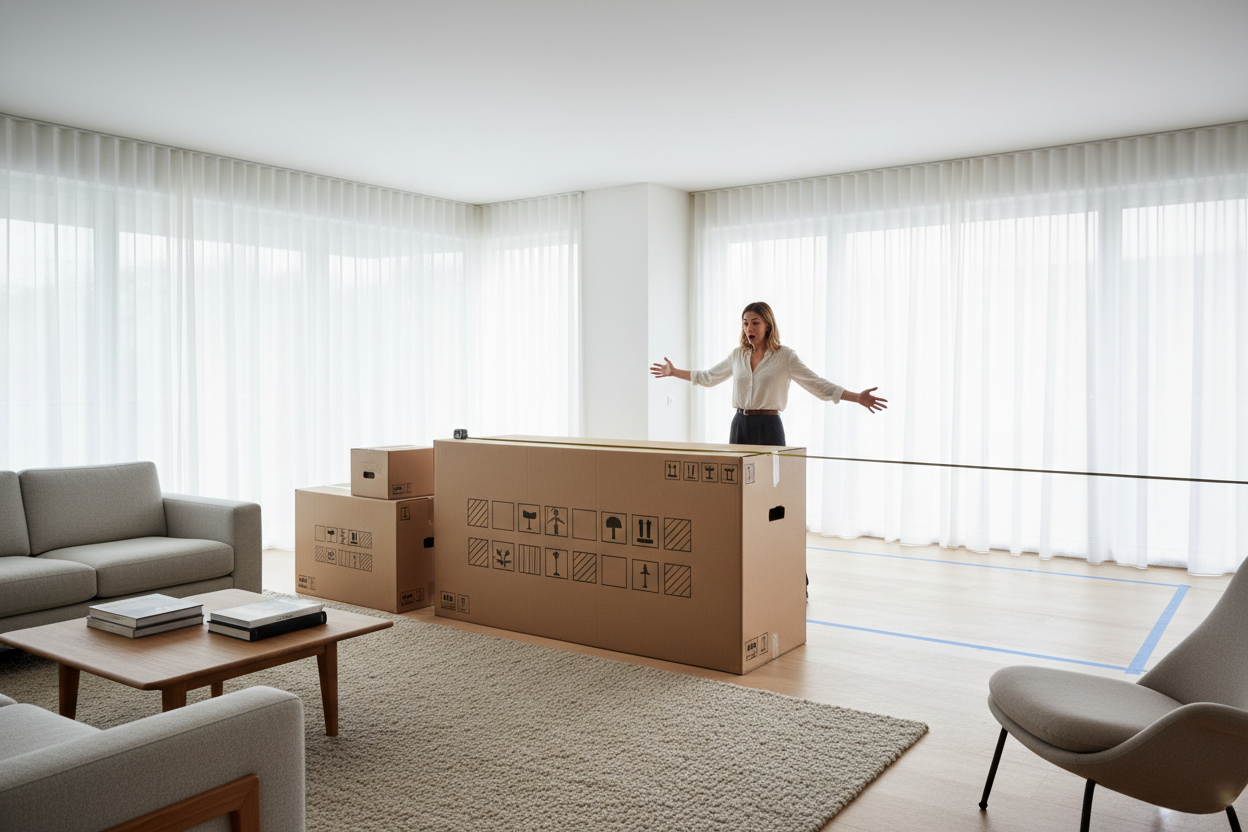
There is a specific kind of heartbreak that occurs in the IKEA loading zone. You have spent hours selecting the perfect silhouette for your living room, testing the seat depth, and choosing a durable weave. You push the flatbed cart to your vehicle, only to realize the physics simply do not work. As a designer, I see this logistical oversight constantly. We focus so heavily on whether the sofa fits the room that we forget to ask how big are ikea couch boxes in the first place.
Quick Decision Guide: Transport Essentials
- The "Flat-Pack" Misconception: While flat-packed, structural frames (like backrests) are often one solid, long piece that cannot be folded.
- Vehicle Requirements: Most 3-seater IKEA sofas require a minivan, truck, or a large SUV with seats folded flat. A standard sedan trunk is rarely sufficient.
- Multi-Box Systems: A single sofa is rarely one box. It is usually split into 2-4 packages (Frame, Armrests, Cushions/Cover).
- Weight Distribution: The heaviest box is the frame. Ensure you have two people for lifting, as these boxes are unwieldy, not just heavy.
Decoding the Dimensions: It's Not One Size Fits All
When curating a space, we look at the visual weight of furniture. However, for procurement, we must look at the packaged weight and volume. IKEA packaging varies drastically between product lines. A sleek, leggy sofa like the ÄPPLARYD comes in significantly different packaging than a modular ground-hugger.
The Modular Giants: KIVIK and FINNALA
Deep-seated, modular sofas are client favorites for media rooms, but they are notorious for their box bulk. Let's look at the ikea kivik box dimensions specifically, as this is a frequent pain point.
The KIVIK is not just long; it is deep. The frame usually comes in a box that hovers around 35-37 inches in width and can be over 70 inches long depending on the configuration. Unlike other models where the armrests are tucked inside the frame, the KIVIK armrests often come in their own substantial boxes. If you are trying to slide this into a compact crossover, the height of the wheel wells in your trunk will likely block the box from laying flat.
The Slender Silhouettes: SODERHAMN and MORABO
Conversely, the SODERHAMN series is a masterclass in flat-packing. Because the base is thin and the cushions are heavily vacuum-compressed, these boxes are much slimmer (often under 10 inches high). These are the "hatchback friendly" options, provided you have the length clearance. However, do not let the slim profile fool you; the length is rigid and non-negotiable.
The "Threshold" Test: Interior Clearance
Getting the box into the car is step one. Getting it into the home is step two. In my design practice, I always advise clients to measure their elevator height and the turning radius of their stairwell.
A common error is measuring the door width but ignoring the hallway turn. If a box is 80 inches long and your hallway is 36 inches wide, you cannot turn that box into a bedroom door unless you have significant vertical clearance to stand it upright. If you have low ceilings or a tight stair landing, you may be forced to unbox the item in the hallway—risking damage to the upholstery before it's even assembled.
Lessons from My Own Projects: The Parking Lot Panic
I want to share a moment of humility from early in my career. I was styling a bachelor's loft and insisted on picking up a LANDSKRONA sofa personally to save the delivery fee and meet a tight deadline. I drove a mid-sized SUV, confident in my "spatial reasoning" skills.
I measured the length. It fit. I measured the width. It fit. What I failed to account for was the angle of the trunk closure. The box fit on the floor, but the trunk door curved inward, hitting the corner of the box and refusing to latch. I spent 45 minutes in the parking lot playing a high-stakes game of Tetris.
I eventually had to unbox the armrests right there on the asphalt to make it work. It was stressful, unprofessional, and risky—one gust of wind and that pristine velvet cover would have been ruined. Since then, my rule is strict: if the box length is within 6 inches of the max cargo length, we pay for professional delivery. It is not worth the anxiety or the potential damage to the goods.
Conclusion
Designing a home should be a joy, not a logistical nightmare. By understanding the reality of these dimensions before you reach the checkout aisle, you ensure that your new centerpiece arrives in pristine condition. Measure your cargo space, account for the wheel wells, and when in doubt, choose delivery. Your back—and your new sofa—will thank you.
Frequently Asked Questions
Can I take the sofa out of the box to fit it in my car?
Technically yes, but as a specialist, I advise against it. The cardboard provides crucial structural protection. Once removed, the fabric is vulnerable to snags, grease from the car latch, and friction burns during transport.
Where can I find the specific box dimensions for my sofa?
On the product page, scroll down to "Product Details" and look for the tab labeled "Packaging." This section breaks down the exact height, length, width, and weight of every single box required for that item.
Are the corner sections of sectionals boxed differently?
Yes. Corner sections are often the most awkward boxes because they are essentially large cubes. They rarely fit through standard sedan doors and almost always require a truck or van due to their width.


Leave a comment
This site is protected by hCaptcha and the hCaptcha Privacy Policy and Terms of Service apply.