










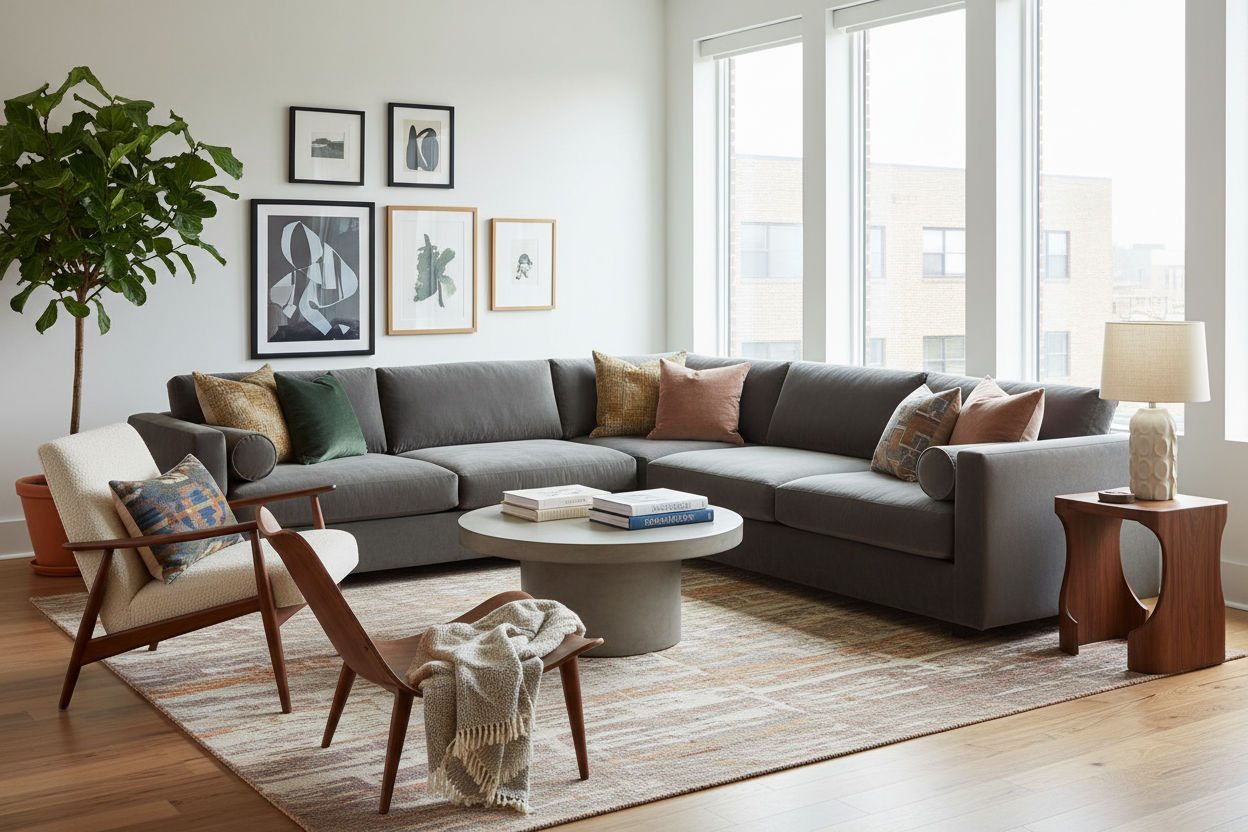
There is a specific paralysis that hits homeowners when standing in a showroom. You see a perfectly staged vignette, and the salesperson suggests buying the entire suite—the three-seater, the loveseat, and the armchair—all in the same beige chenille. While convenient, this approach often results in a room that feels heavy, uninspired, and reminiscent of a hotel lobby rather than a home. The secret to a high-end interior lies in curation, not replication. Choosing the right sofa and seat combination requires a delicate balance of visual weight, tactile variety, and ergonomic precision.
Quick Decision Guide: What to Prioritize
- Scale & Proportion: Ensure the seat height of the chair aligns within 2 inches of the sofa to keep eye levels consistent during conversation.
- Visual Weight: Pair a heavy, grounded sofa with a leggy, lighter seat (or vice versa) to prevent the room from feeling cluttered.
- Fabric Durability: Look for a minimum of 25,000 Martindale cycles for residential use; higher for homes with pets.
- Frame Construction: Opt for kiln-dried hardwood frames over plywood or particleboard to prevent warping over time.
The Art of Mixing, Not Matching
When selecting a sofa and seat, the goal is cohesion, not uniformity. If your sofa is a large, velvet sectional that commands the floor, pairing it with a bulky velvet armchair will suffocate the space. Instead, introduce contrast through silhouette and material.
Material and Texture Interplay
Texture provides the depth that color cannot. If you have a linen sofa, consider a leather seat. The slickness of the leather contrasts beautifully with the matte weave of the linen. This layering creates a "collected" aesthetic that feels organic. For example, a boucle sofa pairs exceptionally well with a smooth walnut-framed accent chair, balancing soft loops with hard architectural lines.
Ergonomics and The "Sit Test"
A beautiful room that is uncomfortable is a failure of design. When sourcing a sofa and seat, consider the foam density and suspension. A sofa intended for lounging usually benefits from a softer fill (like a down-blend wrap), while an accent seat often requires firmer support (high-resiliency foam) to facilitate easy standing.
The Eye-Level Rule
One technical detail often overlooked is the relationship between the seat heights. If your sofa is a low-profile Italian design (seat height around 15 inches) and you pair it with a traditional wingback chair (seat height around 19 inches), the conversation will feel awkward. The person in the chair will perpetually feel like they are looking down on the person on the sofa. Aim for seat heights that are within a 1-2 inch variance.
Space Planning and Layout Flow
The placement of your sofa and seat dictates the traffic flow of the room. Avoid pushing all furniture against the walls. Floating the sofa and angling the seat toward it creates an intimate conversation circle. Ensure there is at least 30 inches of walking clearance behind the seat if it is not against a wall, allowing for unobstructed movement.
Lessons from My Own Projects
I learned the hard way about "visual weight" during a project in a pre-war apartment. I had ordered a stunning, chunky modular sofa that sat directly on the floor—no legs visible. To complement it, I chose a club chair that was equally boxy and grounded. When we installed them, the room instantly felt ten times smaller. The floor space had disappeared, swallowed by upholstery.
I had to swap the club chair for a mid-century Danish chair with slender wooden legs. The difference was immediate. Seeing the floor underneath the chair allowed the room to "breathe" again. Now, whenever I spec a heavy sofa, I make it a strict rule to pair it with a seat that has a visible, airy frame. It’s a small detail, but it saves the room from feeling claustrophobic.
Conclusion
Designing your living space is about creating a dialogue between your furniture pieces. By focusing on scale, texture, and ergonomic harmony, you can curate a sofa and seat combination that serves your lifestyle while elevating your aesthetic. Trust your eye, measure twice, and don't be afraid to break up the set.
Frequently Asked Questions
Should my sofa and seat fabric match?
Generally, no. While they should share a color palette or tonal value, matching fabrics exactly can make a room look flat. If the sofa is a solid color, try a patterned seat, or switch materials (e.g., velvet sofa, leather chair).
What is the ideal distance between a sofa and a seat?
For a comfortable conversation area, the distance should be between 4 to 8 feet. If they are too far apart, shouting becomes necessary; too close, and the space feels cramped and knees may knock.
How do I know if a seat is too big for the room?
Use painter's tape to mark the dimensions on the floor before buying. If the taped area blocks a natural walkway or makes it difficult to access the sofa, the seat is too large. Always leave at least 18 inches between the coffee table and the seat.


Leave a comment
This site is protected by hCaptcha and the hCaptcha Privacy Policy and Terms of Service apply.