










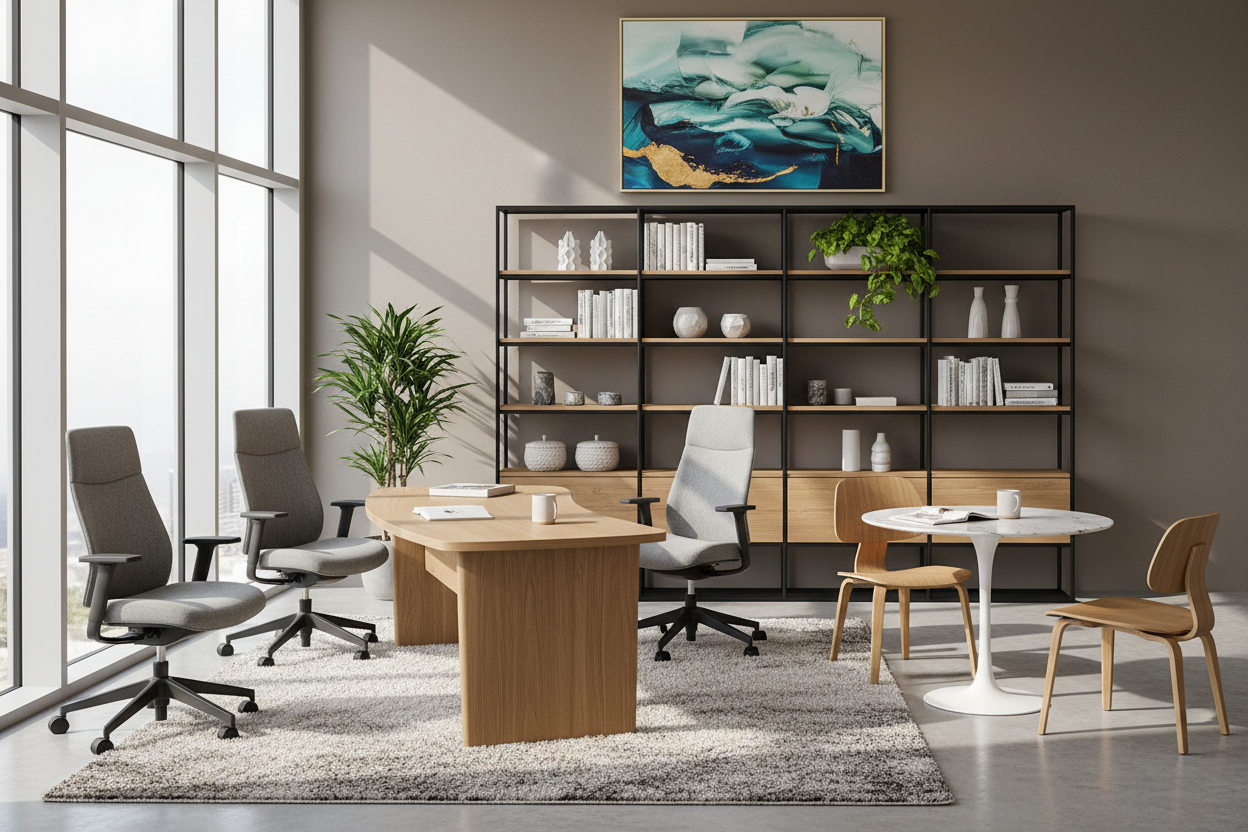
There is a specific tension I see in almost every client consultation regarding workspaces: the battle between aesthetic desire and ergonomic necessity. You want a space that commands respect and feels professional, yet you don't want your environment to feel sterile or clinical. Whether you are outfitting a boutique agency or curating a dedicated corner in your residence, selecting the right tables and chairs for business is rarely as simple as clicking 'add to cart.'
The wrong choice doesn't just look out of place; it hinders productivity and can lead to physical fatigue. This guide cuts through the marketing noise to help you select furniture that serves both your posture and your professional image.
Key Features to Look For
Before committing to a purchase, review this checklist to ensure the furniture meets professional standards while fitting your specific environment:
- Ergonomic Rating: Look for synchronous tilt mechanisms in seating and adjustable heights for desks to accommodate different working styles.
- Material Durability: For surfaces, prioritize high-pressure laminate (HPL) or sealed solid wood over standard veneers to resist heat and moisture rings.
- Scale and Proportion: Ensure a minimum of 36 inches of clearance behind the chair for smooth movement.
- Wire Management: Business tables must have integrated grommets or hidden channels to keep technology streamlined.
- Fabric Grade: If choosing upholstered seating, look for a commercial rub count (Martindale test) of 30,000+ for longevity.
Balancing Materiality with Function
When selecting a home office table and chairs, the material palette is your primary tool for blending the workspace into the surrounding architecture. In a commercial setting, we often lean toward stark durability, but in a hybrid or residential business space, texture is king.
The Surface Debate: Wood vs. Synthetics
Solid wood offers a gravitas that synthetic materials cannot replicate. However, it requires maintenance. For a high-traffic work table and chair set, I often recommend a matte-finish nanotechnology laminate (like Fenix) for the tabletop. It provides a soft touch, resists fingerprints, and heals micro-scratches thermally, maintaining that pristine 'showroom' look without the fragility of natural timber.
Seating Textiles
Avoid bonded leather; it peels within two years of daily use. Instead, opt for top-grain leather or a high-performance velvet. These materials age beautifully and offer a tactile richness that elevates a chair table set for office use beyond mere utility.
Ergonomics and The Silhouette
A common mistake is prioritizing a high-back executive chair that dominates the room visually. Unless you have a grand office with high ceilings, these chairs can make a space feel claustrophobic.
For a cohesive look, seek out an office table and chair set for home where the chair features a 'mid-back' profile. This maintains the sightlines of the room, keeping the space open and airy. Functionally, ensure the chair offers lumbar support that is adjustable independent of the seat back. The goal is a piece that supports your spine for an eight-hour day but looks like a sculptural element when tucked away.
Spatial Planning and Flow
The footprint of your furniture dictates the energy of the room. A heavy, double-pedestal desk anchors a room but limits flexibility. Alternatively, a writing desk with a floating silhouette (legs rather than solid sides) exposes more floor space, making the room feel larger.
When positioning your set, never face a wall if you can avoid it. The 'command position'—facing the door with a solid wall behind you—is not just Feng Shui; it is a psychological design principle that reduces subconscious stress while working.
My Personal Take on Tables and Chairs for Business
I learned a hard lesson about surface finishes early in my career while designing a boutique law firm. I specified a stunning, honed black marble table for the primary meeting space. It looked architectural and imposing—exactly what the client wanted.
Two weeks later, I got a call. The natural oils from forearms and the condensation from water glasses had created a map of 'ghost marks' all over the surface that couldn't be wiped away. We had to have it professionally sealed on-site, which was a logistical nightmare. Since then, whenever I recommend a work table and chair set, I always perform the 'coffee cup test' on the sample finish. If you are buying for your own business, remember: anything that reflects light too harshly or absorbs oils too easily will look messy by 11:00 AM. Matte, sealed finishes are the unsung heroes of a clean professional aesthetic.
Frequently Asked Questions
How much space do I need for a standard office setup?
You should allow for a footprint of at least 60 inches by 60 inches to comfortably accommodate a standard desk and the push-back range of an ergonomic chair without hitting a wall.
Can I mix and match tables and chairs?
Absolutely. In fact, buying a pre-packaged chair table set for office use often looks generic. A curated look involves mixing materials—for example, pairing a walnut desk with a leather and chrome chair creates a sophisticated, layered aesthetic.
What is the ideal desk height for business ergonomics?
The standard height is 29 to 30 inches. However, if you are under 5'4" or over 6'2", an adjustable height desk is not a luxury; it is a medical necessity to prevent shoulder strain.
Final Thoughts
Your workspace is an investment in your output. By choosing pieces that balance structural integrity with visual harmony, you create an environment that invites focus rather than fatigue. Prioritize the touch of the materials and the support of the frame, and the aesthetic will naturally follow.



Leave a comment
This site is protected by hCaptcha and the hCaptcha Privacy Policy and Terms of Service apply.