










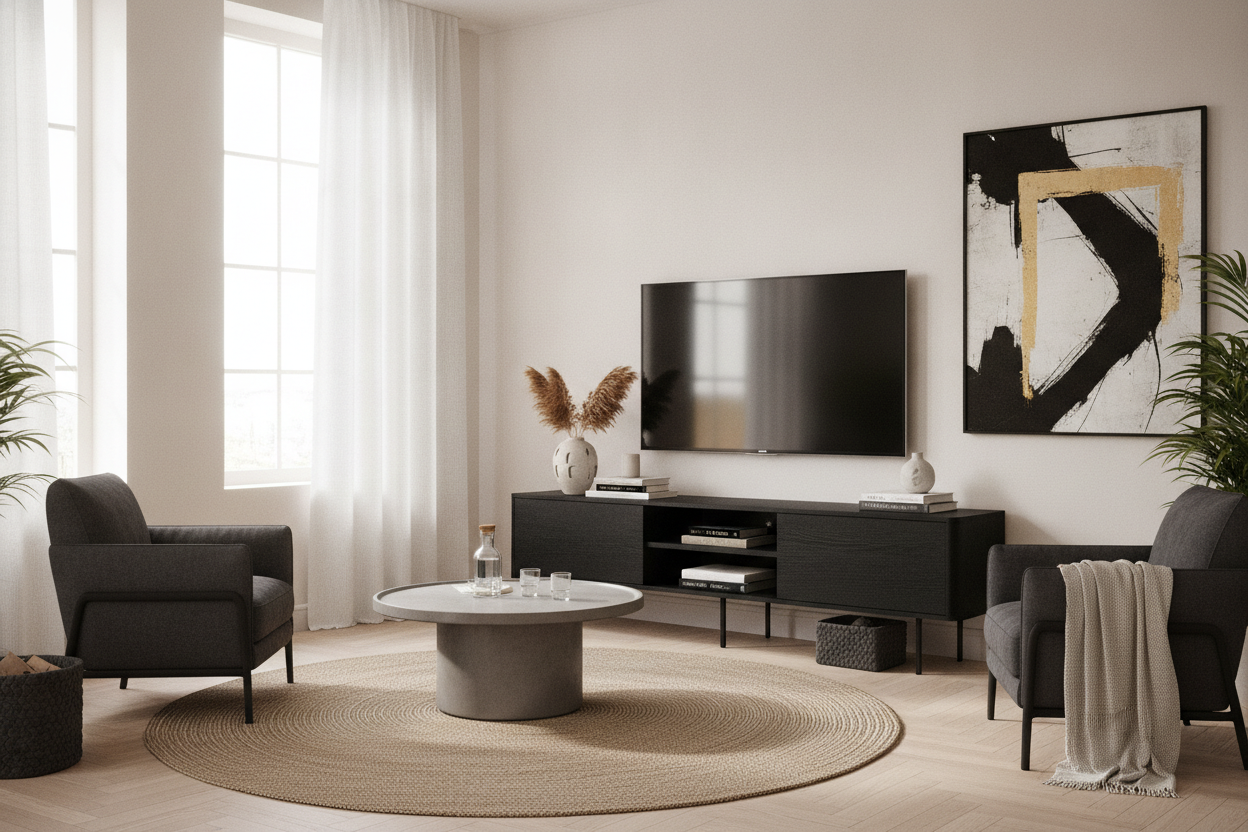
I spent years chasing the 'Scandi-chic' dream. You know the one: light oak, tapered legs, and open shelving that looks like a breath of fresh air in a catalog. But in my actual living room, that airy furniture was a disaster. Every black HDMI cable, every blinking router, and every chunky gaming console stood out like a sore thumb against the pale wood. It didn't look minimalist; it looked messy.
The fix was counterintuitive. I ditched the light wood for a substantial 60 inch black tv stand. I worried it would feel heavy or dated, but instead, it did something magical: it made the tech disappear. If you are tired of your living room looking like a Best Buy clearance aisle, it is time to embrace the dark side.
Quick Takeaways
- Black furniture acts as a visual 'shadow,' camouflaging dark tech gear and messy cords.
- A 60-inch width provides the perfect overhang for 55-inch TVs and sits flush with 65-inch models.
- Matte finishes are your best friend; high-gloss is a magnet for fingerprints and dust.
- Balance a dark console with light rugs or trailing plants to keep the room feeling open.
The Big Lie About 'Airy' Media Consoles
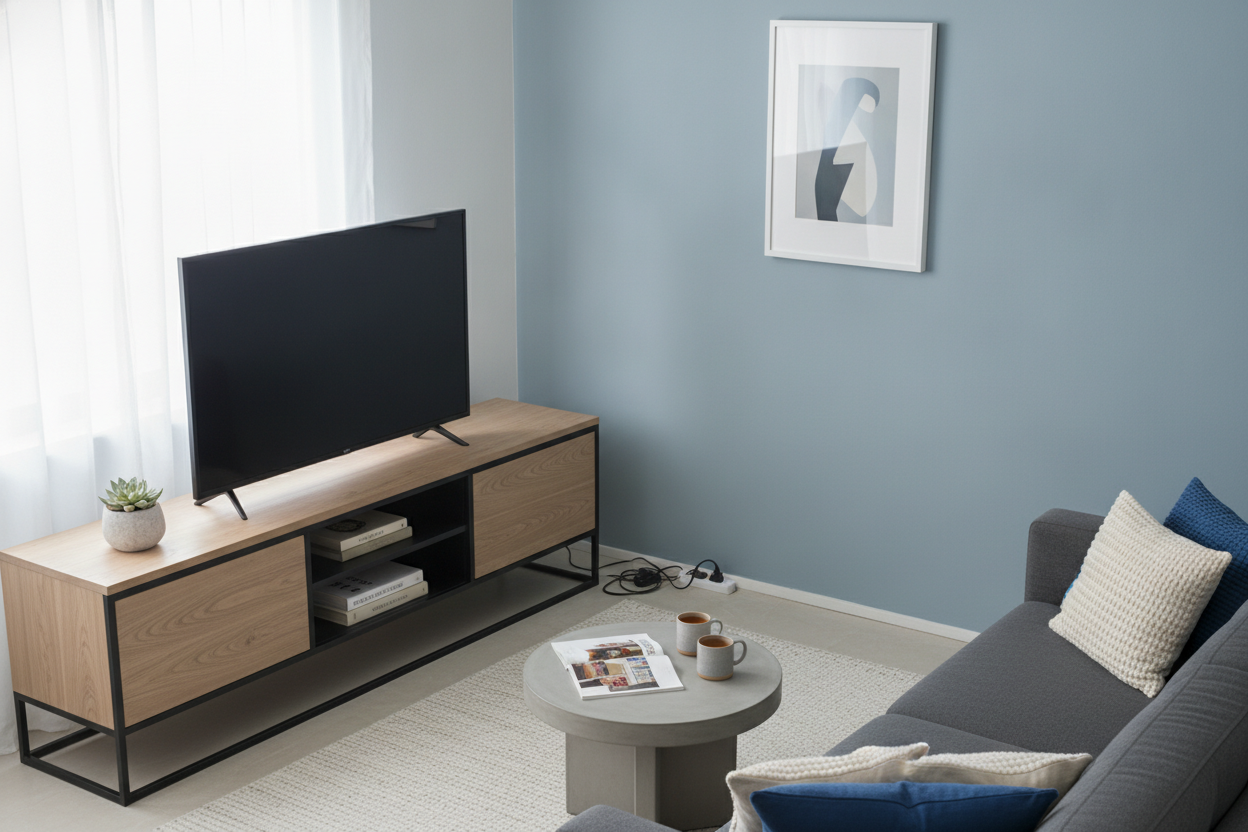
We have been told that open shelving and light colors make a room feel bigger. While that is true for a bookshelf or a coffee table, it is a total lie for media centers. Unless you have a wireless TV (which doesn't exist) and no peripherals, an open-concept stand is just a frame for your tangled 'cord-ghetti.'
I realized that my light-colored stand was actually highlighting the dust bunnies and the plastic texture of my cable box. Light wood reflects light, drawing your eye directly to the gaps where the wires live. A dark console does the opposite. It absorbs the visual noise. When I swapped to a 60 black tv stand, the black plastic of my PlayStation and soundbar finally had a place to hide in plain sight.
Why Going Dark Changed My Living Room
The visual trickery of a dark console is hard to overstate. Because most electronics are black or dark grey, they blend into a dark surface rather than contrasting against it. It creates a cohesive 'tech zone' that feels intentional rather than cluttered. I finally upgraded to a stylish black tv stand entertainment center that featured solid doors, and the difference was night and day. No more staring at the glowing green light of the router during movie night.
Choosing a 60 in black tv stand also gave me enough physical depth to hide a power strip inside the cabinet. By keeping the console dark, any wires that do have to peek out from the back are virtually invisible against the frame. It is the easiest cable management hack I have ever found: just match the furniture to the cables.
The Screen Size Sweet Spot
Proportion is everything. A common mistake is buying a stand that is the exact same width as the TV. This makes the whole setup look top-heavy and precarious. A 60' tv stand black finish is the 'Goldilocks' size for the most popular TV dimensions. If you have a 55-inch screen, you get about 2.5 inches of breathing room on either side. If you have a 65-inch screen, the TV will be roughly the same width as the stand, creating a sleek, monolithic look that feels grounded.
Will It Make My Room Feel Like a Cave?
This is the number one fear I hear from friends. They worry a dark piece of furniture will look like a giant black hole in their small apartment. I get it, but it is all about the 'yin and yang' of the room. You aren't painting the walls black; you are just adding a focal point.
To keep the piece from looking like a dark void, I use a few styling tricks. I placed a cream-colored jute rug underneath the stand to create contrast. On top, I added a few brass decorative objects and a trailing Pothos plant. The green leaves against the black wood look incredible. The dark background actually makes the colors of your decor—and your TV screen—pop more vividly.
3 Things to Check Before You Buy
Not all black finishes are created equal. I once bought a high-gloss black unit that looked like a piano. Big mistake. Every time I touched the remote, I left a smudge, and the glare from the window was distracting. Look for matte or 'satin' finishes. They hide dust much better and look far more expensive than they actually are.
Second, prioritize cord management. A quality tv stand black 60' model should have pre-drilled holes in the back panel. If it doesn't, you'll be stuck drilling your own, which can lead to chipping. Finally, check the weight capacity. Modern 65-inch TVs aren't heavy, but a solid wood console is a 10-year investment. Make sure it can handle at least 100 lbs so it won't sag over time. If you are ready to stop looking at wires, start finding the right tv stands that actually fit your tech reality.
Personal Experience: The Sagging Lesson
I learned the hard way that material matters. My first dark stand was a cheap particle board unit with no center support leg. Within six months, the middle of the stand had bowed nearly an inch under the weight of my older plasma TV. It looked terrible and made the doors stick. Now, I only buy units with a fifth support leg in the center or those made from kiln-dried hardwood. It is worth the extra $100 to not have a 'frowny' TV stand a year later.
FAQ
Is a black TV stand hard to keep clean?
It shows dust a bit more than light oak, but less than glass. A quick wipe with a microfiber cloth once a week is usually enough. Avoid high-gloss if you hate fingerprints.
Does a 60-inch stand fit a 65-inch TV?
Yes, perfectly. A 65-inch TV is actually about 57 inches wide. It will sit almost flush with the edges of a 60-inch stand, which looks very modern and custom-built.
What color rug goes best with black furniture?
Light, neutral tones like oatmeal, light grey, or cream work best. They provide the necessary contrast to keep the room feeling bright and balanced.

Leave a comment
This site is protected by hCaptcha and the hCaptcha Privacy Policy and Terms of Service apply.