










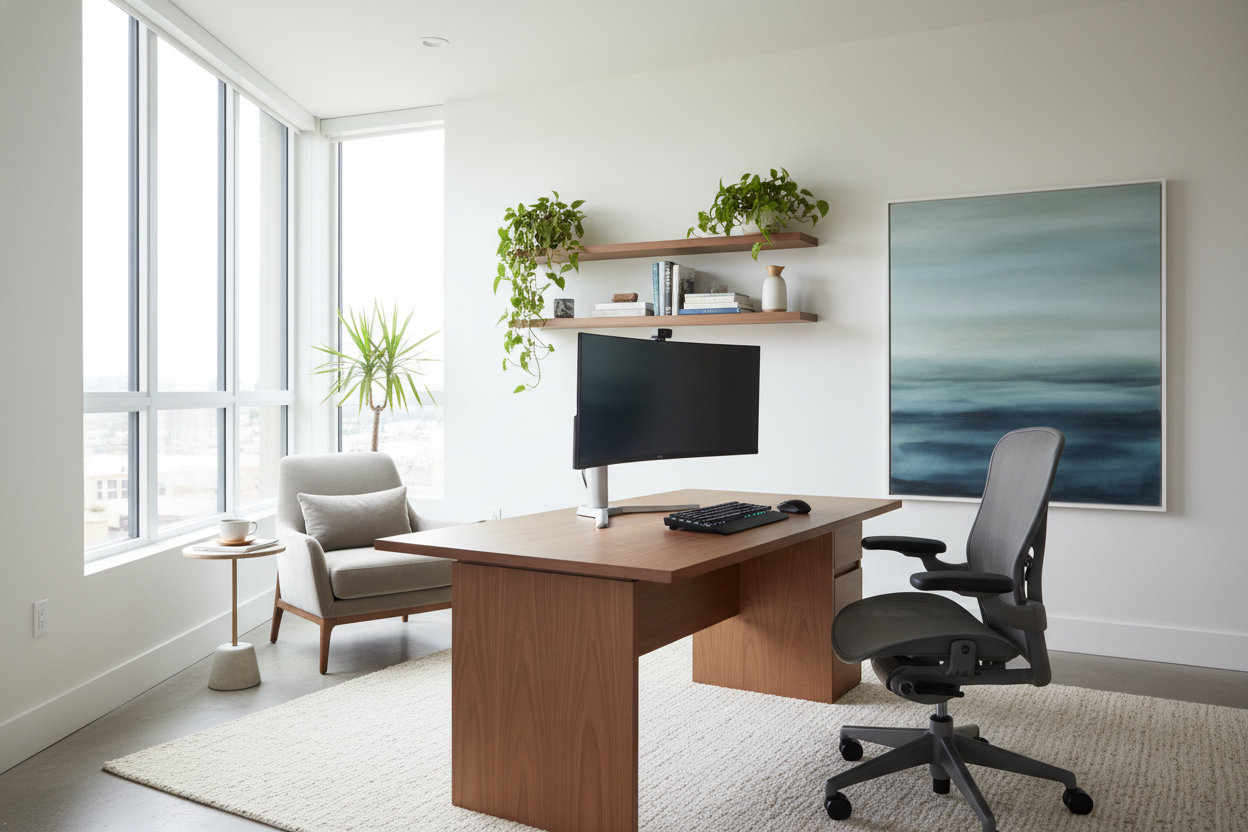
We often blame our lack of focus on digital distractions or poor time management, yet we rarely scrutinize the physical environment where the work happens. As an interior designer, I see this disconnect constantly. You cannot expect high output from a space designed for low-effort lounging. Implementing genuine **work tips to productivity** starts with the foundation: your furniture, your layout, and your lighting.
Quick Decision Guide: Optimizing Your Workspace
If you are rushing to furnish your office, prioritize these structural elements to ensure you are capable of working productively immediately:
- Ergonomic Fidelity: Choose chairs with adjustable lumbar support and seat depth; static chairs induce fatigue within two hours.
- Lighting Temperature: Opt for 4000K (cool white) bulbs for task areas to maintain alertness, reserving warm light for break zones.
- Surface Material: Select matte finishes (wood or laminate) over glass to reduce glare and visual fatigue.
- Spatial Zoning: Position your desk to face the room (command position), never flush against a blank wall.
The Architecture of Focus: Layout and Flow
When clients ask how to get work done efficiently, I first look at their floor plan. Efficiency is a spatial issue. If your printer is in another room or your filing cabinet blocks a walkway, you are creating micro-frictions that break your flow state. To be more productive at work, you must reduce the physical steps required to complete a task.
Arrange your furniture in a tight "cockpit" configuration. Your primary surface should house your computer, while a secondary surface (an L-return or a credenza behind you) should hold reference materials. This allows you to swivel rather than walk, keeping your mind locked on the task.
Choosing the Right Chair: The Engine of Efficiency
If you are struggling to be productive at work, the culprit is often physical discomfort masquerading as boredom. A cheap chair forces your body to expend energy stabilizing your spine—energy that should be directed toward your work.
When curating seating for high-performance spaces, I look for "synchro-tilt" mechanisms. This feature allows the backrest to recline at a faster ratio than the seat pan, keeping your feet flat on the floor while opening up your hip angle. This promotes blood flow and keeps you being efficient at work for longer durations without the nagging need to stretch every 20 minutes.
Visual Noise and Materiality
Learning how to work productively involves managing your visual field. In design, we call this "visual noise." Open shelving that is cluttered creates subconscious stress. For clients needing deep focus, I always specify closed storage with clean lines.
Furthermore, consider the tactile experience. Solid wood desks with a beveled edge provide a softer landing for your wrists compared to the sharp, cold edges of glass or metal. These subtle tactile cues significantly impact how to become efficient by removing minor physical irritants that accumulate over an eight-hour day.
Lighting Layers for Sustained Energy
One of the most overlooked tips for productivity in the workplace is lighting layering. Relying solely on overhead recessed cans creates shadows on your workspace, causing eye strain. To solve this, introduce task lighting with an adjustable arm. This allows you to direct light exactly where you are reading or writing, creating a focal point that visually anchors you to your work. This is the designer's secret on how to get productivity at work—literally spotlighting the task at hand.
My Personal Take on Work Tips to Productivity
In my early years designing home offices, I fell into the "showroom trap." I once designed a custom workspace for myself featuring a stunning, high-gloss lacquered executive desk. It looked incredible in photos. However, in practice, it was a disaster for my workflow.
Every time I touched the surface, it left a greasy fingerprint. The high-gloss finish reflected the overhead light directly into my eyes, causing migraines by 2:00 PM. I found myself constantly wiping the desk instead of working. It taught me a valuable lesson I now pass to clients: Matte absorbs, gloss reflects. If you want to stay in the zone, choose materials that disappear into the background rather than demand your attention. True productivity design is invisible; it supports you without you noticing it.
Conclusion
Transforming your workspace isn't just about aesthetics; it is about engineering an environment that respects your physiology and psychology. By investing in the right materials and layout, you stop fighting your space and start flowing with it.
Frequently Asked Questions
Does desk orientation really affect productivity?
Absolutely. Facing a wall creates a sense of confinement. Positioning your desk to face the door (the "command position") subconsciously lowers anxiety levels, allowing you to focus better on your tasks.
What is the best color for a productivity-focused office?
While white feels clean, it can be sterile. I recommend soft greens (like sage) or blues. These colors have shorter wavelengths that are less straining to the eyes and are psychologically linked to focus and calm.
Hardwood chair vs. Upholstered chair: Which is better?
For any work session over 30 minutes, an upholstered chair with high-density foam is non-negotiable. Hardwood chairs create pressure points that cut off circulation, forcing you to shift constantly and breaking your concentration.

Leave a comment
This site is protected by hCaptcha and the hCaptcha Privacy Policy and Terms of Service apply.