










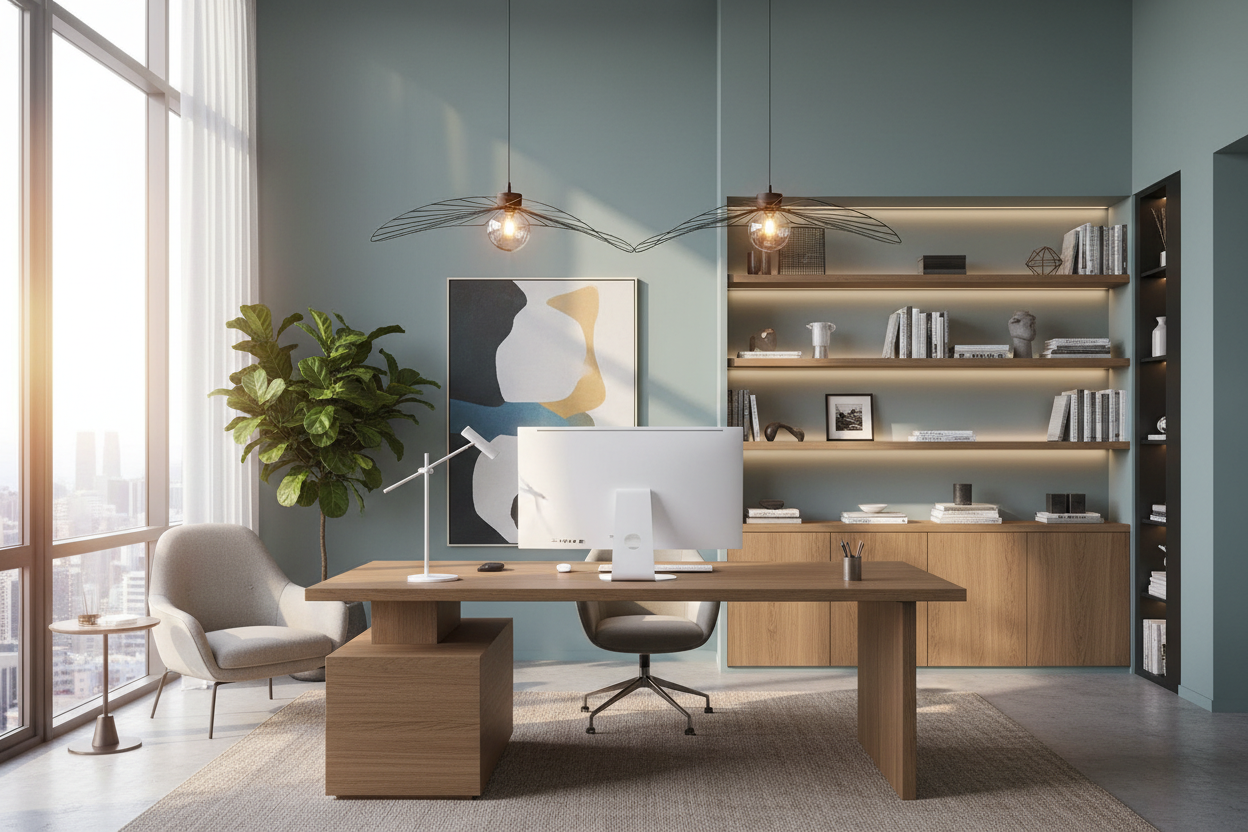
We often obsess over the ergonomics of a chair or the surface area of a desk, yet completely overlook the single most influential factor in our daily productivity: the office room light. As an interior designer, I walk into countless home offices that are either dim caves inducing lethargy or sterile boxes filled with harsh, headache-inducing glare. Lighting is not merely about visibility; it is about defining the volume of the space and regulating your circadian rhythm. If you want to work longer with less fatigue, you need to treat lighting as a layered architectural element, not an afterthought.
Key Features to Look For
- Color Temperature (Kelvin): Aim for 3500K to 4000K for focus; anything lower is too sleepy, anything higher is too sterile.
- Layering Strategy: Never rely on a single overhead source. Combine ambient, task, and accent lighting.
- Color Rendering Index (CRI): Look for a CRI of 90+ to ensure colors (and your video call appearance) look natural.
- Adjustability: Articulating arms and dimmability are non-negotiable for adapting to changing daylight.
- Glare Control: Choose fixtures with diffusers or shades that direct light down, not into your eyes or screen.
Mastering the Three Layers of Illumination
To achieve a professional scheme, we must move beyond the single ceiling fixture. A well-designed office relies on a triad of lighting types that work in concert to reduce contrast ratios and eye strain.
1. Ambient Lighting: The Foundation
This is your general illumination. In many homes, this is a central flush mount, but that creates flat, uninspiring light. I prefer recessed cans on a dimmer or a semi-flush fixture with a linen shade to diffuse the glow. If you are renting, floor lamps bouncing light off a white ceiling can mimic this effect. The goal here is soft, shadow-free coverage that fills the corners of the room.
2. Task Lighting: The Workhorse
When selecting lights for office room setups, the desk lamp is your most critical tool. Aesthetics matter—a brass mid-century modern lamp adds character—but function is paramount. Look for an adjustable arm that allows you to position the beam below your eye level to prevent direct glare. The light should illuminate your documents or keyboard, not your monitor screen.
3. Accent Lighting: The Mood Setter
This is where the design flair comes in. Accent lighting prevents the room from feeling like a cubicle. Consider LED strip lighting behind shelves to highlight books, or a small picture light over a piece of art. This layer adds depth and visual rest points for your eyes when you look away from the screen.
The Ergonomics of Light Placement
The physical placement of your fixtures dictates comfort. A common error is placing a light source directly behind you, which casts a silhouette shadow on your work surface and creates a glare on your monitor. Conversely, a light directly in front of you can cause eye fatigue.
The ideal setup involves positioning your task light on the opposite side of your dominant hand (to avoid writing shadows) and ensuring your ambient light is evenly distributed. For video conferencing, avoid downlights directly above your head, which create unflattering "raccoon eyes." Instead, aim for soft, face-level lighting placed behind your monitor.
Materiality and Visual Balance
Beyond the bulb, the fixture's material impacts the room's energy. In a heavy, wood-paneled office, I often introduce matte black or brushed nickel fixtures to cut through the warmth and add a modern edge. For minimalist white spaces, a lamp with a marble base or a fabric shade introduces necessary texture. Avoid high-gloss chrome finishes on desk lamps, as they can create distracting reflections when hit by sunlight.
My Personal Take on office room light
I learned a hard lesson about lighting angles early in my career while designing a writer's studio in a converted attic. I installed a stunning, oversized industrial pendant light directly over the desk. It looked incredible in photos.
However, two weeks later, the client called me. The pendant had a metal shade that focused the light so intensely it created a "hot spot" of heat on the back of his neck, and the reflection on his glossy laptop screen was blinding. I had to swap it out for a linear suspension light with an acrylic diffuser. It wasn't as "Pinterest-perfect" as the industrial pendant, but the quality of light was buttery and soft. It taught me that in a workspace, the quality of the light output always trumps the sculptural beauty of the fixture itself. Always check the heat emission and the diffusion before falling in love with the silhouette.
Conclusion
Curating the right lighting is an investment in your own efficiency and well-being. By balancing color temperature and layering your sources, you transform a utility space into a sanctuary of focus. Don't settle for the harsh glare of a single bulb; build a lighting landscape that works as hard as you do.
Frequently Asked Questions
What is the best bulb brightness for a home office?
For general ambient light, aim for roughly 2,000 to 4,000 lumens total for the room, depending on size. For your specific task lamp, a bulb between 450 and 800 lumens is usually sufficient to illuminate paperwork without causing glare.
How do I stop light glare on my computer monitor?
Glare is usually caused by windows or bright lights directly behind or in front of the screen. Position your desk perpendicular to windows. For artificial lights for office room setups, use shades or diffusers and ensure the light source is not pointing directly at the glass of your monitor.
Is warm or cool light better for working?
Cooler light (3500K–5000K) mimics daylight and suppresses melatonin, making you feel more alert and focused. Warm light (2700K) is relaxing and better suited for living rooms. A smart bulb that shifts from cool in the morning to warm in the evening is often the best solution for long workdays.

Leave a comment
This site is protected by hCaptcha and the hCaptcha Privacy Policy and Terms of Service apply.