










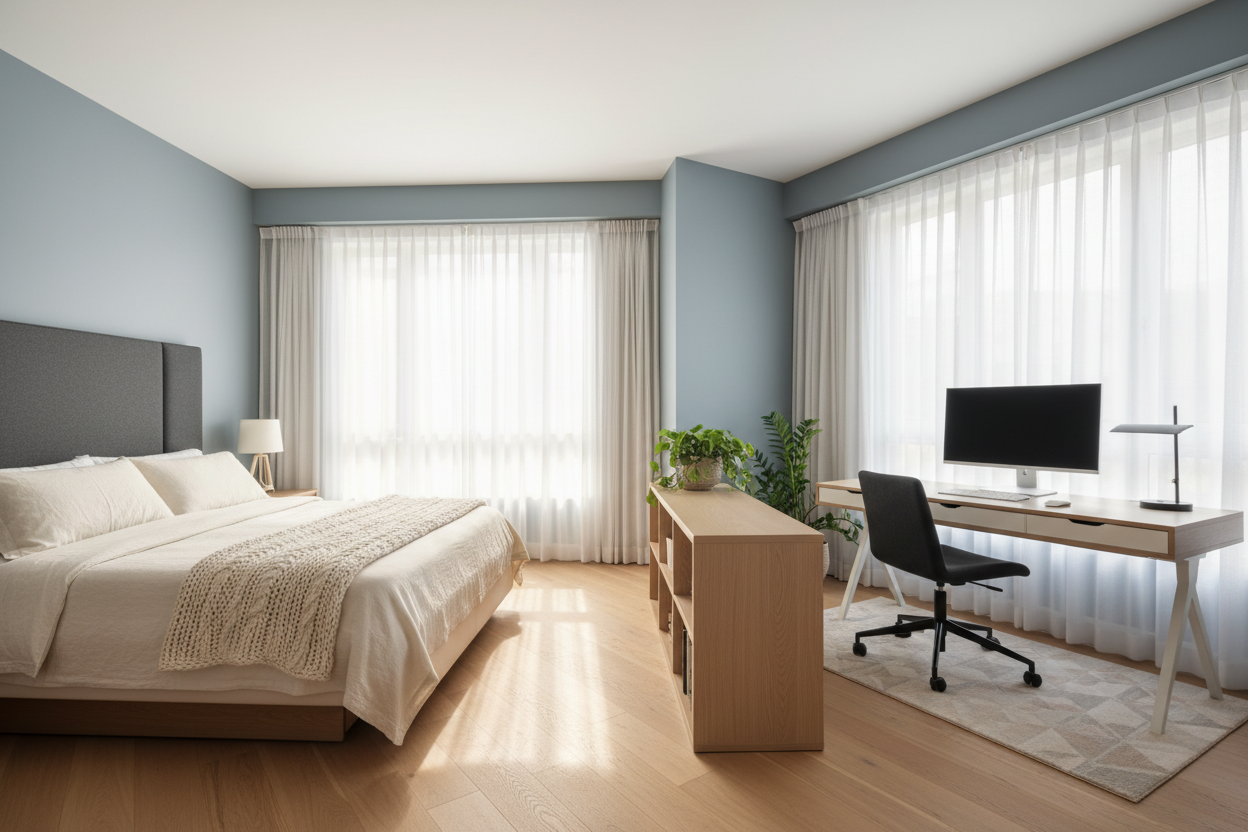
Integrating a workspace into your sanctuary is one of the most complex challenges in residential design. The conflict is inherent: one function demands alertness and energy, while the other requires calm and decompression. If you execute a bedroom home office layout poorly, you risk insomnia and decreased productivity. However, with intentional space planning and the right furniture silhouettes, you can create a room that serves both masters without compromise.
Key Features of a Balanced Dual-Purpose Room
- Visual Zoning: Establishing distinct boundaries through rugs, paint blocking, or furniture orientation to separate "work" from "rest."
- Scale and Proportion: Selecting desks and chairs that fit the room's volume without dominating the bed, which should remain the focal point.
- Concealed Tech: Prioritizing cable management and storage solutions to hide blinking lights and chaotic wires at night.
- Lighting Layers: Utilizing task lighting for work that does not bleed into the ambient, relaxing lighting required for the evening.
Mastering the Floor Plan and Sightlines
The first rule of bedroom office space ideas is managing sightlines. Never position your desk so that you are staring directly at your pillow while working, as this induces lethargy. Conversely, you should not be able to see your computer screen from your pillow, as this triggers anxiety.
For smaller footprints, bedroom corner office ideas often work best. By floating a desk perpendicular to a window rather than pushing it flat against a wall, you gain natural light without glare and create a distinct "zone" that feels architectural rather than accidental. If the room allows, placing the desk behind the headboard (if the bed is floating) creates a sophisticated hotel-suite aesthetic that completely blocks the view of work equipment when you are in bed.
Furniture Selection: Materiality and Silhouette
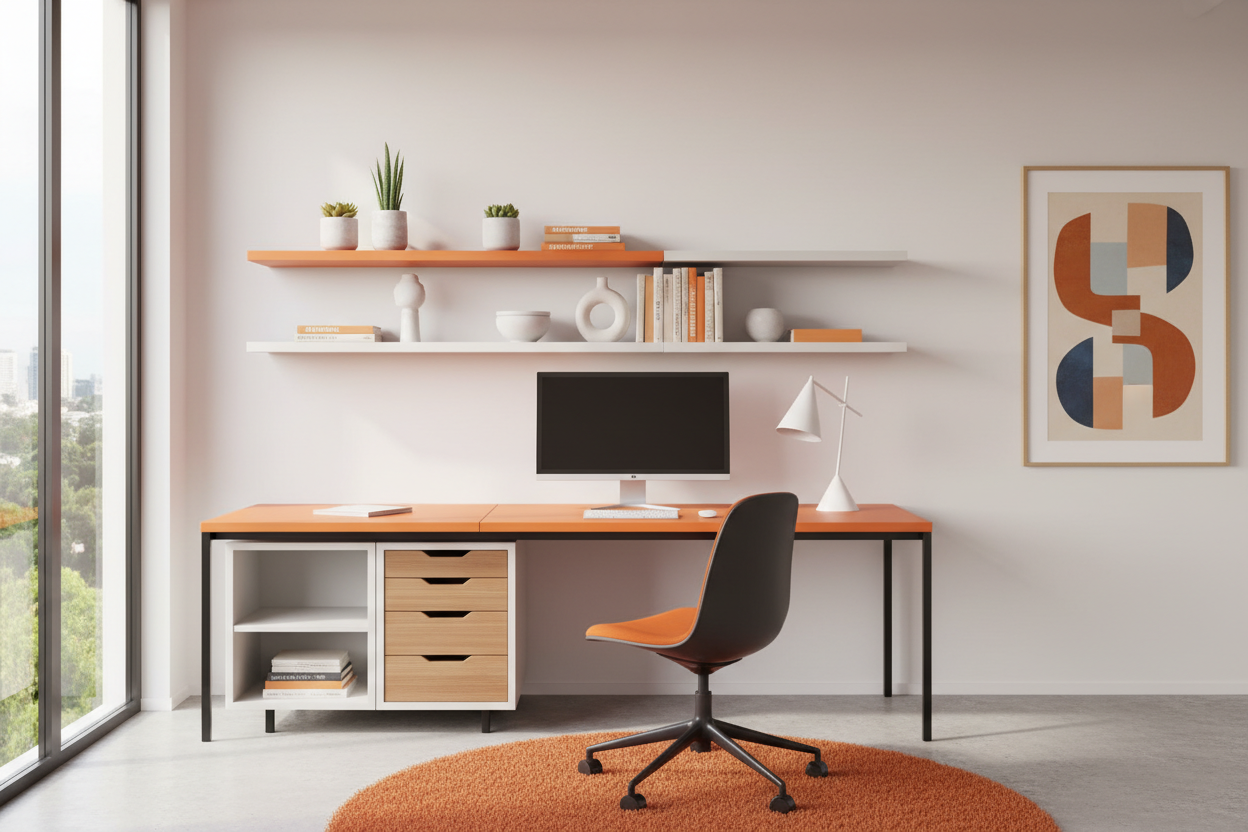
When curating ideas for bedroom office space, avoid the "corporate cubicle" aesthetic. A chunky black melamine desk or a high-back mesh chair will clash with soft linens and drapery. Instead, look for materials that bridge the gap between function and domestic comfort.
The Desk
Opt for writing desks with slender legs and warm textures. Walnut, white oak, or even leather-wrapped surfaces add tactile warmth. If you are exploring bedroom converted to office ideas where the room is large, consider a vintage dining table used as a desk; it offers ample surface area but feels like furniture, not equipment.
The Chair
This is where most designs fail. While ergonomics are non-negotiable, the visual weight of a standard office chair is heavy. Look for low-profile task chairs upholstered in bouclé, velvet, or high-quality leather. They must offer lumbar support and adjustability, but the mechanism should be discreet.
Storage and The "Cloffice"
Clutter is the enemy of sleep. Successful bedroom office setup ideas rely heavily on closed storage. Open shelving can look chaotic in a bedroom setting. If you have a reach-in closet you can spare, converting it into a "cloffice" (closet-office) is the ultimate luxury. It allows you to literally close the door on your workday. If that isn't an option, invest in a credenza or a rolling pedestal that tucks under the desk to keep paperwork out of sight.
My Personal Take on Bedroom Home Office Layout
I learned a hard lesson about acoustic and visual "noise" during a project for a client in a downtown loft. We designed a stunning custom desk with a glass top to keep the space feeling airy. It looked incredible in photos.
However, two weeks later, the client called me. The issue wasn't the look; it was the sound and the smudges. Every time she set her coffee mug down or typed on her mechanical keyboard, the glass amplified the sound, making the bedroom feel cold and clattery. Furthermore, the glass reflected the standby light of her monitor onto the ceiling at night. We ended up swapping it for a matte-finished oak desk with a leather blotter. The wood absorbed the sound, and the matte finish stopped the light reflection. It’s a reminder that in a bedroom, tactile silence is just as important as visual beauty.
Conclusion
Merging rest and work requires a delicate hand. By prioritizing closed storage, choosing furniture with residential finishes, and strictly managing your sightlines, you can build a space that fosters productivity during the day and tranquility at night. Don't settle for a setup that compromises your sleep.
Frequently Asked Questions
How do I fit a desk in a small bedroom without it looking crowded?
Focus on "leggy" furniture. Desks and chairs with exposed legs allow light to travel underneath, increasing the sense of floor space. Wall-mounted floating desks are also excellent for maintaining visual flow in tight quarters.
What is the best lighting for a bedroom office?
Avoid overhead fluorescent lighting. Use a dedicated task lamp with a warm color temperature (2700K-3000K) for the desk. Ensure it has a dimmer so it doesn't become a harsh spotlight in the evening.
Can I use a dining chair as a desk chair to save space?
For short bursts of work (under 2 hours), a dining chair is acceptable. However, for full workdays, you risk back strain. If you must use a dining style, ensure the seat height is correct relative to the desk surface, or add a discrete lumbar pillow.

Leave a comment
This site is protected by hCaptcha and the hCaptcha Privacy Policy and Terms of Service apply.