










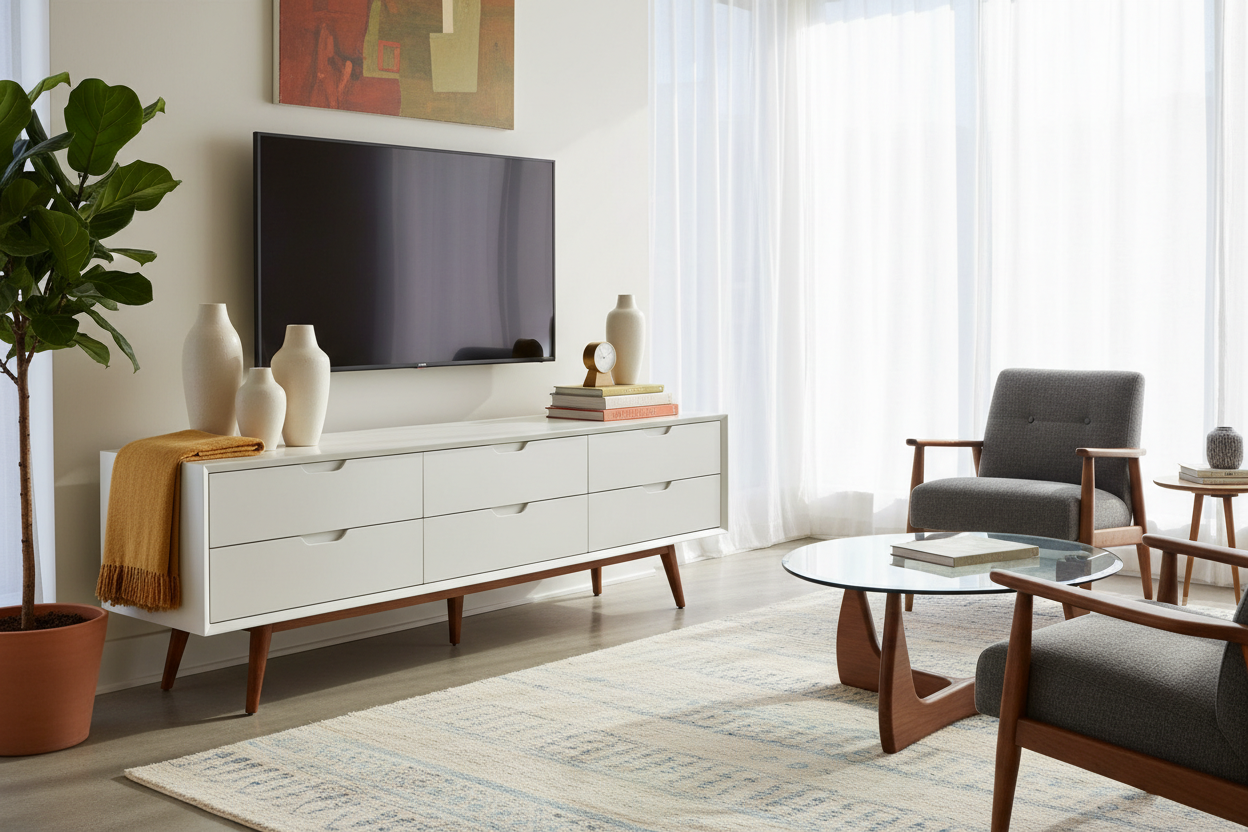
One of the most common design dilemmas I see in North American living rooms is the dreaded 'black hole' effect. You buy a massive, beautiful flat-screen TV, mount it to the wall or set it on a dark credenza, and suddenly one entire side of your room feels heavy, dark, and visually overwhelming. This is exactly where mid century modern white tv stands earn their keep.
By introducing a crisp, light-reflecting surface right beneath the screen, a white mid century media console immediately balances the visual weight of the room. But there is a fine line between a bright, airy living space and a room that feels like a dentist's waiting area. In this guide, we are going to break down exactly how to choose, size, and style these iconic pieces so your living room stays warm and inviting.
Quick Decision Guide
- Size for visual balance: Your console should be at least 4 to 6 inches wider than your TV on both sides to prevent the setup from looking top-heavy.
- Check the finish: Matte white looks beautiful but absorbs oils and fingerprints; opt for a satin or semi-gloss lacquer for easier maintenance.
- Warm it up: Pair stark white finishes with natural textures like walnut legs, brass hardware, or woven baskets.
- Plan for cables: Tapered mid-century legs mean the space under the console is visible. Ensure the unit has robust internal cable management to hide wires.
Taming the Black Hole Effect
When you place a large black rectangle (your TV) on a dark wood or black stand, the whole arrangement dominates the room. A white mid century tv stand acts as a visual palate cleanser. The clean lines and negative space created by the iconic tapered legs allow light to flow underneath the piece, making small apartments and narrow suburban family rooms feel significantly larger.
Nailing the Proportions
Proportion is everything. If you have a 65-inch TV (which is roughly 57 inches wide), you need a console that is at least 65 to 70 inches wide. Anything smaller, and the TV will dwarf the furniture. Mid-century design relies heavily on low, horizontal profiles. Keeping the unit wide and low to the ground maintains that authentic vintage aesthetic while putting your screen at the ideal ergonomic viewing height—usually around 42 inches from the floor to the center of the screen.
Warming Up a Crisp White Palette
The biggest risk with a white mid century modern media console is that it can read as cold or clinical. The trick is to introduce friction through texture and contrasting materials. A pure white box needs grounding.
Layering Textures and Tones
Look for designs that incorporate warm wood tones. A walnut frame with white lacquered doors, or a solid white unit sitting on a teak base, bridges the gap between modern minimalism and organic warmth. You can also style your vintage modern tv stand with tactile objects: a trailing pothos plant in a terracotta pot, a stack of matte-finish coffee table books, or a heavily textured ceramic lamp. These elements break up the rigid geometry of the furniture.
Material Matters: Engineered vs. Solid Wood
There is a misconception that all engineered wood is cheap. When shopping for a white mid century modern tv console, a high-quality MDF (medium-density fiberboard) core with a baked-on lacquer finish is actually preferable to solid wood for the door fronts. Solid wood expands and contracts with the seasonal humidity shifts typical in North American homes, which can cause painted finishes to crack at the joints. However, the legs and structural base should absolutely be solid wood or steel to prevent sagging under the weight of your electronics.
Lessons from My Own Projects
A few years ago, I was designing a narrow open-concept condo in Toronto. The client insisted on a budget-friendly, all-white mid century white tv stand to brighten the space. It looked incredible on installation day. But I learned a hard lesson about finishes when I visited three months later. The unit had a cheap, porous matte white finish. Every single time the client opened the doors to grab a gaming controller, the oils from their hands left a slight yellow smudge that was nearly impossible to scrub out without damaging the paint.
Furthermore, because the piece had high 8-inch tapered legs, every single black power cord was highly visible dangling down to the baseboard outlet. We ended up having to retro-fit a white cable-concealment track down the back leg and swap the hardware to oversized brass pulls so the client wouldn't have to touch the white doors directly. If you are buying a white console, always prioritize a durable, wipeable topcoat and pre-plan your wire management.
Frequently Asked Questions
Does a white console show too much dust?
Surprisingly, no. Dark wood and black glass consoles show dust almost immediately. White finishes actually camouflage everyday household dust quite well, though they will show dark pet hair and smudges more readily.
Can I mix a white mid-century piece with transitional decor?
Absolutely. Because white is a neutral and mid-century silhouettes are relatively simple, these consoles act as chameleons. To blend it into a transitional room, swap out ultra-modern peg legs for a slightly thicker base, and use hardware (like brushed nickel or antique brass) that matches the rest of your home.
How do I clean a lacquered white TV stand?
Skip the harsh chemical cleaners and abrasive sponges, which will dull the finish over time. Use a slightly damp microfiber cloth with a tiny drop of mild dish soap to wipe away fingerprints, followed immediately by a dry microfiber cloth to prevent water spots.

Leave a comment
This site is protected by hCaptcha and the hCaptcha Privacy Policy and Terms of Service apply.